
How to Clean Wood Floors: A Sustainable Guide to Long-Lasting Hardwood Care
The best way to clean wood floors is to dust them daily, damp-mop weekly with a pH-neutral cleaner, and deep clean seasonally, while avoiding excess water, steam mops, and acidic products like undiluted vinegar. When you follow a simple routine, you protect the finish, extend the floor’s life, and keep your home healthier.
But here’s what most cleaning guides miss: your wood floors aren’t just a surface. They’re an investment in responsibly sourced materials that can last 50 years or more. When Marcus and his wife refinished their 1920s oak floors instead of replacing them, they saved roughly $8,000 and kept hundreds of pounds of flooring out of a landfill. Their secret? They stopped treating cleaning as an afterthought and started treating it as preservation.
In this guide, you’ll learn how to clean wood floors the right way, from daily habits to seasonal deep cleaning. We’ll also show you why sustainable floor care matters, which eco-friendly cleaners actually work, and which common mistakes slowly destroy your finish. Whether you have solid hardwood, engineered wood, or site-finished planks, this approach works.
Key Takeaways
- Clean wood floors with a dry microfiber mop daily and a damp microfiber mop weekly using a pH-neutral cleaner.
- Avoid steam mops, soaking wet mops, and acidic cleaners like straight vinegar, they damage the finish over time.
- Choose eco-friendly, plant-based cleaners or simple DIY recipes with castile soap to protect indoor air quality.
- Match your cleaning method to your floor type: solid hardwood tolerates more moisture than engineered wood.
- A consistent maintenance routine extends floor life by decades, reducing waste and preserving your investment.
Why Proper Wood Floor Care Matters for Sustainability

Wood floors are already one of the more sustainable flooring choices available, especially when they come from certified forests. But their environmental advantage disappears quickly if you replace them every 10 to 15 years because of poor care.
According to the U.S. Environmental Protection Agency, indoor air quality can be two to five times worse than outdoor air. Many conventional floor cleaners release volatile organic compounds (VOCs) that contribute to that problem. When you switch to non-toxic, pH-neutral cleaners, you reduce chemical exposure for your family and pets without sacrificing results.
Well-maintained hardwood floors can last 50 to 100 years. That longevity means fewer raw materials harvested, less manufacturing energy used, and less waste sent to landfills. In other words, the most sustainable floor is the one you already have, kept in great condition.
Want the bigger picture on caring for all types of wood surfaces? Our pillar guide on how to clean wood covers furniture, cabinetry, flooring, and outdoor wood in one place.
What You’ll Need to Clean Wood Floors Safely
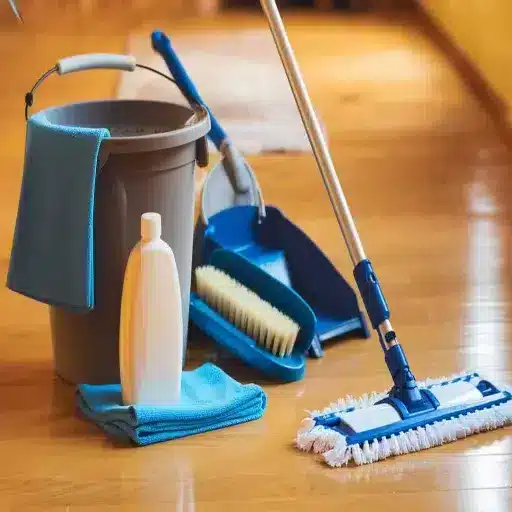
Before you start, gather the right tools. Using the wrong supplies is where most damage begins.
Essential Supplies
- Microfiber dust mop: Traps dust, pet hair, and grit without scratching.
- Microfiber wet mop with washable pads: Holds moisture without oversaturating the floor.
- pH-neutral wood floor cleaner: Look for plant-based or EPA Safer Choice products.
- Spray bottle: For controlled application of cleaning solution.
- Soft-bristled broom or vacuum with hardwood setting: Removes debris before mopping.
- Clean, lint-free cloths: For spot cleaning and drying.
What to Avoid
- Steam mops: Forcing hot vapor into seams can warp boards and damage finishes.
- Abrasive scrub pads: These scratch polyurethane and oil finishes.
- Straight vinegar: The acidity dulls finishes over time.
- Excess water: Standing water is the leading cause of floor damage.
- Furniture polish or wax on polyurethane floors: These create a slippery, dull buildup.
If you’re comparing specific products, our guide to the best wood cleaner breaks down top-rated options for floors, furniture, and trim.
The Best Way to Clean Wood Floors: Step-by-Step
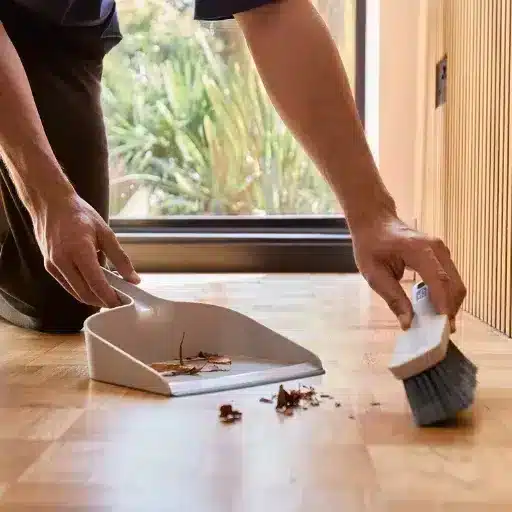
This routine works for most sealed hardwood and engineered wood floors. If your floors are waxed or unfinished, adjust accordingly.
Step 1: Remove Dust and Debris Daily
Grit is your floor’s biggest enemy. Tiny particles act like sandpaper underfoot, slowly wearing down the finish. A quick pass with a microfiber dust mop each evening takes two minutes and prevents long-term damage.
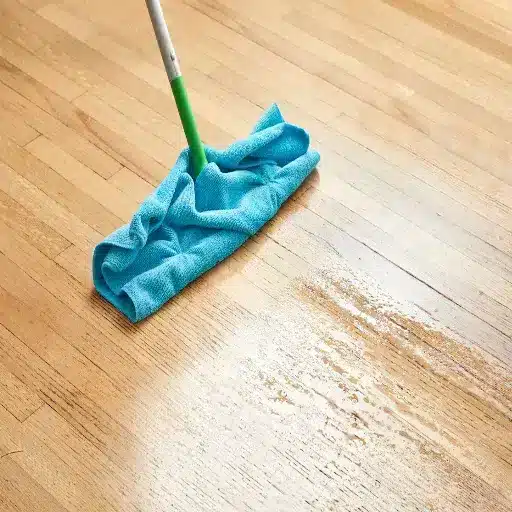
Step 2: Damp-Mop Weekly With a pH-Neutral Cleaner
Mix your cleaner according to the label, usually about one ounce per gallon of water. Lightly mist the floor with a spray bottle, then mop with a damp (not wet) microfiber pad. Work in small sections and rinse the pad often.
Step 3: Spot-Clean Spills Immediately
Water, coffee, and pet accidents should be wiped up right away. Use a dry or slightly damp cloth. Avoid soaking the spot, since moisture that seeps between boards causes cupping and staining.
Step 4: Deep Clean Seasonally
Every three to four months, do a more thorough clean. Move lightweight furniture, vacuum with a hardwood attachment, and mop with a slightly stronger (but still pH-neutral) solution. Dry the floor with a clean microfiber cloth afterward.
Step 5: Buff and Protect the Finish
After deep cleaning, buff the floor with a dry microfiber pad to restore shine. For extra protection in high-traffic areas, consider adding felt pads to furniture legs and placing rugs near entryways.
How to Clean Wood Floors Naturally
You don’t need harsh chemicals to get wood floors clean. Several plant-based options work well and align with a lower-waste lifestyle.
Castile Soap Solution
Mix one tablespoon of liquid castile soap with one gallon of warm water. Damp-mop as usual. This is gentle on finishes and biodegradable.
Plant-Based Commercial Cleaners
Look for products labeled pH-neutral, biodegradable, and free from synthetic fragrances. Brands with EPA Safer Choice or Green Seal certification are good starting points.
The Vinegar Debate
Many DIY recipes call for vinegar. While diluted white vinegar can cut grime, its acidity slowly degrades polyurethane finishes. If you use it, limit it to once every few months and always dilute it heavily, one-half cup per gallon of water at most.
Essential Oil Additions
A few drops of lemon or tea tree oil can add a light, fresh scent and mild antibacterial properties. Don’t overdo it; oils can leave residue if used in high concentrations.
For times when sanitizing matters, like after illness or pet accidents, see our guide on how to disinfect wood without damaging the finish.
Cleaning Different Types of Wood Floors
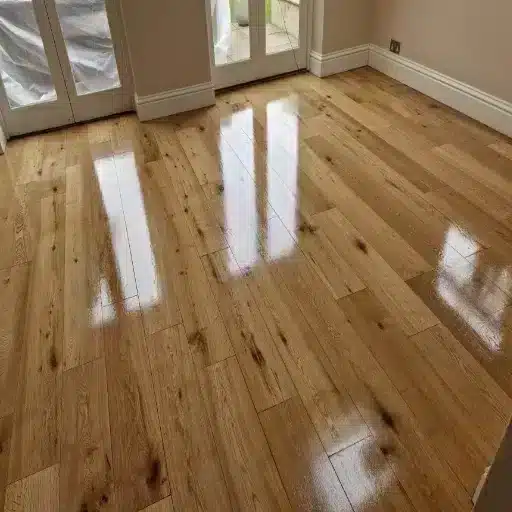
Not all wood floors are the same. The construction and finish affect how much moisture and pressure they can handle.
Solid Hardwood Floors
Solid hardwood is thick and can be sanded and refinished multiple times. It tolerates slightly more moisture than engineered wood, but you should still avoid soaking it.
Engineered Wood Floors
Engineered wood has a real wood veneer over plywood or fiberboard. It resists humidity better than solid wood but can’t be refinished as many times. Use minimal water and clean along the grain.
Prefinished vs. Site-Finished Floors
Prefinished floors have a factory-applied, highly durable finish. Site-finished floors are sanded and sealed in place. Both need gentle cleaners, but site-finished floors may need refinishing sooner in high-traffic areas.
Laminate and Wood-Look Alternatives
Laminate is not real wood, but it often looks like it. Never use a steam mop on laminate. A barely damp microfiber mop and a laminate-safe cleaner are your safest options.
Common Wood Floor Cleaning Mistakes to Avoid
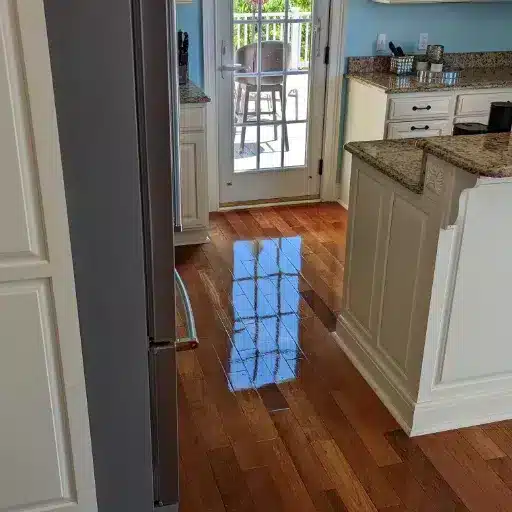
Even well-meaning homeowners damage their floors. Here are the most common errors and how to prevent them.
Using Too Much Water
Water is wood’s enemy. A soaking wet mop forces moisture into seams and underneath boards, leading to warping, cupping, and mold.
Skipping the Dry Dusting Step
Mopping over grit drags particles across the finish and creates micro-scratches. Always dust or vacuum first.
Applying Wax on Polyurethane Floors
Wax and polyurethane don’t mix. Wax creates a cloudy, slippery film that’s difficult to remove without stripping the finish.
Using Steam Mops on Sealed Wood
Manufacturers of most hardwood and engineered floors explicitly warn against steam mops. The heat and moisture can penetrate the finish and damage the wood core.
Ignoring Manufacturer Recommendations
Your floor’s warranty may require specific care products. Check the manufacturer’s guidelines before trying a new cleaner.
A Sustainable Wood Floor Maintenance Schedule
Consistency beats intensity. Small habits performed regularly keep floors looking better than occasional deep scrubs.
Daily Habits
- Sweep or dust-mop high-traffic areas.
- Wipe up spills immediately.
- Remove shoes near entryways when possible.
Weekly Routine
- Vacuum or sweep the entire floor.
- Damp-mop with a pH-neutral cleaner.
- Check for scuffs or scratches and address them with a touch-up marker if needed.
Monthly Tasks
- Clean under rugs and furniture.
- Inspect felt pads on furniture legs.
- Rotate rugs to ensure even fading and wear.
Seasonal Deep Care
- Move furniture and clean underneath.
- Deep clean and buff the floor.
- Check humidity levels, ideally 35% to 55% year-round.
When to Refinish Instead of Replace
If your floors look dull, scratched, or stained but are structurally sound, refinishing is usually the better choice. It costs 50% to 75% less than replacement and restores the surface without sending usable material to a landfill.
FAQ: How to Clean Wood Floors
Can you use vinegar to clean wood floors?
You can use heavily diluted vinegar occasionally, but it’s not the best long-term choice. The acidity can dull polyurethane finishes over time. A pH-neutral cleaner or castile soap solution is safer for regular use.
How often should you clean wood floors?
Dust or sweep daily in busy areas, damp-mop weekly, and deep clean seasonally. Homes with pets or children may need more frequent spot cleaning.
What is the best mop for wood floors?
A flat microfiber mop with washable pads is the best choice. It cleans effectively with minimal water and won’t scratch the finish.
Are steam mops safe for hardwood floors?
Generally, no. Most hardwood and engineered floor manufacturers advise against steam mops because the heat and moisture can damage the finish and warp the wood.
How do you make wood floors shine naturally?
Buff the floor with a dry microfiber pad after cleaning. Avoid wax or oil-based polishes on polyurethane floors. Consistent cleaning also prevents the buildup that makes floors look dull.
Conclusion
Learning how to clean wood floors isn’t complicated, but it does require the right habits. Dust often, mop with a pH-neutral cleaner, avoid excess water, and deep clean seasonally. Those four actions will keep your floors beautiful for decades.
The real payoff goes beyond appearance. Every year you extend the life of your wood floors is a year you don’t need new materials, new manufacturing, or new waste. That’s the heart of sustainable home care.
At VitalWood Global, we believe the materials you choose deserve to last. If you’re considering new wood flooring for a renovation or build, explore our sustainably sourced wood flooring options, and keep this guide handy to protect your investment for years to come.
Ready to make your home more sustainable? Start with your floors.