
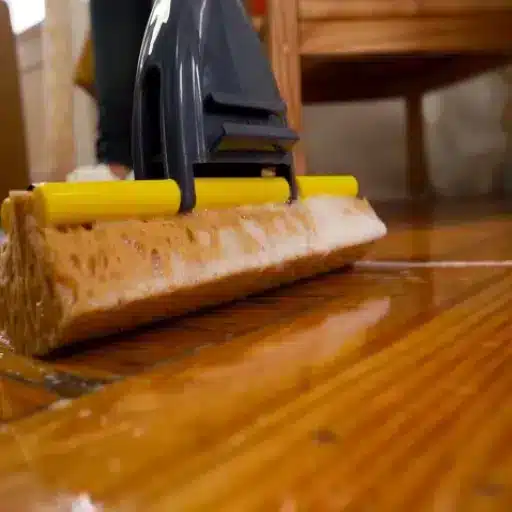
How To Disinfect Wood: Safe Methods For Every Surface And Finish
If you’re wondering how to disinfect wood without ruining the finish, the answer starts with a single rule: clean it first, apply a wood-safe disinfectant to a cloth rather than the surface, respect the label’s contact time, and dry the wood immediately. The right product depends on your finish: 70% isopropyl alcohol suits sealed furniture and floors, 3% hydrogen peroxide or a diluted bleach solution (1 tablespoon per gallon) works for food-contact cutting boards, and most surfaces are better served by gentle, low-VOC options than by harsh all-purpose sprays.
James found this out the hard way. After a family bout of the flu last winter, he reached for the same disinfecting spray he used on countertops and wipes down his solid oak dining table. Within a week, the once-glossy lacquer looked cloudy and felt rough to the touch. The finish had been etched by chemicals never designed for wood. A simple clean had turned into a refinishing project, and a table that should have lasted generations was stripped of its protective layer.
If you’ve ever hesitated between “kill the germs” and “save the finish,” you’re in good company. Wood is porous and reactive, and most disinfectants were formulated for plastic, glass, and tile. Get the match right, though, and you can make wood genuinely safe, even food-contact cutting boards, without sacrificing the surface you love. In this guide, you’ll learn how to disinfect wood by finish type, which products and contact times actually work, what to avoid, and how to keep every surface from floors to cutting boards clean, healthy, and beautiful.
Key Takeaways
- Clean wood before you disinfect it; disinfectants cannot work through dirt and grease.
- Match the product to the finish: 70% isopropyl alcohol for sealed furniture and floors, hydrogen peroxide or diluted bleach for food-contact cutting boards.
- Respect contact times: about 30 seconds to 2 minutes for alcohol, 5 to 10 minutes for hydrogen peroxide, and per-label for EPA-registered products.
- Never soak wood, and always dry it immediately to prevent warping, raised grain, and mold.
- Wood cutting boards are not less sanitary than plastic; deep cracks, not the material, are the real bacterial risk.
Disinfecting Wood vs. Cleaning Wood: Know the Difference
Cleaning and disinfecting are not the same job, and confusing them is where most wood damage begins. Cleaning removes dirt, grease, and visible grime. Disinfecting kills germs. The CDC recommends cleaning a surface first, then applying an EPA-registered disinfectant only when needed, because organic matter can neutralize many disinfectants and shield bacteria underneath.
The germ-kill hierarchy helps here. Sanitizing reduces germs to a safe level, which is the standard for food-contact surfaces like cutting boards. Disinfecting kills a higher percentage of germs on hard, non-porous surfaces and is what you want after illness. Sterilizing eliminates all microorganisms and is rarely practical or necessary in a home.
So when do you actually need to disinfect wood? Not as often as many cleaning-product labels suggest. Routine dusting and damp wiping keep most furniture and floors perfectly healthy. Disinfection matters in higher-risk moments: after someone in the home is sick, after raw meat touches a cutting board, for high-touch surfaces like cabinet handles and stair rails, and when you bring secondhand wood furniture into your home. For everything else, a solid cleaning routine is the better, gentler choice. Our complete guide to how to clean wood walks through the everyday routine that keeps most surfaces safe without chemicals.
First, Identify Your Wood and Finish
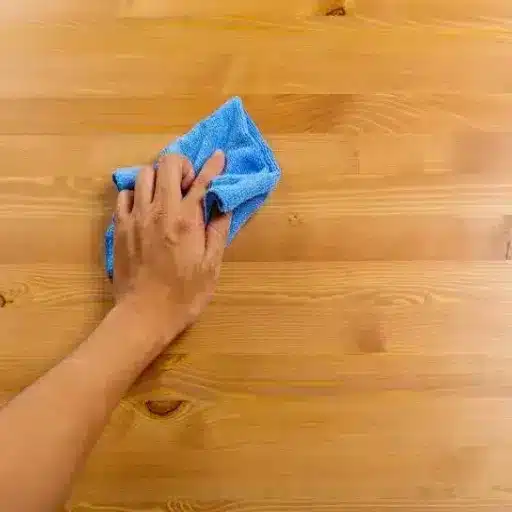
Before you pick a disinfectant, find out what is on the surface. This one step decides everything that follows, because a product that is gentle on polyurethane can be destructive to shellac, and bleach that is fine for a cutting board can ruin a finish.
The water-drop test is the fastest way to tell if wood is sealed. Place a few drops of water on an inconspicuous spot. If the water beads up and sits on the surface, the wood is sealed with polyurethane, lacquer, varnish, or wax. If the water soaks in and darkens the wood, it is unfinished or has a worn finish, and it should never be treated with a liquid disinfectant.
Common finishes tolerate disinfectants very differently. Polyurethane and modern water-based finishes are the most durable and accept alcohol-based cleaning well. Lacquer and shellac are sensitive and can cloud or dissolve with the wrong solvent. Oil and wax finishes need nourishing products, not harsh disinfectants. Bare or unfinished wood has no protection at all and should be cleaned dry whenever possible.
Species matters too. Maple’s tight, closed grain is why it is the classic cutting-board wood. Oak’s open grain absorbs moisture and needs fast drying. Teak and other oily hardwoods naturally resist microbes and weathering. Pine and other softwoods raise grain and scar easily. Understanding your wood helps you predict how a disinfectant will behave before you risk the surface.
The Safe Disinfectants for Wood (Decision Matrix)
There is no single “best disinfectant for wood.” Instead, match the chemistry to the finish and the job. The table below gives you a quick decision framework.
| Disinfectant | Best For | Dilution | Contact Time | Cautions |
|---|---|---|---|---|
| 70% isopropyl alcohol | Sealed furniture, floors, handles | Ready to use | 30 sec to 2 min | Ventilate; avoid shellac, lacquer, unfinished wood |
| 3% hydrogen peroxide | Cutting boards, unfinished wood, mold | Ready to use | 5 to 10 min | Can lighten dark woods; rinse food-contact surfaces |
| Diluted bleach | Cutting boards (food contact) | 1 tbsp per 1 gallon water | 2 to 10 min | Rinse thoroughly; never on finishes |
| EPA-registered wood-safe disinfectant | Sealed wood per label | Per label | Per label, often 5 to 10 min | Check “safe for finished wood”; rinse food-contact surfaces |
| Wood-safe commercial product | Oiled and waxed wood | Ready to use | About 5 min per label | Designed for oiled surfaces; still spot-test |
| Diluted white vinegar | Routine care of sealed wood only | 1:1 with water | 5 to 10 min | Avoid oil, wax, shellac, lacquer, and unfinished wood |
Isopropyl alcohol at 70% is the workhorse for sealed surfaces. It evaporates quickly, which limits moisture damage, and it kills many viruses and bacteria within seconds. Apply it to a soft cloth, wipe the surface, and let it dry. Never pour it directly onto wood.
Hydrogen peroxide at 3% is a gentle option that breaks down into water and oxygen, leaving no residue. It is a smart pick for food-contact boards and for treating mold on unfinished wood, though it can lighten darker species if left too long.
Diluted bleach follows the USDA guidance for sanitizing cutting boards: 1 tablespoon of unscented liquid chlorine bleach per 1 gallon of water. It works, but it must be rinsed thoroughly, and it should never touch a finish, where it raises grain and strips color.
EPA-registered disinfectants can be wood-safe if the label says so. Read the fine print: products like Clorox wipes are labeled safe on finished wood but restricted to non-food-contact surfaces. For anything that touches food, the label must say it is cleared for food-contact surfaces, or you must rinse with potable water afterward per label directions. The EPA finalized new test methods in 2024 for measuring disinfectant residue on surfaces like cutting boards, which underscores how closely this is regulated.
White vinegar gets a lot of praise online, but use it with care. Its acidity can etch lacquer, dull polyurethane, and strip oil and wax finishes over time. On sealed wood, a 1:1 dilution is acceptable for routine wiping. On shellac, oil, wax, or bare wood, avoid it entirely.
How to Disinfect Wood Furniture and Cabinets
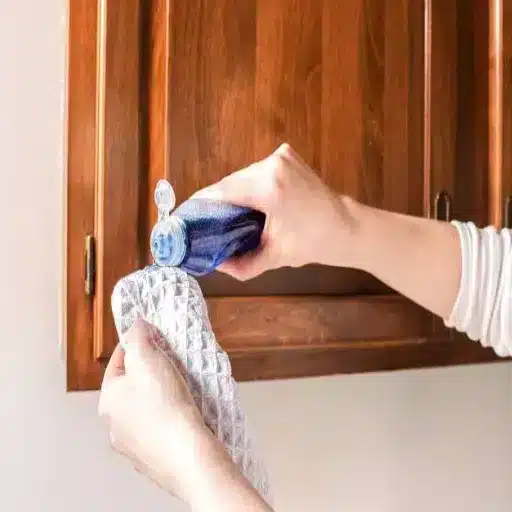
For sealed furniture, the safest routine is 70% isopropyl alcohol on a cloth. Dust the piece first, then wipe the cloth with the grain. Let the alcohol do its job for about 30 seconds to 2 minutes, then buff with a dry cloth. Work in small sections so the surface never stays wet for long. For high-touch cabinet fronts and handles, the same method works well, and it fits naturally into a broader cleaning wood furniture routine.
Painted wood is more forgiving than stained or natural wood, but the same principle applies: a damp cloth and a gentle disinfectant, never a soaking wet rag. For kitchen cabinets, grease is the real challenge. Clean off the grease first with a mild, pH-neutral cleaner, because a disinfectant sitting on a greasy film is not disinfecting anything. Then follow with the alcohol wipe for high-touch areas. Our guide on how to clean wood cabinets covers the grease-cutting workflow in detail.
Secondhand furniture is a different story. When you bring home a thrifted table or dresser, you have no idea what it has been through. Start with a thorough dry dusting, then vacuum crevices and hardware. Use an alcohol wipe on sealed, non-porous areas, and be more careful with veneer, which can blister if moisture gets under the surface layer. If the piece has an unknown or worn finish, treat it like unfinished wood and avoid liquid disinfectants until you know more.
How to Disinfect Hardwood Floors
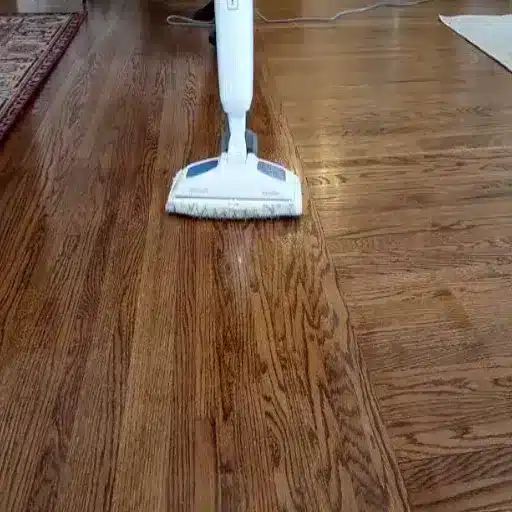
Floors see a lot of traffic, but they also absorb moisture more easily than furniture, so the golden rule is to never mop disinfectant onto hardwood. The right approach is a barely damp microfiber mop with a pH-neutral, wood-safe cleaner, worked in small sections and dried as you go.
For targeted disinfection, such as after an illness or a pet accident, mist a 70% alcohol solution onto a mop pad rather than onto the floor, then dry the section immediately. Avoid steam mops as a regular tool; the repeated heat and moisture can warp boards and damage finishes. Most of the time, a solid routine keeps floors clean, and our article on how to clean wood floors explains how to choose floor-safe products and keep the finish looking its best.
How to Disinfect Wood Cutting Boards
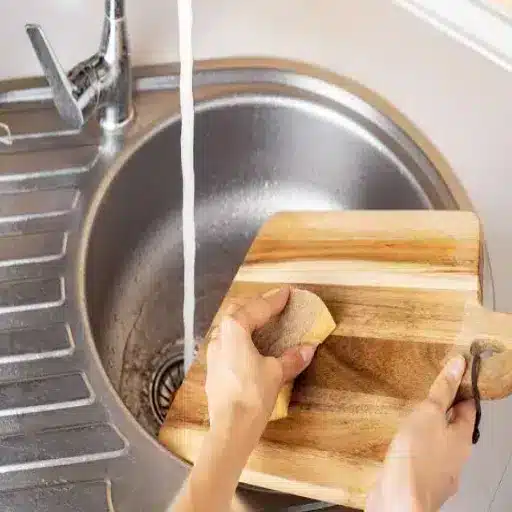
Cutting boards are the highest-stakes disinfection job, because whatever you use ends up near food. The good news is that wood boards, when properly maintained, are not less sanitary than plastic. Research going back decades found that bacteria recover less readily from wood than from plastic, and more recent studies on sugar maple show it can reduce E. coli to undetectable levels within hours, even without cleaning. The real risk is not the material but deep knife grooves, where bacteria can hide. Board condition and replacement timing matter more than whether you choose wood or plastic.
Clean first, always. Scrub the board with hot, soapy water, then rinse. Don’t soak it and never put it in the dishwasher, since prolonged water causes warping and splitting. To sanitize wood cutting boards for everyday use, spray the surface with 3% hydrogen peroxide, let it sit for 5 to 10 minutes, then rinse and dry upright. After raw meat, use the diluted bleach solution (1 tablespoon per gallon), let it stand for a couple of minutes, rinse thoroughly, and dry.
Once the board is dry, re-oil it with food-grade mineral oil to keep the wood hydrated and protect it from cracking. Avoid olive or vegetable oils, which turn rancid. And when deep cuts or cracks develop, replace the board. No disinfectant can reach bacteria hidden inside a deep groove.
Special Surfaces: Veneer, Unfinished Wood, Antiques
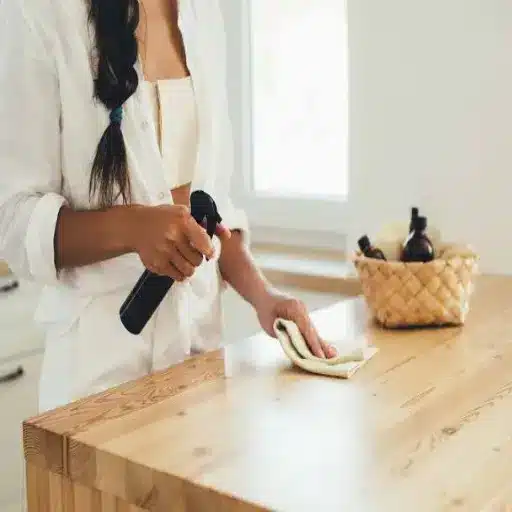
Some surfaces should be treated as exceptions. Wood veneer is a thin layer of real wood over a substrate, and it cannot tolerate harsh disinfectants or prolonged moisture. Alcohol on a barely damp cloth is about as aggressive as you should get, and most veneer pieces are better served by gentle cleaning than by disinfecting.
Unfinished wood has no protective layer, so liquid disinfectants will raise the grain and leave stains. For bare wood, stick to dry dusting and gentle cleaning. If you must disinfect after mold exposure, 3% hydrogen peroxide with a short contact time, followed by thorough drying, is the gentlest option.
Antique furniture deserves the most restraint of all. The finish may be original shellac, and any solvent that dissolves shellac will destroy the value of the piece. A barely damp cloth and immediate drying are the safest approach. For real disinfection needs, use alcohol sparingly on a cloth, dry at once, and reapply a protective wax. When in doubt, consult a conservator rather than experiment.
Disinfecting Wood After Mold
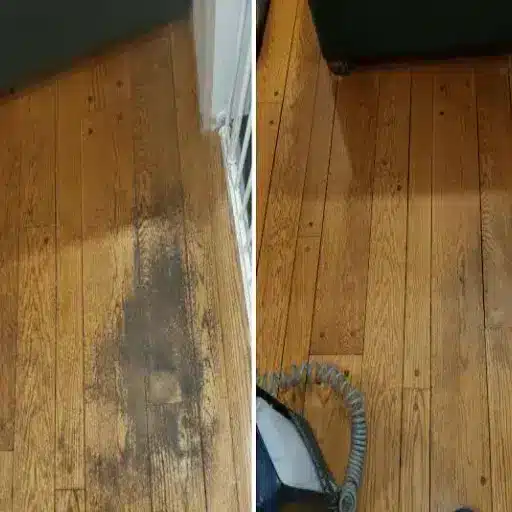
Mold on wood is a two-part problem: kill the mold, then address why it grew in the first place, almost always moisture. For light surface mold on sealed wood, clean the area, apply a diluted vinegar or hydrogen peroxide treatment, let it sit briefly, and dry completely. For stubborn mold, sanding the affected wood is often the only reliable way to remove spores that have penetrated below the surface.
Never treat mold without fixing the moisture source, or it will return. And know when to replace: if mold has softened the wood, turned it crumbly, or penetrated deeply, no treatment will restore it. Replacing the damaged board or panel with fresh, responsibly sourced material is the safer and more sustainable move.
Products and Practices to Avoid
Knowing what not to use is half the battle. Avoid these on wood:
- Bleach on finishes raises the grain, discolors the wood, and weakens fibers. Keep it for cutting boards only.
- Ammonia-based glass cleaners cloud shellac and dull lacquer.
- Undiluted vinegar etches finishes over time, even though it is popular online. The National Wood Flooring Association likewise cautions against vinegar and other acidic cleaners on hardwood.
- Steam mops, soaking, and the dishwasher force moisture into wood and invite warping and mold.
- Abrasive pads and scouring sponges scratch the surface and create new hiding spots for bacteria.
The common thread is moisture and harsh chemistry. Wood is happiest with quick, gentle contact followed by immediate drying.
A Safe Disinfecting Routine for Any Wood Surface
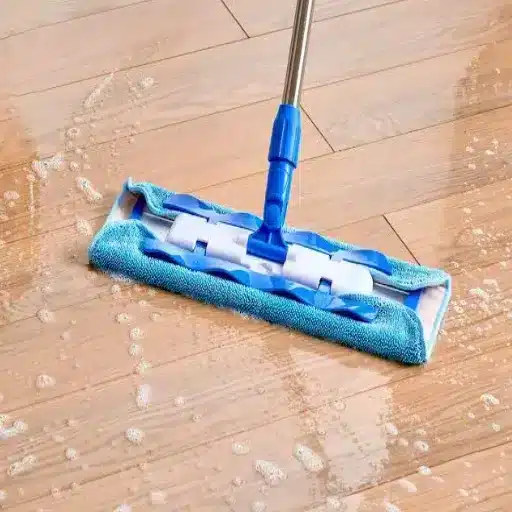
You can apply the same five-step logic to almost any wood surface:
- Dust first, so you’re not grinding grit into the finish.
- Clean with a mild, pH-neutral solution to remove the dirt that would otherwise block a disinfectant.
- Disinfect with the right product and the full contact time, applied to a cloth, never poured on.
- Dry immediately with a soft towel.
- Condition with oil or wax to protect the finish and keep the wood healthy.
That last step matters more than most people think. A well-maintained finish is easier to clean and needs less aggressive disinfection, which means fewer chemicals, less wear, and a longer life for the wood itself.
FAQ
How do you disinfect wood without damaging the finish?
Clean first, then apply a wood-safe disinfectant to a cloth, respect the contact time, and dry immediately. Match the product to your finish: 70% isopropyl alcohol for sealed wood, gentler options for everything else.
Can you use Clorox wipes on wood?
Only on finished, sealed wood, and only as a light wipe. They are labeled for non-food-contact surfaces, so never use them on cutting boards.
Can you use rubbing alcohol on wood?
Yes, on sealed surfaces. Seventy percent isopropyl alcohol evaporates quickly and is one of the safest disinfectants for polyurethane and varnish. Avoid it on shellac, lacquer, oil, wax, and bare wood.
Is vinegar a disinfectant for wood?
Vinegar has mild antimicrobial properties, but its acidity can dull finishes over time. On sealed wood, a 1:1 dilution is acceptable for routine wiping. Avoid it on oil, wax, shellac, lacquer, and unfinished wood.
How do you sanitize wood?
To sanitize wood safely, clean the surface first, then apply a wood-safe disinfectant to a cloth, respect the contact time, and dry immediately. For cutting boards, use 3% hydrogen peroxide for 5 to 10 minutes; for sealed furniture, 70% isopropyl alcohol works well.
How do you disinfect wooden cutting boards?
To disinfect wood cutting boards safely, wash with hot, soapy water, then sanitize with 3% hydrogen peroxide for 5 to 10 minutes or diluted bleach (1 tablespoon per gallon), rinse thoroughly, dry upright, and re-oil with food-grade mineral oil.
Can you use bleach on wood?
Only on food-contact cutting boards, diluted to 1 tablespoon per gallon and rinsed thoroughly. Bleach on finished wood raises the grain, strips color, and damages the finish.
Does hydrogen peroxide damage wood?
In 3% concentration, it is gentle and leaves no residue, though it can lighten some dark woods if left too long. It is safe for cutting boards and useful for mold on unfinished wood.
How do you disinfect wood after mold?
Clean the surface, treat with hydrogen peroxide or diluted vinegar, and dry completely. Fix the moisture source, and replace any wood that has become soft or deeply penetrated.
Can you disinfect unfinished wood?
Not with liquid disinfectants, which raise the grain and stain bare wood. Use dry dusting and gentle cleaning, and turn to hydrogen peroxide only for targeted mold treatment.
Conclusion
Learning how to disinfect wood safely comes down to three habits: clean first, match the product to the finish, and dry immediately. It does not have to mean choosing between hygiene and the health of your furniture. Alcohol for sealed wood, hydrogen peroxide or diluted bleach for cutting boards, and gentle care for veneer, antiques, and unfinished wood will carry you through almost any situation. And when a board is deeply cracked or mold has done lasting damage, replacing it with quality, responsibly sourced material is the smarter, more sustainable choice.
Whatever your next project, choose materials you can feel good about. At VitalWood Global, we supply premium, sustainably sourced wood products for furniture, flooring, cabinetry, and more, backed by expert guidance every step of the way. Browse our wood products or get in touch with VitalWood Global to talk through your project.