
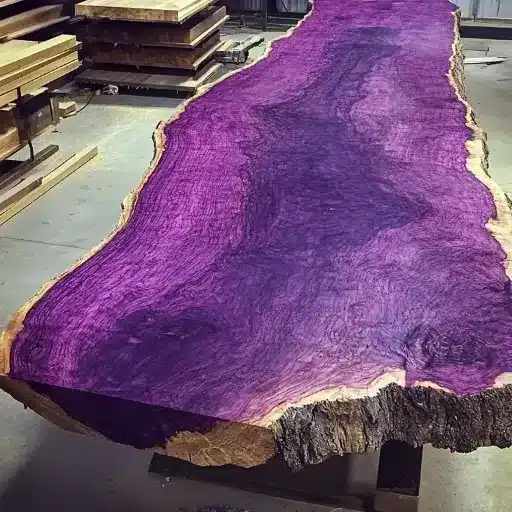
Purple Heart Wood: The Exotic That Punches Above Its Weight
Purple heart wood hits you first with that electric violet glow straight off the saw. It’s one of those exotics where the color alone justifies the price hike, but then you plane the first board and realize the density fights back—tools dull fast, dust hangs heavy, and the real question becomes whether you can actually make it work for your build.
What Makes Purple Heart Wood Different
Purple heart wood starts conversations because it doesn’t stay the same color twice. Fresh from the saw, it’s a muddy brown or gray that nobody orders it for—expose it to air and light, though, and those pigments wake up fast into deep violet, sometimes edging toward eggplant. That’s the hook. But the density behind that color shift is what keeps it in high-end jobs.
Origin and that signature color shift
Purple heart comes from Central and South America, mainly the Peltogyne genus across countries like Brazil, Guyana, and Suriname. Trees push 40–50 meters tall, but logs rarely exceed 1 meter diameter due to heart rot risks in older growth. The wood’s straight grain and fine texture make it look tame until you cut it.
Fresh cuts disappoint. A board straight off the mill looks dull brown. Within days—or hours under UV—it oxidizes into rich purple as natural flavonoids react with oxygen and light. Left indoors, it darkens further to chocolate tones over a couple years. Outdoors, it silvers like teak. You can bake it at 175°C for 20–30 minutes to force the shift and stabilize it early, but that’s extra handling most mills skip.
Janka hardness and density facts
This stuff qualifies as heavy artillery. Janka hardness sits at 2,220 lbf, putting it ahead of many tropicals like ipe or Brazilian cherry. At 0.87 specific gravity, a 1x6x8′ board weighs around 17 pounds dry—noticeable heft that resists denting in knife handles or flooring accents.
Yet it’s not invincible. Interlocked grain resists splitting but fights planing; tearout shows up without sharp 80° helix cutters. Density also means slow drying—cracks open if you rush below 10% MC. Still, that same mass shrugs off termites and decay without treatment, which is why accents in humid climates lean on it.
The combo sells it. Color grabs eyes, hardness holds up. Just don’t expect the showroom purple to last unprotected.
Working Purple Heart Wood Without Wrecking Your Tools
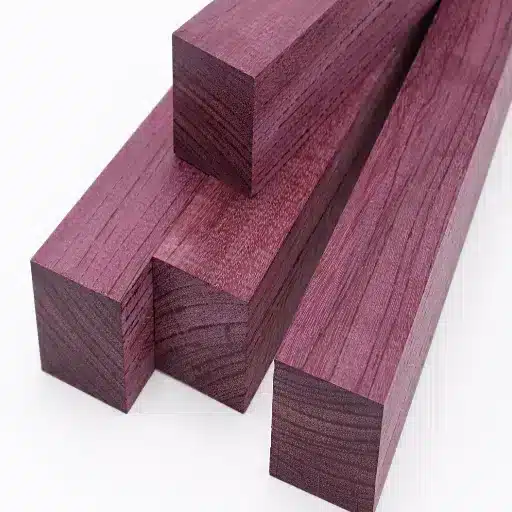
Purple heart wood laughs at dull blades and casual dust collection. Its silica content and interlocking grain chew through high‑speed steel in under 10 board feet, while the dust irritates skin and lungs faster than most tropicals. Respect those realities or spend more time sharpening than building.
1. Blade prep and sharpening tricks
Start with carbide or diamond tooling—no exceptions. HSS edges crumble after two passes; even good carbide needs honing every 27–32 feet depending on your planer head. Set shallow bites, 0.5 mm max, or tearout stripes show up like tramlines.
Interlock fights back. A 40° rake angle or 80° helix spiral cutterhead smooths the fuzzy spots where grain reverses direction. Strop blades with green chromium oxide compound between sharpenings—it holds the bevel sharper longer than plain leather. You’d notice the difference on end grain blocks for cutting boards.
Climb cut sparingly. Against the grain rips cleanly but grabs if you push too fast. Let the machine do the work; forcing it burns facets that no sandpaper hides.
2. Dust control – it’s not optional
This dust stings. Skin rashes hit after 45 minutes unprotected, and eye irritation lingers for hours. N95 minimum; P100 if sanding clouds build up. Wet sanding cuts airborne particles by 70%, but dry immediately to avoid color bleed.
Vacuum everything. Shop vacs clog fast—use cyclone separators ahead of the filter or bags fill in one session. Segregate purple heart dust; mixing with lighter woods stains like purple ink. Dispose in sealed bags, not yard mulch—heat from decomposition can kick up fumes.
Ventilation matters too. Cross drafts clear the bench, but full‑face shields beat goggles when chips fly back. Gloves off for fine work; powder‑free nitriles grip better but swap often.
3. Finishing challenges and solutions
Purple heart hates water‑based finishes first pass—they raise grain like wet spaghetti. Seal with dewaxed shellac or 2 lbs sanding sealer first; it locks pigments and blocks blotching. Dye stains work before topcoats; oils pull uneven after oxidation starts.
UV kills the purple fast. Add UV blockers to poly or lacquer—three thin coats, 320 grit between, wet sand final pass. Exposed pieces silver to gray in 18 months outdoors; covered work holds plum tones years longer.
Test small. Board ends react differently than faces; finish both or watch cupping split the glue line. Buffed paste wax over oil revives color on knife handles—daily use polishes it brighter than new.
Tools recover. Blades strop back to razor in minutes. Dust washes off skin before rash sets. Finish right and that violet glow stays put.
Where Purple Heart Wood Actually Shines
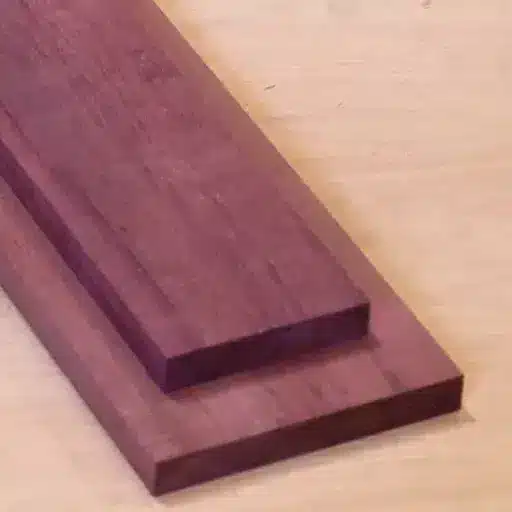
Purple heart wood doesn’t belong everywhere—it’s too heavy and pricey for bulk work. But drop it into high‑visibility accents or wear surfaces, and the color plus durability steal the show. Knife handles that take daily abuse. Table inlays glowing under spotlights. Spots where “wow” matters more than “workhorse.”
Think knife handles first. That 2,220 Janka rating shrugs off blade impacts and oils without cracking; a 5‑inch chef’s knife grip stays slick and dent‑free after 18 months of restaurant shifts. Color holds under hand wear better than most exotics—no fading to mud like some purple dyes.
Furniture accents demand it. Table legs or drawer fronts pop against walnut or cherry carcasses, especially with a high‑gloss oil finish that amplifies the violet. A conference table band around 14 chairs draws eyes without overwhelming the room; clients notice the detail, not the cost.
Turners love it for bowls and pens. Density turns mirror smooth at 300 RPM with fresh C2 carbide; end grain vases show chatoyance under angled light you can’t fake with stains. Chess sets or bottle stoppers make unforgettable gifts—small enough to justify $18/board foot.
Musical instruments too. Guitar bodies resonate warm lows thanks to straight grain and mass; luthiers pair thin purple heart backs with brighter tops for tonal balance. Drums and violins use it sparingly where purple edges peek through f‑holes or sound holes.
Outdoor accents work if sealed. Stair treads or pergola beams weather to silver‑gray patina, but UV oil keeps violet alive 3–4 years longer than unprotected. Avoid full decking—weight kills joist spans, and cupping shows on wide boards.
Inlays seal the deal. Marquetry borders or clock faces contrast sharply; laser‑cut accents in lighter cabinets glow like amethysts. A 1/8‑inch thick band around 27 cabinet doors reads premium without breaking the material budget.
That said, scale matches use. Full slabs overwhelm small spaces. Thin veneers lose impact. Let purple heart accent the build, not bury it.
Can You Use It Outdoors? Durability Real Talk
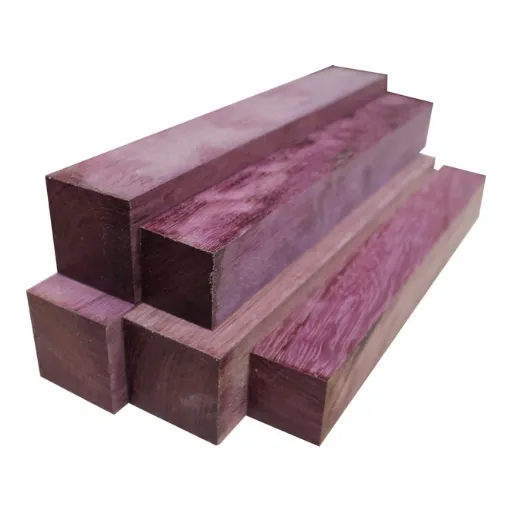
Purple heart wood handles weather better than most tropicals, but it’s no miracle material. Natural oils and tight grain shrug off rot and bugs without chemicals, yet UV turns that prized violet to silver faster than you’d like. Accents and small structures? Yes. Full exposure decks? Rethink it.
Rot and insect resistance
Decay fungi hate purple heart. High density and extractives rate it Class 1 durability—on par with teak or ipe—surviving ground contact 15–25 years untreated. Termites and powderpost beetles bounce off too; lab tests show near-zero mass loss after 36 months exposure.
Wet works fine. Sawn posts in coastal gardens hold dimension without checking if end‑sealed properly. A 4×4 pergola beam stays solid through monsoons where pine would sponge and split.
Still, standing water kills it. Poor drainage pools extractives and invites soft rot. Elevate contact points or watch base rot creep up 18 inches in three wet seasons.
UV fading and weathering
Sunlight murders the color. Fresh violet fades to dove gray in 12–18 months full sun; covered sides stay purple while edges weather unevenly, creating a two‑tone halo you’d notice from the deck chair.
Seal it early. Penetrating UV oils like teak oil with blockers hold 2–3 years before reapplication; film‑forming urethanes crack after one winter freeze cycle. Baking boards at 150°F for 4 hours locks oxidation early, but weight jumps 7% from retained moisture.
Surface checks appear too. Annual sanding—0.5 mm max—revives color on treads or benches, but deep exposure reveals heartwood bands that never match fresh stock. Compare it to cedar: purple heart outlasts but loses visual punch faster.
Use it smart outdoors. Rail caps, post accents, gate details—small parts where color pops under eaves. Full siding or decking demands low expectations or constant maintenance.
Sourcing Purple Heart Wood in 2026
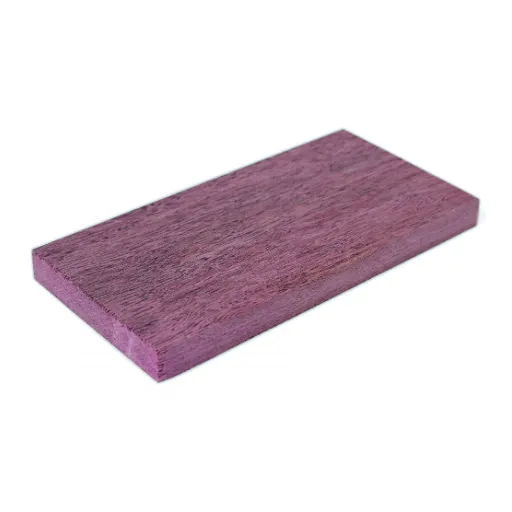
Finding good purple heart wood means chasing verified chains over bargain bins. Wild logs flood spot markets, but mills pushing FSC stamps charge 25–40% more for paperwork that actually holds up to audits. Skip the shortcuts unless you like surprises in grade and origin.
FSC certified vs wild harvested
FSC certified purple heart traces every log from stump to yard. Guyana and Brazilian concessions tag trees pre‑cut, with GPS coordinates and yield reports—essential if your client demands green building credits or hates CITES headaches. Expect longer lead times, 8–12 weeks versus 4 for spot buys.
Wild harvested tempts with price. Port‑of‑entry lots from Suriname or French Guiana hit yards unmarked, often mixed species or grades. No chain‑of‑custody means no LEED points, and customs flags random containers yearly. A 2025 crackdown banned 17% of incoming tropicals for origin gaps.
Quality flips the script. Certified flitches average fewer heart‑rot pockets—mills reject suspect logs upfront. Wild stock hides defects until quarter‑sawn, when 1 in 6 boards shows black streaks you can’t plane out. Pay for traceability or roll the dice.
Price per board foot by grade
FAS grade starts at $16–22/board foot for 4/4 thickness, kiln‑dried to 6–8% MC. Straight 8′ lengths with minimal sapwood command the high end; figure or crotch grain jumps 50% over flatsawn.
Selects drop to $12–17. Clearer faces, tighter knots allowed, perfect for knife scales or table bands. No.1 Common hits $9–13—sound defects OK for dimension parts or turnings where color trumps perfection.
Thickness shifts numbers fast. 6/4 jumps 27% over 4/4; 8/4 rare at $28+ for live edge slabs. Width matters too—12″ wide pulls premium versus 6″ rips. Bulk buys (500+ bf) shave 15%, but small orders carry $2–3 freight minimums.
Market swings hit exotics hard. Droughts in Guyana spiked 2025 prices 18% mid‑year; steady now but watch fuel surcharges on ocean freight. Compare to wenge at $14 average—purple heart holds value better on resale blanks.
Verify before wiring money. CO ask for CITES export docs, mill photos, and MC readings. Cheap FAS that planes to Selects exists. Wild lots without kiln tags risk case hardening or sticker stains. Source smart.
Frequently Asked Questions (FAQ)
-
Why does purple heart wood lose its color so fast?
Fresh purple heart wood oxidizes from brown to violet in days, but UV exposure fades it to dark brown or gray within 12–18 months outdoors. Indoors, it holds longer under UV‑blocking finishes. A tabletop inlay exposed to sunlight through windows turned ashy after 14 months despite sealing—heat the piece at 150°F for 4 hours pre‑finish to lock pigments early. -
Is purple heart wood safe to work with?
The dust irritates. Skin rashes and eye stinging hit after 45 minutes unprotected; wear N95 or P100 masks religiously. A woodturner planing 8 board feet without gloves got welts lasting 3 days. Gloves off for precision grip, but wash immediately—silica content dulls tools fast too, so swap carbide blades often. -
What’s the best finish for purple heart wood projects?
Dewaxed shellac first, then UV‑inhibitor poly in thin coats. Waterborne raises grain badly on this dense wood. A knife handle finished with boiled linseed oil and paste wax stayed vibrant 2 years with daily use; unsealed edges dulled fastest. Sand to 320 grit between coats or burnishing leaves swirl marks. -
How hard is purple heart wood to cut and plane?
Very. Janka 2,220 rating means interlocked grain tears out unless you use 80° helix heads or climb cut slowly. A tablesaw blade dulled after 27 feet of ripping 4/4 stock. Hand planes need green chromium oxide stropping; shallow 0.5 mm bites prevent fuzzy spots forever. -
Can I use purple heart wood for outdoor furniture?
Yes, but seal ends religiously. Rot resistance rivals teak, lasting 15+ years in contact, yet cupping hits wide panels without backer boards. Pergola posts held color 3 years under UV oil; decking silvered fully by year two. Small accents beat full exposure.
References
-
USDA Forest Products Laboratory. (2024). Wood Handbook: Wood as an Engineering Material – Chapter 4: Decay Resistance and Janka Hardness Ratings. https://www.fpl.fs.usda.gov/documnts/fplgtr/fplgtr190/chapter_04.pdf
-
The Wood Database. (2022). Purpleheart (Peltogyne spp.): Physical Properties, Machining Characteristics, and Safety Notes. https://www.wood-database.com/purpleheart/
-
Architectural Woodwork Institute (AWI). (2024). AWI 300 Performance Standards: Exotic Hardwood Applications and Finishing Requirements. https://awinet.org/standards
- Click here to read more.