
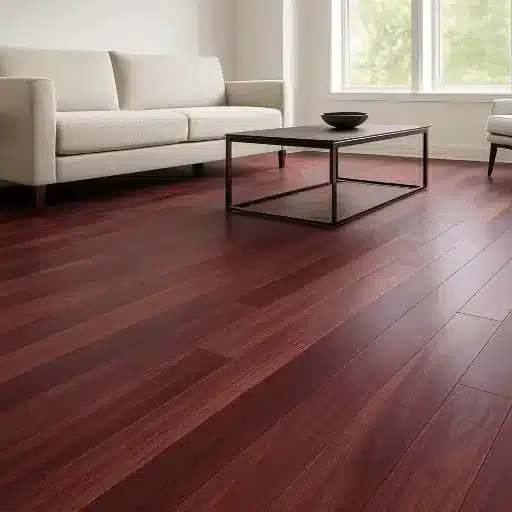
Purple Heart Wood Flooring: Pros, Cons, Cost & Installation
Purple heart wood flooring is one of the hardest, most durable hardwood floors you can install, and with proper care it lasts 30 to 50 years. It costs roughly twice as much as oak, its vivid violet color slowly fades to brown unless you protect it from UV light, and installation requires carbide tooling and experience. This guide walks you through every trade-off so you can decide if it’s right for your home.
Here’s the honest version: purple heart wood flooring is a statement piece, not a budget option. Homeowners who buy it usually fall in love with the color first, then learn the hard way that the color needs active management. The good news is that the wood itself is superb. It shrugs off scratches, dents, moisture, and termites, and it will outlast most finishes you put on it.
Most of what you’ll find online about purple heart flooring is scattered. Retailer pages skip pricing, forum threads argue about fading, and the trend pieces ignore what it costs to install. We’re going to fix that. You’ll leave this guide knowing exactly what purple heart wood flooring costs installed, how the color behaves, what installation involves, and how to buy it responsibly from certified sources.
Key Takeaways
- Purple heart wood flooring has a Janka hardness around 2,520 lbf, roughly 36% harder than white oak, giving it exceptional scratch and wear resistance for high-traffic areas.
- Installed cost typically runs $12 to $25+ per square foot, about double the cost of red oak flooring, and material alone runs $8 to $22 per board foot.
- The natural purple color fades to brown under UV light, but a water-based finish with UV inhibitors, window film, and rotation of rugs can slow the change for years.
- A well-maintained purpleheart floor lasts 30 to 50+ years, far longer than its finish, and sanding can restore the color when it fades.
- Buy from FSC-certified sources: while the genus isn’t CITES-listed, Peltogyne purpurea is Vulnerable in parts of its range, so certified sourcing matters.
What Is Purple Heart Wood Flooring?
Purple heart wood flooring is solid or engineered flooring made from the heartwood of Peltogyne trees, a tropical hardwood native to Central and South America. Known for its vivid violet color, extreme hardness, and natural rot resistance, it has become a premium choice for homeowners who want a floor no stain can imitate. It’s also called purpleheart, amaranth, violet wood, morado, or pau roxo.
The color is the headline. Fresh-cut purple heart looks dull gray-brown, then oxidizes to a rich eggplant purple within days of exposure to air and light. That transformation is part of its appeal, and it’s also the source of the biggest complaint you’ll read in reviews.
Where does flooring fit in the bigger picture? It’s one of the seven primary purple heart wood uses, alongside furniture, cutting boards, turning, and instruments. For a deep look at the entire species and its properties, start with our purple heart wood complete guide.
| Property | Purple Heart | White Oak | Red Oak |
|---|---|---|---|
| Janka hardness | ~2,520 lbf | ~1,360 lbf | ~1,290 lbf |
| Average dried weight | ~56 lb/ft³ | ~48 lb/ft³ | ~44 lb/ft³ |
| Tangential shrinkage | ~1.8% | ~8.9% | ~8.6% |
| Natural durability | Class 1 (rot/termite resistant) | Durable | Moderate |
| Color | Vivid purple, fades with UV | Light brown | Reddish-brown |
That stability number deserves attention. Purple heart has very low tangential shrinkage around 1.8%, which means it doesn’t move much with humidity once properly dried and acclimated. For flooring, that translates to tight, stable joints and fewer gaps over time. If you want the full technical data sheet, The Wood Database keeps the industry-standard reference on purpleheart.
Purple Heart Wood Flooring Pros and Cons
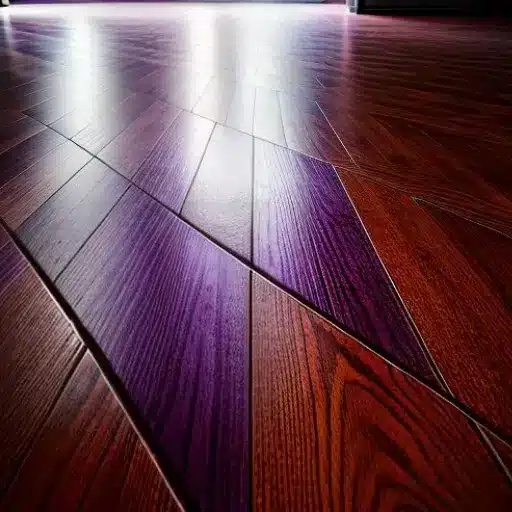
Let’s lay out the trade-offs plainly, because purple heart is not the right choice for every floor.
Pros
- Exceptional hardness. At roughly 2,520 lbf Janka, purple heart is about 36% harder than white oak and lands in the same league as hickory and pecan. It resists scratches, scuffs, and wear from pets, kids, and heavy foot traffic.
- Long lifespan. A well-maintained purple heart wood floor can last 30, 40, or even 50+ years. The wood outlasts the finish.
- Natural resistance. It’s rated Class 1 for durability, meaning it resists rot, decay, fungi, and dry-wood termites without chemical treatment.
- Dimensional stability. Low shrinkage means stable joints and fewer seasonal gaps when properly acclimated.
- A color you can’t fake. The natural violet runs all the way through the wood, so it won’t wear away like a stain on lighter wood.
Cons
- High cost. Installed, you’ll typically pay $12 to $25+ per square foot, about double red oak. Material alone runs $8 to $22 per board foot.
- Color fade. Without UV protection, the purple slowly turns brownish-purple and then dark chocolate. You can slow it, but you can’t stop it.
- Hard to work. It dulls blades quickly, can tear out, splinters easily, and exudes a gummy resin when overheated by dull tools. Carbide tooling is non-negotiable.
- Heavy. At roughly 56 pounds per cubic foot, it’s noticeably heavier than oak, which makes handling, shipping, and installation more demanding.
- Dust is a sensitizer. Sanding and cutting produce dust that can cause skin and respiratory irritation, so proper PPE is required.
- Harder to source locally. Most big-box stores don’t stock it, so you’ll order from specialty suppliers and wait for delivery.
Is Purple Heart Wood Good for Flooring?
Yes, purple heart wood is good for flooring, but it’s not the best choice for every room or budget. It’s excellent for high-traffic areas, accent strips, borders, and inlays where its hardness and unique color earn their premium. It’s a poor fit for sun-drenched rooms without UV management, tight budgets, or DIY installers without the right tooling and experience.
Here’s a three-question filter to help you decide:
- Can you budget for it? If installed cost is the deciding factor, purple heart probably isn’t the floor for you. Consider engineered hardwood or a domestic species instead.
- Can you manage the light? If a room has large, unshaded windows, plan for UV-filtering film, UV-inhibiting finishes, and rug rotation, or accept that the purple will mellow.
- Who’s installing it? Purple heart punishes dull blades and heavy-handed technique. A pro with carbide tooling will save you money and frustration.
How Much Does Purple Heart Wood Flooring Cost?
This is the question everyone asks, so let’s be direct. Expect to pay $12 to $25+ per square foot installed for purple heart wood flooring in 2026, and up to $30+ for premium grades or complex patterns. That’s roughly two to three times the cost of red oak, which typically installs for $6 to $12 per square foot.
Material is only part of the equation. Here’s how the numbers break down.
| Cost Component | Price Range |
|---|---|
| Rough lumber | $8 to $16 per board foot |
| Surfaced lumber (S2S) | $12 to $22 per board foot |
| S4S (surfaced four sides) | $8 to $12 per board foot |
| FAS grade (select) | $16 to $22 per board foot |
| FSC-certified premium | 25-40% more than standard |
| Professional installation | $4 to $8 per square foot |
| Subfloor prep and demo | $1 to $3 per square foot |
Why is it so much more than oak? Three reasons: it’s an imported tropical hardwood, it’s denser and heavier to ship, and it’s harder to cut and install, which pushes labor costs up. A 400-square-foot living room in purple heart can easily run $6,000 to $10,000 installed, versus $3,000 to $5,000 for red oak.
Buying tip: kiln-dried material with a moisture content around 6-8% is worth paying for. Wet or poorly dried purple heart moves after installation, and you don’t want gaps appearing six months in.
First CTA: Want to price responsibly sourced purple heart wood for your project? Get a quote from our sourcing team →
Does Purple Heart Wood Flooring Fade?
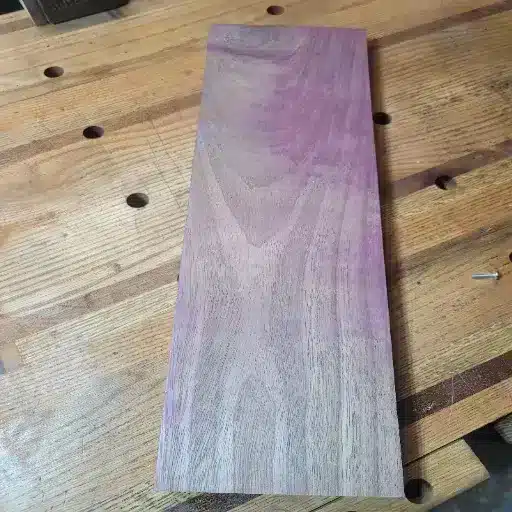
Yes, purple heart wood flooring fades, and this is the single biggest objection you’ll hear from owners. The vivid violet is caused by natural pigments that oxidize, and UV light accelerates the change. Unprotected, a purple heart floor will shift toward brownish-purple within a year or two and can gray noticeably if it’s hit by direct sunlight for years.
Let’s be clear about something: no finish stops the fade completely. Every finish slows it, and some slow it much better than others. The difference is the difference between a floor that stays purple for years and one that turns brown in eighteen months.
Here’s the color management system that works, used by installers who know this wood:
- Use a water-based finish with UV inhibitors. Water-based polyurethane holds purple better than oil-based finishes, which can pull the color toward brown. Ask for a UV-inhibiting topcoat.
- Seal all four sides before installation. Sealing the ends and back reduces moisture exchange and slows oxidation from underneath.
- Add UV-filtering window film in rooms with direct sunlight. This is the single most effective thing you can do.
- Rotate rugs and furniture so the floor ages evenly and no patch stays permanently covered.
- Do a sun test before you commit. Lay sample boards in the room for two to four weeks and see how the color settles. It’s cheap insurance.
Some owners lean into the aging. The deep brownish-purple that develops over years is still beautiful, and it’s a more “mature” look than the electric violet of a fresh install. If the purple is non-negotiable, plan on sanding and refinishing every few years to restore it. That works, because the color runs through the entire thickness of the wood.
Installing Purple Heart Wood Flooring
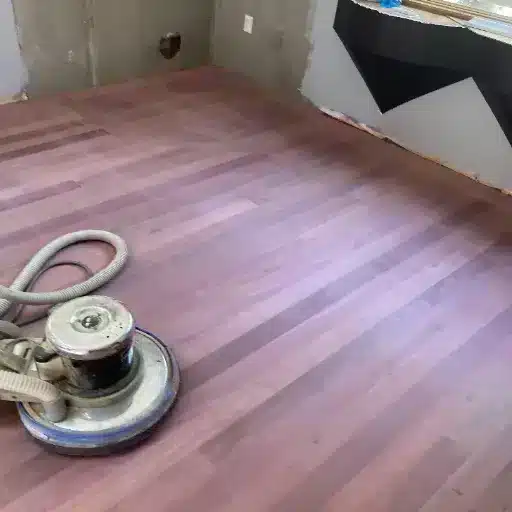
Installing purple heart wood flooring is a job for someone who respects the wood. Here’s what’s involved and where beginners most often go wrong.
Acclimation is step one. Let the flooring sit in the room, unboxed, for at least a week before installation so it reaches equilibrium with your home’s humidity. Purple heart is dimensionally stable once acclimated, but installing it cold is how you get cupping and gaps later.
Use carbide-tipped blades, sharp. Purple heart dulls steel blades fast, and a dull blade generates heat that melts the natural resin into a gummy mess on your tools. Carbide, slow feed rates, and light passes keep things clean. The same applies to router bits if you’re cutting tongues or profiles.
Pre-drill everything. The wood is hard enough that nails and screws will split it if you drive them without pilot holes. Pre-drilling is not optional.
Expect splintering. Purple heart is prone to tear-out and splinters, especially at edges and ends. One installer we know pulled more than twenty splinters out of his hands after a single day milling it. Wear gloves, and use a sharp blade to reduce tear-out.
Plan for tight joints. Because the wood has low tangential shrinkage, it won’t swell to close gaps the way oak will. If you install with gaps, they stay gaps. Set joints tight at installation.
Watch the subfloor. The floor is heavy, so leveling and proper subfloor prep matter more than with lighter species. Follow the manufacturer’s or NWFA’s recommendations for fastening and expansion.
Protect yourself. Purple heart dust is a known sensitizer. Wear an N95 or P100 respirator, gloves, and eye protection when cutting and sanding, and use dust collection.
For a visual walkthrough of how this wood behaves on the saw and under the sander, this video covers the essentials.
Purple Heart Wood Flooring vs. Engineered and Other Woods
Should you go solid purple heart, an engineered alternative, or a different species entirely? Here’s a practical comparison.
| Species | Janka (lbf) | Installed Cost/Sq Ft | Color Stability | Best Use |
|---|---|---|---|---|
| Purple heart | ~2,520 | $12-$25+ | Fades to brown with UV | Accents, high-traffic, statement floors |
| Ipe | ~3,680 | $10-$20 | Brown, stable | Outdoor and heavy-wear floors |
| Hickory | ~1,820 | $6-$12 | Stable | Rustic full-room floors |
| White oak | ~1,360 | $7-$14 | Stable | Classic full-room floors |
| Walnut | ~1,010 | $7-$14 | Stable, darkens slightly | Soft, elegant floors |
| Padauk | ~1,725 | $8-$15 | Orange-red fades to brown | Accent strips, inlays |
Solid purple heart is the premium, dramatic choice, but many buyers are better served by engineered wood flooring with a purple heart veneer. Engineered format is more dimensionally stable over radiant heat, installs as a floating floor with less skill, and costs less to install while showing the same face. The trade-off is that you can refinish an engineered purple heart floor fewer times than a solid one.
If you’re drawn to the red-orange warmth of tropical exotics, our purpleheart vs padauk comparison breaks down how these two popular accent woods differ on color, hardness, workability, and price.
Design tip: the smartest way to use purple heart in most homes is as accent strips, borders, inlays, or a herringbone feature, set into a field of a stable domestic species like white oak. You get the wow factor without paying full-room exotic prices, and the color is easier to manage in smaller doses.
Maintaining and Refinishing Purpleheart Floors
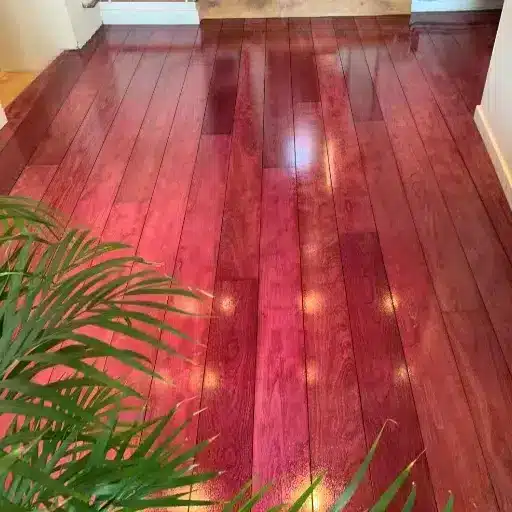
Day-to-day care for purple heart wood flooring is straightforward, and the wood is forgiving. The finish is usually what fails first, not the wood itself.
- Sweep or vacuum regularly to remove grit, which is the main cause of surface scratches. This matters more than the wood’s hardness.
- Clean spills promptly with a damp (not wet) mop and a wood-safe cleaner. Purple heart resists moisture well, but standing water on the finish is still a problem.
- Use felt pads under furniture and area rugs in high-traffic paths.
- Reapply finish as needed, especially in sun-exposed areas, where the UV topcoat breaks down faster.
How long does purple heart wood flooring last? With proper care, 30 to 50+ years is a realistic expectation. The distinction that matters: the wood will outlast the finish, so the real maintenance cycle is finish care, not wood care.
Refinishing is where this species stands apart. Because the color runs through the whole thickness, sanding a faded purple heart floor brings the purple back. A professional screen-and-coat or full sand-and-refinish every 5 to 10 years can restore the color and protect the wood for another decade. Just know that the wood is hard, so refinishing is slower and harder on sanding equipment than oak or maple, and it’s a job best left to a pro with experience on tropical hardwoods.
Is Purpleheart Flooring Sustainable?
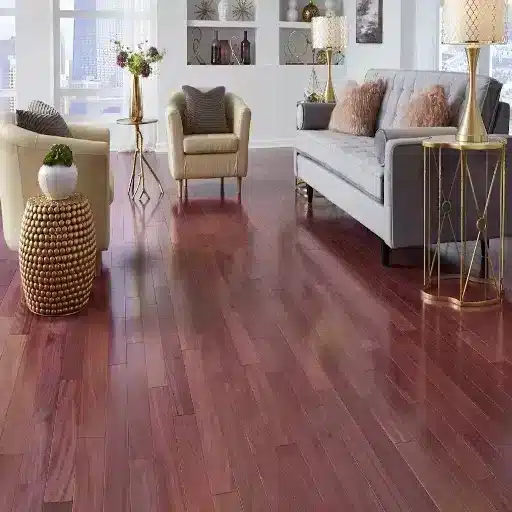
Here’s the part most articles skip, and it matters. Purple heart is not currently listed on the CITES appendices, and the Peltogyne genus as a whole isn’t on the global IUCN Red List. But that’s not the whole story.
One widely harvested species, Peltogyne purpurea, is assessed as Vulnerable in parts of its range, including Costa Rica, Panama, and Colombia, and it’s legally protected in Costa Rica. In the Brazilian Amazon, where most commercial supply comes from, there are real concerns about overharvesting and illegal logging in some areas. The bottom line: certification matters, and you should buy from suppliers who can show it.
What to look for when you buy:
- FSC certification. The Forest Stewardship Council certifies forests that are managed responsibly and tracks the chain of custody from forest to your door. FSC-certified purple heart costs 25-40% more, and it’s worth every dollar.
- Legal-harvest documentation. Ask for proof the wood was legally harvested and exported.
- A supplier who answers the question. A source that can’t tell you where the wood came from is a red flag. At VitalWood Global, our sourcing team verifies certifications and legal provenance before any exotic wood ships, so you can build with confidence.
Here’s the thing about responsible sourcing: a purple heart floor is a 30 to 50-year commitment. Spending a little more upfront on certified, kiln-dried material protects both your investment and the forest it came from. That’s a trade worth making.
Frequently Asked Questions
Is purple heart wood good for flooring?
Yes, purple heart wood makes excellent flooring for high-traffic areas and accent applications. It’s extremely hard and scratch-resistant, lasts 30 to 50 years, and offers a natural purple color no stain can match. It’s not ideal for tight budgets, sun-drenched rooms without UV protection, or DIY installers without carbide tooling.
Does purple heart wood flooring fade?
Yes. The purple color slowly fades to brown under UV light. Water-based finishes with UV inhibitors, window film, and rug rotation slow the change, but no finish stops it completely. Sanding can restore the color because it runs through the wood.
How much does purple heart wood flooring cost?
Installed, expect $12 to $25+ per square foot in 2026, about double the cost of red oak. Material runs $8 to $22 per board foot, and FSC-certified grades cost 25-40% more.
How long does purple heart flooring last?
With proper care, 30 to 50+ years. The wood outlasts the finish, so the real maintenance cycle is refinishing every 5 to 10 years to restore color and protection.
Can you refinish purple heart wood floors?
Yes. Because the color runs through the wood, sanding a faded floor restores the purple. Refinishing is harder than on oak or maple due to the wood’s density, so a professional is recommended.
Is purple heart harder than oak?
Yes. Purple heart has a Janka hardness around 2,520 lbf, roughly 36% harder than white oak and 95% harder than red oak. It also has very low tangential shrinkage, making it dimensionally stable.
Is purpleheart flooring sustainable?
The genus isn’t CITES-listed, but Peltogyne purpurea is Vulnerable in parts of its range. Buy FSC-certified material with documented legal provenance to ensure your floor is responsibly sourced.
Final Verdict: Is Purple Heart Wood Flooring Worth It?
Let’s pull it together. Purple heart wood flooring is a stunning, exceptionally durable floor that can last 50 years, but it’s expensive, hard to install, and its signature color needs active management.
Here’s who it’s for: homeowners who want a one-of-a-kind floor, have the budget, can control light exposure, and will hire a pro with carbide tooling. It’s also ideal for accent strips and borders in an otherwise conventional floor.
Here’s who should pass: anyone shopping on price, rooms with heavy direct sunlight and no UV plan, and DIY installers who don’t have the tools or experience to work a tropical hardwood.
If you do it right, you get a floor that draws a reaction from every guest who walks in, one that shrugs off decades of traffic and keeps a touch of its violet glow for years. If you’re ready to explore responsibly sourced purple heart wood for your project, contact VitalWood Global for a quote. Our team sources certified exotic hardwoods and can walk you through grades, pricing, and installation planning. And if you want the whole picture on this remarkable species first, our purple heart wood complete guide covers everything from tree to finished project.