
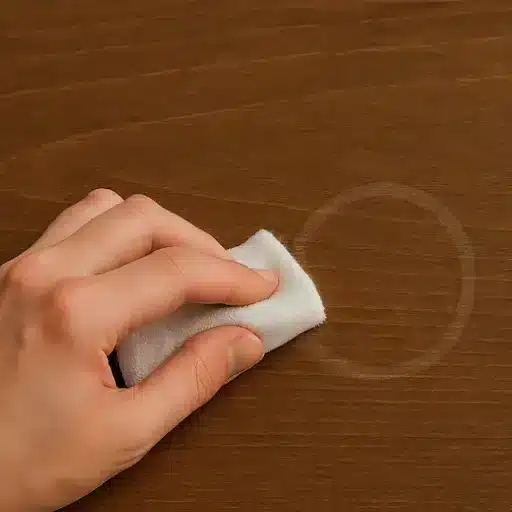
Best Water Stain Remover for Wood: How to Choose the Right One
The best water stain remover for wood is not a single bottle. It is the product that matches your stain and your finish: a white-ring remover for moisture trapped in the finish, an oxalic acid wood bleach for dark iron and tannin stains, or a tannin spot remover for oiled wood. Pick the wrong one, and you can bleach, dull, or strip the finish you were trying to save.
Dana stood in the hardware aisle staring at three labels: “wood bleach,” “ring remover,” and “tannin spot remover.” Her oak dining table had a pale ring from a sweating glass, and she grabbed the bottle that sounded strongest. Ten minutes later, the ring was gone, but so was the warm color around it. The fix cost more than the stain. This guide is part of our complete resource on how to remove water stains from wood. By the end, you will know how to diagnose the mark, decode the label, and choose the safest remover that actually works.
If the stain has already gone too deep for any remover, explore VitalWood Global’s custom wood solutions for replacement boards, veneer, and panels that match your project.
Key Takeaways
- The best water stain remover for wood depends on the stain type and the finish, not on brand strength.
- White or cloudy rings sit in the finish and respond to ring removers, oil-based sprays, or simple DIY methods.
- Dark or black stains need wood bleach: oxalic acid for iron and tannin marks, two-part bleach for natural color, peroxide for mold.
- Never mix oxalic acid with chlorine bleach, and never neutralize an acid with vinegar.
- When veneer bubbles, the substrate swells, or mold spreads, replacement beats any remover.
First, Match the Remover to the Stain
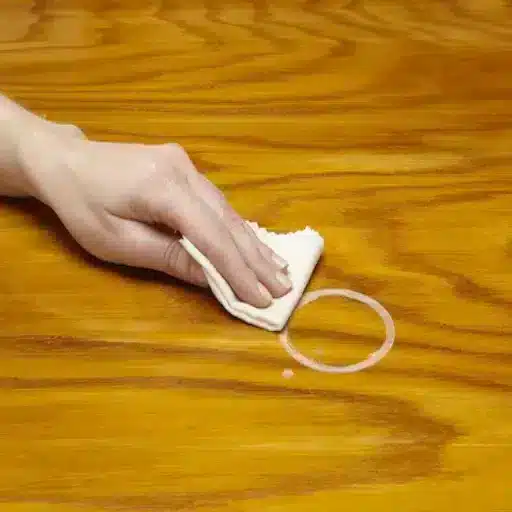
White or cloudy stains
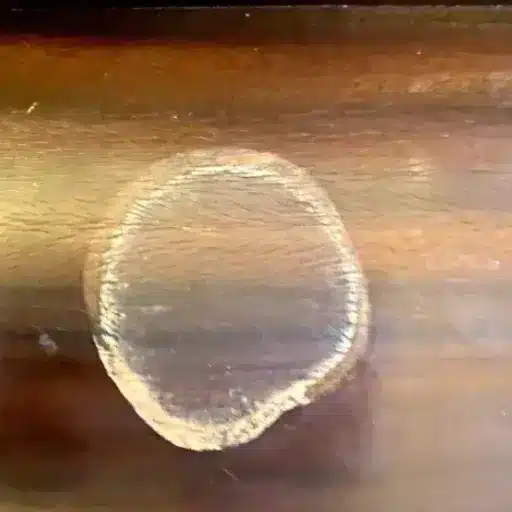
White rings, hazy patches, and foggy spots mean moisture is trapped in the finish, not the wood. These are the easiest marks to treat because you do not have to reach the wood fibers. A dedicated white ring spot remover, an oil-based water mark spray, or even a household method usually clears them.
Run a fingertip across the spot. If it feels smooth and level with the surrounding surface, the finish is intact and the moisture is underneath it. That is a good candidate for a gentle ring remover rather than a harsh bleach.
Dark or black stains
Dark stains mean water reached the wood and reacted with tannins or with iron from nails and hardware. Oak, walnut, cherry, and mahogany are especially prone to gray or black discoloration. These stains live inside the wood, so a surface ring remover will do almost nothing.
You need a wood water stain remover with real chemistry, usually oxalic acid or a two-part bleach.
Why does finishing type change everything
The same bottle behaves differently on shellac, lacquer, polyurethane, oil, and wax. A solvent that lifts a ring from shellac can dissolve a lacquer finish. An abrasive that polishes polyurethane can scratch a soft oil finish. Before you buy anything, identify the finish.
Test in a hidden spot. Dampen a cotton swab with denatured alcohol and rub a small area. If the finish softens, it is shellac. If it does not react, try lacquer thinner on another hidden spot. If neither solvent affects it, the finish is likely polyurethane, varnish, or a modern catalyzed coating.
How to Read a Water Stain Remover Label
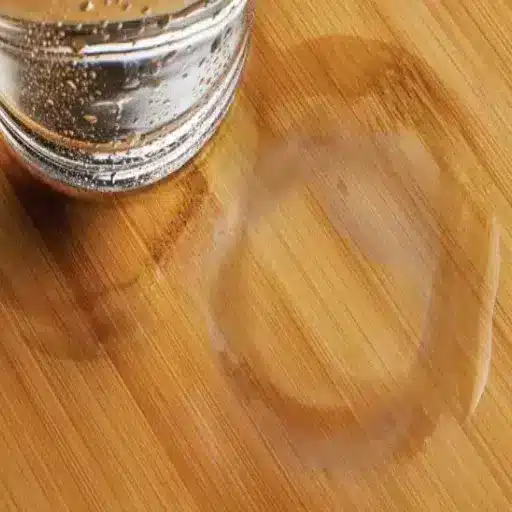
Ring remover, wood bleach, brightener, or tannin remover
Labels are marketing, not chemistry, so learn what they usually mean:
- Ring remover or water mark remover: a mild blend of oil, solvent, and fine abrasive for white rings in the finish.
- Wood bleach: often oxalic acid, but sometimes a two-part kit. Read the active ingredient.
- Brightener: usually an oxalic acid deck cleaner that also lifts gray weathering and iron stains.
- Tannin spot remover: a targeted product for dark tannin marks, common on oiled oak and walnut.
Active ingredients to look for (and avoid)
For white rings, look for mineral oil, lemon oil, or a fine polishing compound. For dark stains, look for oxalic acid, sodium hydroxide paired with hydrogen peroxide, or hydrogen peroxide alone. Avoid anything that lists chlorine bleach for furniture, since it is harsh on fibers and produces toxic byproducts.
If a label hides the active ingredient, treat it as a gamble. The best water stain removers for wood tell you exactly what is inside so you can match the chemistry to the problem.
Best Water Stain Remover for Wood: White Rings
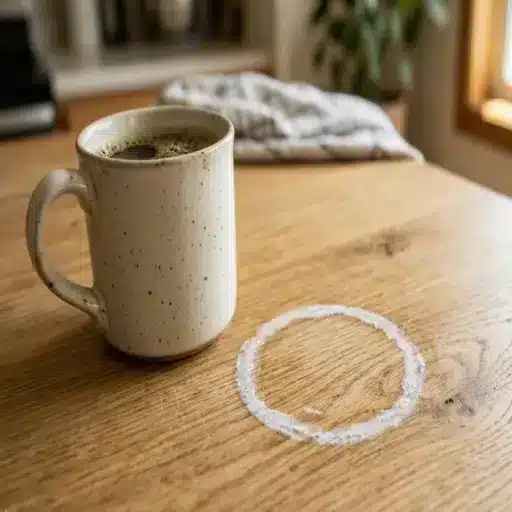
Oil-based sprays and white ring spot removers
Oil-based water mark sprays and white ring spot removers work by displacing trapped moisture and re-oiling the finish. They are the safest first purchase for pale rings on finished furniture. Apply a small amount to a soft cloth, rub with the grain, let it sit, then buff dry. Repeat once if a faint haze remains.
These products shine on finished tables, dressers, and cabinets.
Waxes and polishes that lift and protect
Furniture waxes and beeswax blends can lift light white marks while leaving a protective layer behind. The solvent in the wax draws out moisture, and the wax itself helps resist future rings. Buff after a few hours for the best result.
Waxes are a good fit for traditionally finished or waxed wood. They are not strong enough for dark stains and should not be layered over silicone sprays, which can block future refinishing.
When a DIY method works just as well
For a fresh white ring, a hair dryer on low heat or a low iron over a cotton cloth often matches a store-bought remover. Mayonnaise, petroleum jelly, and a baking soda paste can also displace moisture. These cost almost nothing and are worth trying before you spend money.
Be careful with heat, since too much can blur the finish or loosen veneer adhesive.
Soft CTA: Still shopping for the right bottle? The comparison table near the end of this guide matches each stain and finish to a product category so you buy once.
Best Water Stain Remover for Wood: Dark Stains and Bleaches
Oxalic acid for iron and tannin stains
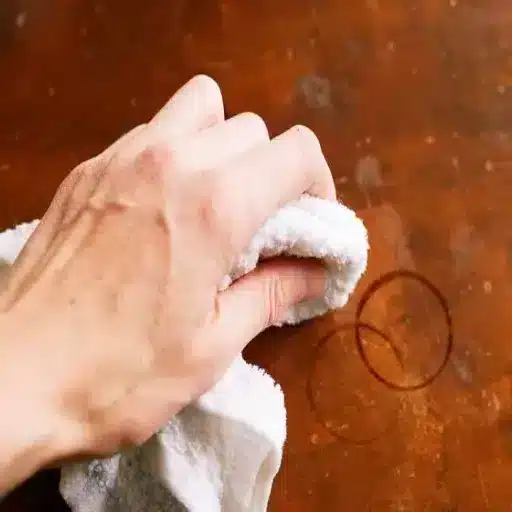
Oxalic acid is the workhorse for black water stains, nail rings, and gray weathering. It works by reducing iron compounds into a colorless, water-soluble form that rinses away. According to Popular Woodworking, it is one of the most useful bleaches in a restoration shop.
Oxalic acid cannot lighten wood beyond its natural color, and it will not remove dye stains. You must strip the finish first, since finish and wax block penetration. Treat the whole surface, not just the spot, so the color stays even.
Two-part (A/B) wood bleach for natural color
Two-part, or A/B, wood bleach combines sodium hydroxide with strong hydrogen peroxide. Mixed together, they trigger a strong oxidizing reaction that removes the wood’s natural color. This is the right choice when you want a lighter, even tone across a whole surface, not when you want to erase a single ring.
Two-part bleach is ineffective on dye stains and works fastest on low-tannin woods like beech. It is overkill for a single dark ring and risky on thin veneer, because the color change is hard to reverse.
Hydrogen peroxide and chlorine bleach
Hydrogen peroxide, sold from 3% up to 35%, releases oxygen radicals that break down dark pigments. It is gentle on fibers and works especially well on high-tannin woods like oak and mahogany that do not always respond evenly to two-part bleach. Apply several light coats rather than one heavy soak.
Chlorine bleach and calcium hypochlorite are stronger on dye stains but harsher on wood and produce toxic fumes. Reserve them for mold or dye problems, and never use them as a first choice for a water ring.
Oxalic vs. two-part vs. peroxide: a quick comparison
| Bleach type | Best for | Cannot do | Caution |
|---|---|---|---|
| Oxalic acid | Iron and tannin black stains, nail rings | Lighten past natural color; dye stains | Strip finish first; neutralize after |
| Two-part (NaOH + peroxide) | Removing natural color evenly | Dye stains; spot repairs | Hard to reverse; risky on veneer |
| Hydrogen peroxide | High-tannin woods, mold, gentle lightening | Heavy iron stains | Weaknesses in light and heat |
| Chlorine bleach | Dye stains, mold | Delicate or antique finishes | Toxic fumes; harsh on fibers |
Best Removers by Finish Type
Polyurethane and modern sealed finishes
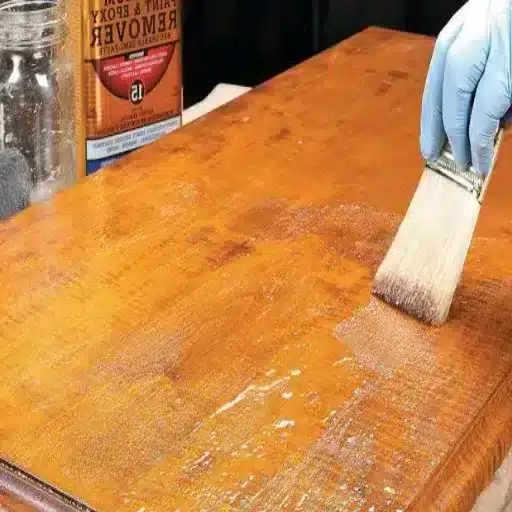
Polyurethane does not dissolve in alcohol or lacquer thinner, so ring removers and oil-based sprays are your safest tools. For a dark stain under a sealed finish, you will need to strip the small area, treat the wood, and reapply a matching clear coat. Avoid strong solvents on the surrounding finish.
Shellac and lacquer
Shellac and nitrocellulose lacquer are common on older and mid-century pieces. They respond to gentle solvent amalgamation, where a compatible solvent softens the finish so a fine abrasive can level the damaged layer. This requires a light touch and good ventilation.
Oiled and waxed wood
Oiled and waxed finishes pair well with tannin spot removers, which can lift dark marks without sanding in many cases. Osmo UK notes that matching the cleaner to the finish, from a light spray cleaner to a dedicated tannin remover, gives the best results on oiled wood. Re-oil the area after treatment so the sheen blends in.
Veneer and antiques: when no remover is safe
Veneer is a thin slice of real wood, often 0.5 to 2 mm thick, glued to a substrate. Aggressive chemicals and sanding can cut through it in seconds. Antiques add another risk, since the wrong solvent can strip a historic finish and destroy value.
For delicate surfaces, restorers often favor purpose-made ring removers and warn against DIY hacks like ironing, mayonnaise, or olive oil on valuable pieces. Restorate UK recommends matching the remover to the finish and avoiding abrasives and heat on antiques. For a full safe process, see our guide to how to remove water stains from wood veneer.
DIY vs. Commercial: An Honest Verdict
Where home remedies match commercial products
For fresh white rings sitting in the finish, home remedies are often comparable to commercial removers and far cheaper. Gentle heat, mayonnaise, and a baking soda paste all displace moisture from the finish. On a recent ring, you can reasonably try these before spending money.
Marcus spilled a glass of ice water on his sealed maple coffee table and caught it within the hour. A low-heat pass with a hair dryer lifted the ring completely. He never opened his wallet.
Where commercial chemistry wins
Dark, set-in stains are where DIY underperforms. Household acids and oils cannot reach the iron and tannin discoloration inside the wood. Targeted chemistry, like oxalic acid for iron stains or a tannin spot remover for oiled wood, is more predictable and often faster than repeated home attempts.
Cost, time, and risk tradeoffs
DIY is cheap and low-toxicity but limited and slow on deep stains. Commercial removers cost more, and some are caustic, yet they are more reliable on the stains that actually need them. The smart move is to start gently, then step up to the right chemical only when the stain demands it.
How to Use Any Wood Water Stain Remover Safely
Identify the finish and patch test
Always test the remover in a hidden spot and wait several minutes. Watch for softening, dulling, color change, or raised grain. A five-minute test can save a whole tabletop.
Application basics
Work with the grain, not across it. Use thin, even coats rather than one heavy soak. For bleaches, strip the finish first and treat the entire surface so the color stays uniform.
Neutralize, rinse, and re-finish
Oxalic acid and two-part bleaches must be neutralized after use. Rinse the area with a baking soda solution or a dilute household ammonia solution, then rinse again with clean water and let it dry fully. Never use vinegar to neutralize an acid, since vinegar is also an acid and will not do the job.
Once the wood is dry, sand lightly with fine paper to smooth raised grain, then apply a matching stain and a clear finish. If the damage goes beyond a surface stain, our guide to how to refinish water damaged wood walks through the full repair.
PPE, ventilation, and disposal
Wear nitrile gloves, eye protection, and a mask when mixing powders or working with strong chemicals. Work in a well-ventilated area, keep products away from children and pets, and store them in their original labeled containers. Dispose of leftover solution according to local hazardous-waste rules, and never pour mixed bleach down a drain that may hold other cleaners.
Common Mistakes That Make Stains Worse
Mixing chemicals
Never mix oxalic acid, often sold as wood bleach, with household chlorine bleach. The combination releases dangerous noxious fumes. Use one chemistry at a time, rinse thoroughly, and let the surface dry before trying anything else.
Over-wetting and over-sanding
Adding more water to a water stain sounds counterintuitive, and it is. Soaking the area can swell the substrate, loosen adhesive, and create new stains. Heavy sanding is just as risky, especially on veneer, where a few passes can expose the substrate beneath.
Skipping neutralization
Leaving active bleach in the wood keeps the reaction going and can weaken fibers or discolor the new finish. Neutralize, rinse, and dry every time. This one step separates a clean repair from a blotchy one.
Treating the symptom, not the leak
A remover clears the mark, but it does not fix the source. Find and stop the leak, the sweating pipe, or the humidity problem first. Otherwise the stain returns, sometimes worse than before.
When a Remover Is Not Enough
Stains too deep for chemistry
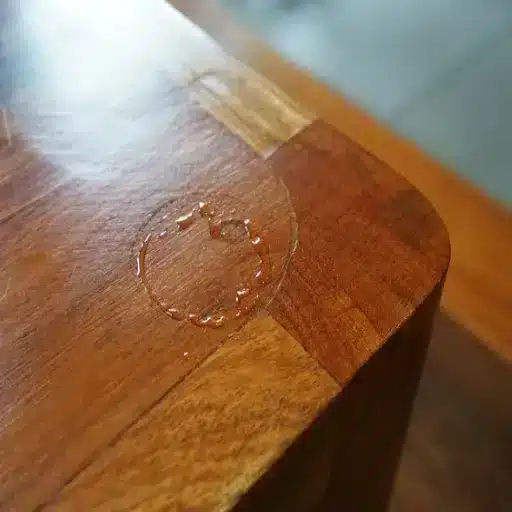
Some stains penetrate so deeply that even oxalic acid only lightens them. If the mark survives two or three careful treatments, more chemistry will not help. At that point, sanding and refinishing, or replacing the affected board, is the honest path.
Bubbled veneer, swollen substrate, and mold
Bubbles mean the veneer adhesive has failed. A soft or swollen substrate means the core has absorbed too much water. Mold that spreads beyond a small patch needs remediation, not a ring remover. None of these are stain problems anymore.
Replacing with quality material
When the damage is structural or widespread, replacing the board, veneer, or panel is safer and often cheaper than repeated repair attempts. Quality, properly finished wood also resists staining in the first place, which lowers the chance you face the same problem again.
Lena tried three rounds of oxalic acid on a walnut veneer sideboard that had sat under a leaking plant tray for weeks. The black stain faded, but the veneer had bubbled across the back edge and the particleboard core was soft. She stopped chasing the stain, replaced the top with a sustainably sourced panel, and sealed the edges. The sideboard looked better than before, and the new top has shrugged off two spills already.
Product Shortlist by Use Case
| Stain and finish | Recommended remover category | When it is the wrong choice |
|---|---|---|
| Fresh white ring on sealed finish | Oil-based water mark spray or DIY heat | Ring is dark or the finish is damaged |
| White ring on shellac or lacquer | White ring spot remover, gentle | Harsh abrasives or strong solvents |
| Black iron or tannin stain on bare wood | Oxalic acid wood bleach | Dye stains; finished surface |
| Even lightening of natural color | Two-part (A/B) wood bleach | Single spot; thin veneer |
| Dark stain on oiled oak or walnut | Tannin spot remover, then re-oil | Sealed polyurethane surface |
| Mold or organic discoloration | Hydrogen peroxide or chlorine bleach | Light surface rings |
| Antique or delicate veneer | Purpose-made ring remover or a pro | DIY heat, oils, or abrasives |
Hardwood floors follow similar rules, but the scale and moisture behavior differ.
FAQ
What is the best water stain remover for wood?
The best water stain remover for wood is the one matched to your stain and finish. Use a white ring spot remover or oil-based spray for pale rings in the finish, oxalic acid for black iron and tannin stains, and a tannin spot remover for oiled wood.
Does oxalic acid remove water stains from wood?
Yes, oxalic acid removes black water stains caused by iron and tannins, and it clears nail rings and gray weathering. It cannot lighten wood past its natural color, remove dye stains, or work through a finish, so strip the area first and neutralize after.
What removes black water stains from wood?
Black water stains usually need oxalic acid or a two-part wood bleach applied to bare wood. Strip the finish, treat the whole surface, neutralize with baking soda or ammonia solution, rinse, dry, and re-stain and seal.
Is wood bleach the same as oxalic acid?
Not always. Many products labeled “wood bleach” contain oxalic acid, but some are two-part kits that combine sodium hydroxide and hydrogen peroxide. Check the active ingredient, so you know which chemistry you are buying.
Can you use Bar Keepers Friend on wood water stains?
Bar Keepers Friend contains oxalic acid and can help with iron and tannin stains on bare wood. It is abrasive, so use it gently, keep it away from finished or delicate surfaces, and neutralize and rinse thoroughly.
Are commercial water stain removers better than home remedies?
For fresh white rings, home remedies often match commercial removers. For dark, set-in stains, commercial chemistry like oxalic acid or a tannin remover is more reliable. Start gently, then step up only if the stain needs it.
What is the best white ring remover for wood furniture?
A dedicated white ring spot remover or an oil-based water mark spray is the safest first choice for finished furniture. Furniture wax with a mild solvent can also lift light rings while adding protection.
When should I replace the wood instead of using a remover?
Replace the board, veneer, or panel when the veneer bubbles, the substrate is soft or swollen, mold spreads, or the stain survives several careful treatments. Quality replacement material resists future staining better than a damaged surface.
Conclusion
Choosing the best water stain remover for wood starts with diagnosis, not the store shelf. White rings sit in the finish and respond to gentle ring removers, oil-based sprays, or simple home methods. Dark stains live in the wood and need the right bleach: oxalic acid for iron and tannins, two-part bleach for natural color, or peroxide for mold and high-tannin woods.
Match the chemistry to the finish, test in a hidden spot, neutralize and rinse after bleaching, and never mix products. Start gently and step up only when the stain demands it. When the damage has moved beyond a surface mark, replacing the board, veneer, or panel with quality, sustainably sourced material is the smarter long-term fix.
For more help, explore our complete guide to removing water stains from wood, plus related guides on heat stains, white water stains, dark water stains, wood furniture, wood floors, wood veneer, and refinishing water-damaged wood.
Ready to repair or replace with quality, sustainable materials? Get in touch with VitalWood Global for custom wood solutions and expert guidance tailored to your project.