
Engineered Oak Flooring: 2026 Buying & Installation Guide
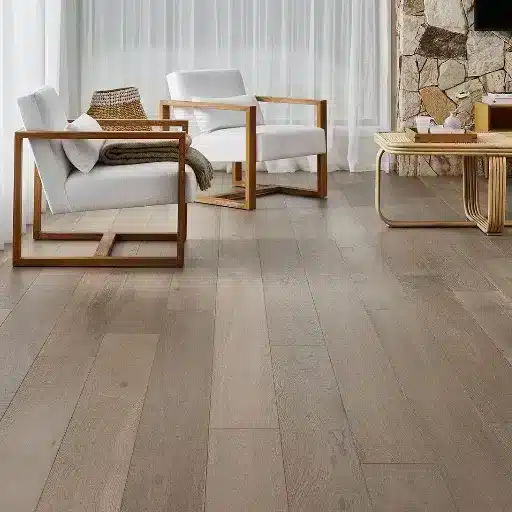
Engineered oak flooring is real wood flooring made with a thin oak wear layer bonded to a stable plywood or fiberboard core. It gives you the look and feel of solid oak with better resistance to moisture, wider plank options, and a lower installed cost. Most homeowners and commercial specifiers choose engineered oak when they want the warmth of oak over concrete, radiant heat, or below-grade spaces where solid oak would struggle.
That choice only works if you understand what separates a high-quality engineered oak floor from a budget product that will fail in a few years. Elena, an interior designer in Austin, learned this the hard way. She specified a cheap engineered white oak floor for a downtown condo renovation in 2023. The wear layer was just 1.2 mm, and the core was low-density fiberboard.
Within 18 months, the boards had chipped at every furniture transition, and the client wanted a full replacement. The difference between that product and a quality engineered oak floor with a 4 mm wear layer was only about $2 per square foot. The replacement cost far more than the original savings.
This guide explains how to choose engineered oak flooring with confidence. We’ll cover species, construction, finishes, costs, installation, and the sustainability certifications that matter. By the end, you’ll know how to evaluate wear layers, compare white oak and red oak, and decide whether domestic or European oak fits your project.
Key Takeaways
- Engineered oak flooring pairs a real oak wear layer with a stable engineered core, making it suitable for concrete, radiant heat, and wider planks.
- White oak is harder and more water-resistant than red oak, while European oak often offers longer planks and more character grading.
- A wear layer of 3-4 mm or more allows light refinishing and extends the floor’s useful life.
- Total installed costs range from $8−$16 per square foot depending on species, grade, finish, and installation method.
- FSC-certified and low-VOC engineered oak flooring supports healthier indoor air quality and responsible forestry.
What Is Engineered Oak Flooring?
Engineered oak flooring is built in layers. The top layer is a thin slice of real oak, called the wear layer or veneer. Below that sits a core made of plywood, high-density fiberboard, or stone-polymer composite. The bottom layer, or backing, balances the plank and helps prevent warping.
This layered construction gives engineered oak an advantage over solid oak in environments where wood movement is a problem. The cross-directional plies in the core resist expansion and contraction caused by humidity changes. That stability means engineered oak can be installed over concrete slabs, below-grade rooms, and radiant heat systems where solid oak would gap or cup.
The wear layer determines how long the floor will look good. A 2 mm wear layer can be screened and recoated but not fully sanded. A 3-4 mm wear layer can usually handle one or two refinishes over decades. A 6 mm wear layer behaves much like solid oak and can be refinished multiple times.
Not all engineered oak is equal. Lower-end products may use rotary-peeled veneers that look less like natural solid wood, or cores that absorb moisture and swell. High-quality products use sawn-cut veneers from slower-grown oak, which gives clearer grain and better stability.
If you are new to engineered wood in general, our pillar guide on engineered wood flooring explains the full category, including how engineered products compare to laminate and solid hardwood.
Why Choose Engineered Oak Over Solid Oak?
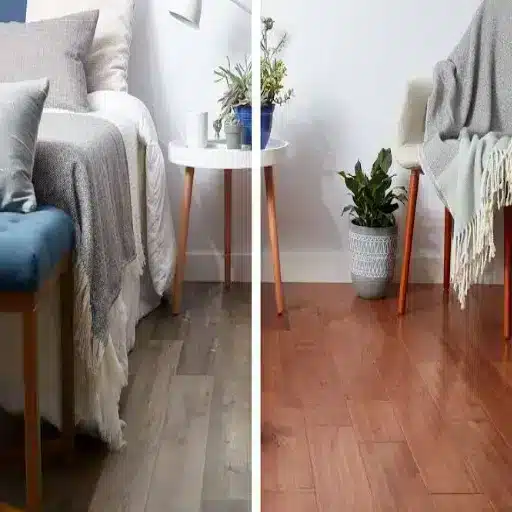
Oak is the most popular hardwood flooring species in North America for good reason. It is hard, attractive, and accepts stain well. Engineered oak takes those benefits and adds practical improvements for modern construction.
Stability in Changing Environments
Solid oak expands and contracts across the grain with humidity changes. In dry winters, boards shrink and create gaps. In humid summers, they swell and can cup. Engineered oak’s layered construction limits this movement because the plies run in alternating directions. The result is a floor that stays flatter across seasons.
Wider Planks Without the Risk
Wide solid oak planks are beautiful but risky. The wider the board, the more it moves. Engineered oak lets you install planks 7 inches, 9 inches, or even wider without the same seasonal drama. For more on this style, see our guide to wide plank engineered wood flooring.
Better for Concrete and Radiant Heat
Solid oak cannot be glued directly to concrete because moisture moves through the slab. Engineered oak can. It also performs better over radiant heat, where daily temperature swings stress solid wood.
Lower Installed Cost
Engineered oak typically costs 20-40% less installed than solid oak of the same species. You get the visible surface you want while using less slow-growing hardwood overall.
Sustainability Benefits
Because engineered oak uses a thin veneer of precious oak over a fast-growing core, it stretches timber resources further. When the core is made from certified plywood and the adhesive is low-VOC, the environmental profile improves further.
Oak Species: White Oak, Red Oak, and European Oak
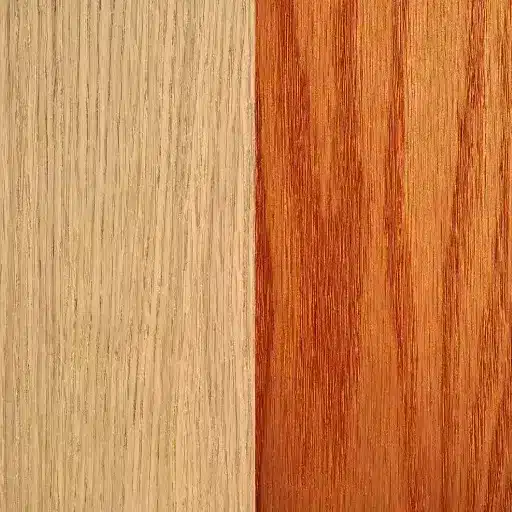
The word “oak” covers many species with different colors, hardness, and grain patterns. The three most common choices for engineered flooring are white oak, red oak, and European oak.
White Oak
White oak has a Janka hardness rating of about 1,360 lbf, making it one of the hardest domestic flooring species. Its grain is tight and straight, and its natural color ranges from light tan to medium brown. White oak is also more water-resistant than red oak because its pores are plugged with tyloses, a natural barrier that slows moisture movement.
Engineered white oak flooring is the top choice for high-traffic homes, kitchens, and commercial spaces. It takes stain evenly and works well with both modern gray-washed finishes and traditional honey tones.
Red Oak
Red oak has a Janka rating of about 1,290 lbf and a more pronounced, open grain than white oak. Its natural color leans toward warm pink and reddish-brown tones. Red oak is slightly softer than white oak and absorbs water more readily, so it is less ideal for kitchens or entryways.
Red oak is often chosen for traditional interiors where warmth and visible grain are desired. It is also usually less expensive than white oak, which can matter in large projects.
European Oak
European oak, sometimes called French oak or English oak, tends to have a longer growing season and more varied grain. Planks are often longer and wider than North American options. European oak engineered flooring is popular for high-end residential and hospitality projects where a more rustic or character-grade look is wanted.
European oak is not a different species in the botanical sense, but the slower growth and different forestry practices create planks with distinct color variation and figuring. Many designers choose European oak for its natural tannins, which react beautifully with reactive stains and fuming.
Grades, Finishes, and Styles

Once you choose a species, the next decisions are grade, finish, and plank dimensions.
Wood Grades
- Select grade: Few knots and minimal color variation. Clean, modern look.
- Character grade: More knots, mineral streaks, and color variation. Adds visual interest.
- Rustic or cabin grade: Heavy character, larger knots, and dramatic variation. Often the most affordable.
The grade affects price and appearance more than durability. Choose select grade for a minimalist space and character grade for a more organic, lived-in feel.
Finishes
- UV-cured polyurethane: Durable, low maintenance, and common in residential flooring.
- Aluminum oxide: Extremely hard finish, often used for commercial warranties.
- Oil finish: Penetrates the wood and enhances natural grain. Requires more maintenance but is easier to spot-repair.
- Reactive stain: Reacts with tannins in the oak to create aged, smoky colors.
- Brushed or hand-scraped texture: Adds physical texture that hides scratches and dents.
Matte and low-sheen finishes are trending for 2026 because they show less dust and scratch glare than high-gloss options.
Plank Dimensions
Standard engineered oak planks range from 3 to 7 inches wide and 2 to 7 feet long. Wider and longer planks create a more expansive, high-end look but cost more. Thicker planks feel more solid underfoot and usually allow future refinishing.
Construction Specs That Matter
Shopping for engineered oak flooring means reading spec sheets. Here are the numbers that actually matter.
Wear Layer Thickness
| Wear Layer | Refinishing Potential | Typical Lifespan | Best For |
|---|---|---|---|
| 1-2 mm | Screen and recoat only | 10-15 years | Rental properties, temporary fixes |
| 3-4 mm | 1-2 full refinishes | 20-30 years | Most homes |
| 5-6 mm | 2-4 refinishes | 30-50+ years | Forever homes, commercial spaces |
A thicker wear layer costs more upfront but extends the floor’s life significantly.
Total Plank Thickness
Total thickness ranges from 3/8 inch to 3/4 inch. Thicker planks feel more like solid wood underfoot and are easier to nail or staple. Thinner planks work well for glue-down installations over concrete.
Core Material
- Plywood core: Best stability, accepts fasteners well, and resists moisture better than fiberboard.
- HDF core: Harder surface feel but can swell if moisture penetrates the joints.
- SPC or WPC core: Waterproof core options often found in hybrid engineered products. Good for basements and wet areas.
Joint System
Tongue-and-groove joints are standard. Click-lock systems make floating installation faster. Beveled edges create defined gaps between planks; micro-beveled or square edges create a smoother, more seamless look.
Engineered Oak Flooring Cost
Cost depends on species, grade, wear layer, finish, and installation method. The table below shows typical 2026 installed ranges in the United States.
| Product Tier | Material /sq ft | Installation /sq ft | Total /sq ft |
|---|---|---|---|
| Budget red oak, 2 mm wear layer | $3-$5 | $3-$5 | $6-$10 |
| Mid-range white oak, 3-4 mm wear layer | $6-$10 | $4-$7 | $10-$17 |
| Premium European oak, 4-6 mm wear layer | $10-$16 | $5-$9 | $15-$25 |
| Wide plank or custom finish | $12−$22 | $6-$10 | $18-$32 |
Material-only prices at big-box retailers can be misleading. A $4/sq ft engineered oak plank with a 1.5 mm wear layer is not comparable to a $9/sq ft plank with a 4 mm wear layer. The cheaper product may need replacement within 10-15 years, while the better product can last decades.
Other cost factors include:
- Subfloor prep: Leveling, moisture remediation, and underlayment can add $1−$4/sq ft.
- Transitions and trim: T-moldings, reducers, baseboards, and shoe molding add material and labor.
- Stairs: Engineered oak on stairs requires bullnose pieces and skilled installation.
- Geography: Labor rates vary significantly by region.
Installation Methods
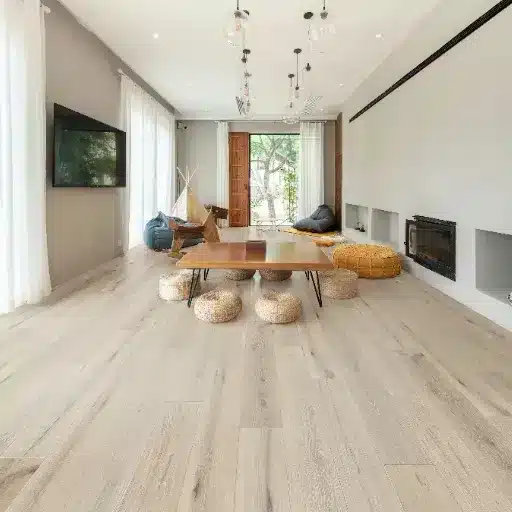
Engineered oak flooring can be installed three ways. The right method depends on the subfloor and the product design.
Floating Installation
Floating floors click together and rest on an underlayment without fastening to the subfloor. This is the fastest method and works well over concrete, existing tile, and radiant heat. It is also the easiest to remove later.
The downside is a slightly hollow sound unless you use a quality underlayment. Floating floors are not ideal for very large open areas without expansion breaks.
Glue-Down Installation
Glue-down installation bonds the planks directly to the subfloor with adhesive. It creates a solid, quiet floor and is popular for concrete slabs and commercial spaces. Urethane adhesives often include a moisture barrier, which simplifies installation over concrete.
The tradeoffs are messier work, longer cure times, and the need for proper ventilation. Choose low-VOC or zero-VOC adhesives to protect indoor air quality.
Nail-Down Installation
Nail-down or staple-down installation is used over plywood or OSB subfloors. It is the traditional method and gives a permanent, solid feel. This method requires a wood subfloor of adequate thickness and a flooring nailer.
Best Rooms for Engineered Oak Flooring
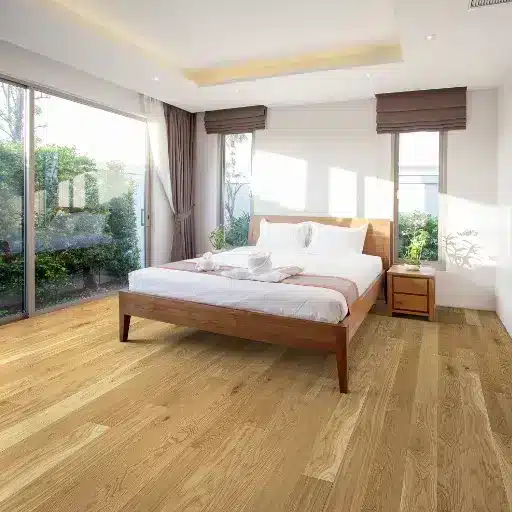
Engineered oak is versatile, but some rooms suit it better than others.
Living Rooms and Bedrooms
These are the ideal spaces. Stable humidity, moderate traffic, and visible square footage make engineered oak a natural choice. Wide planks and matte finishes look especially good here.
Kitchens
Engineered white oak performs well in kitchens because it resists moisture better than red oak. Wipe up spills quickly, use rugs at sinks, and avoid steam mops. A quality finish is essential.
Basements
Engineered oak can work in basements if moisture testing, a vapor barrier, and the right product are used. Basements are high-risk for wood floors, so follow manufacturer guidelines exactly.
Over Radiant Heat
Many engineered oak products are rated for radiant heat. The stable core handles the daily heating and cooling cycle better than solid oak. Always confirm the product is certified for radiant heat before buying.
Sustainability and Indoor Air Quality

For architects and designers focused on green building, engineered oak offers both benefits and caveats.
Forest Certification
Look for products certified by the Forest Stewardship Council (FSC) or Programme for the Endorsement of Forest Certification (PEFC). These labels confirm the oak came from responsibly managed forests. The National Wood Flooring Association (NWFA) also provides resources on responsible wood sourcing.
Adhesives and Emissions
Engineered flooring cores are bonded with adhesives that can emit formaldehyde and other VOCs. Choose products that meet CARB Phase 2, TSCA Title VI, or FloorScore standards. Low-VOC and zero-VOC options are increasingly common and important for bedrooms, schools, and healthcare spaces.
Efficient Use of Oak
Because engineered oak uses a thin veneer of slow-growing oak over a fast-growing core, it uses less premium hardwood than solid oak. That efficiency makes it a more sustainable choice when the core and adhesives are also responsibly sourced.
Caring for Engineered Oak Flooring
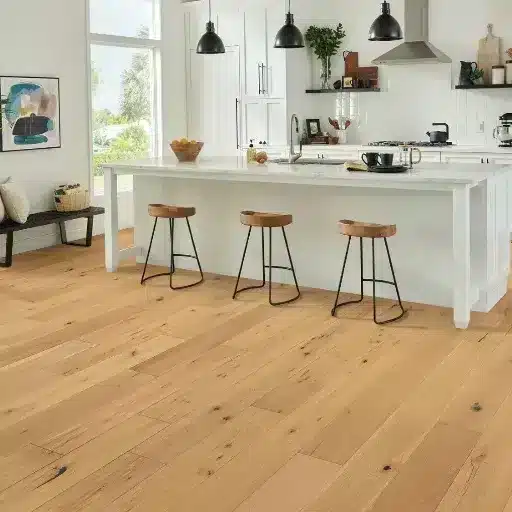
Proper maintenance protects your investment and keeps the floor looking new longer.
Daily Cleaning
Sweep, dust-mop, or vacuum regularly to remove grit that can scratch the finish. Use a soft-bristle attachment and avoid beater bars on vacuums.
Mopping
Use a barely damp mop with a manufacturer-approved cleaner. Excess water can seep into joints and damage the core. Never use a steam mop on engineered oak.
Humidity Control
Keep indoor relative humidity between 30-50% year-round. Use a humidifier in winter and a dehumidifier in summer. Stable humidity prevents seasonal gapping and cupping.
Furniture Protection
Use felt pads under furniture legs. Lift rather than drag heavy items. Add rugs in high-traffic areas and at entryways to trap grit.
Refinishing
Refinishing depends on wear layer thickness. A 3-4 mm layer can usually be sanded once or twice by a professional. A 1-2 mm layer cannot be sanded safely. When in doubt, consult a flooring professional before attempting any refinishing.
FAQ About Engineered Oak Flooring
Is engineered oak real wood?
Yes. The top wear layer is real oak. Only the core is engineered for stability.
How long does engineered oak flooring last?
With proper care, a quality engineered oak floor with a 3-4 mm wear layer can last 20-30 years. Products with 5-6 mm wear layers can last 30-50 years or more.
Can engineered oak be refinished?
It depends on the wear layer. A 3 mm or thicker wear layer can usually be refinished at least once. Thinner wear layers cannot be safely sanded.
Is engineered oak waterproof?
No. Engineered oak is more moisture-resistant than solid oak but is not waterproof. Wipe up spills quickly and avoid installing standard engineered oak in bathrooms or laundry rooms.
Which is better, white oak or red oak?
White oak is harder, more water-resistant, and takes stain more evenly. Red oak is warmer in color and usually less expensive. White oak is the better choice for most high-traffic and moisture-prone areas.
Is engineered oak cheaper than solid oak?
Yes. Engineered oak typically costs 20-40% less installed than solid oak because it uses less premium hardwood and is faster to install.
What is the best finish for engineered oak flooring?
UV-cured polyurethane and aluminum oxide finishes are the most durable for busy households. Oil finishes require more maintenance but offer a more natural look and easier spot repair.
Can I install engineered oak myself?
A floating click-lock floor is a reasonable DIY project for many homeowners. Glue-down and nail-down installations require more skill, tools, and subfloor preparation.
Conclusion
Engineered oak flooring offers the warmth and character of real oak with the stability modern construction demands. Choose white oak for durability and moisture resistance, red oak for traditional warmth, or European oak for a high-end, character-rich look. Pay attention to wear layer thickness, core construction, finish type, and certification standards. The right engineered oak floor can last decades and support your sustainability goals at the same time.
At VitalWood Global, we believe the best material choices are informed, ethical, and built to last. If you are comparing options, our guide to the best engineered wood flooring can help you narrow down the right product for your project. For samples, certifications, or a quote on sustainably sourced engineered oak, contact our team.