
Waterproof Engineered Wood Flooring: What Works in Kitchens, Bathrooms & Basements
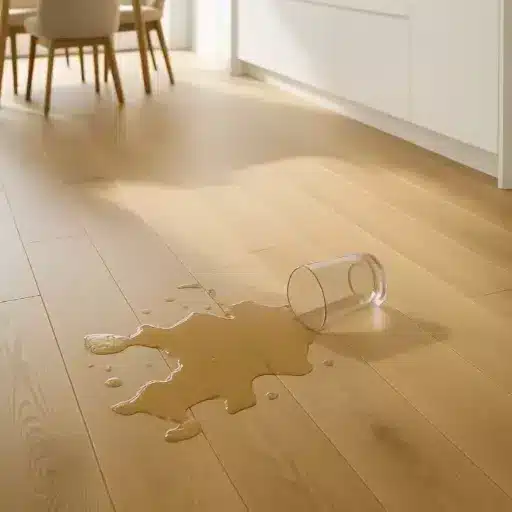
Most waterproof engineered wood flooring is water-resistant, not truly waterproof — but a new generation of sealed-edge, waterproof-core products can handle spills, pet accidents, and even limited standing water for up to 36 hours. The right choice depends on the room, the subfloor, and how honestly you read the label.
That label confusion costs homeowners money every year. A product marketed as “waterproof hardwood” may have a water-repellent surface but a core that still swells when water seeps through the seams. For busy kitchens, damp basements, and homes with pets, the difference between water-resistant and waterproof engineered hardwood can mean the difference between a floor that lasts 30 years and one that warps in three.
In this guide, you’ll learn exactly how waterproof engineered wood flooring works, where it belongs in your home, when luxury vinyl plank or tile is the smarter choice, and how to protect your investment for the long term. Whether you’re a homeowner planning a renovation or a builder specifying materials, this article will help you choose responsibly sourced wood flooring that matches both your performance needs and your sustainability values.
Key Takeaways
- Most engineered wood flooring is water-resistant, not waterproof. True waterproof engineered hardwood uses sealed edges, waterproof cores, or densified wood technology.
- The best rooms are kitchens, powder rooms, living areas, and pet-friendly homes. Full bathrooms and flood-prone basements still need tile or LVP/SPC.
- Leading waterproof technologies include Bruce Hydropel™ (up to 36-hour water protection), Bruce Dogwood® Pro (densified wood), and Shaw Floorte® with Repel® finish.
- Look for FSC or PEFC certification, FloorScore or GREENGUARD low-VOC labels, and CARB/EPA TSCA formaldehyde compliance when choosing sustainable products.
- Spill response matters: wipe up water within 20–30 minutes on standard engineered wood, and follow manufacturer limits even on “waterproof” products.
Is Engineered Wood Flooring Really Waterproof?
Let’s answer the question directly.
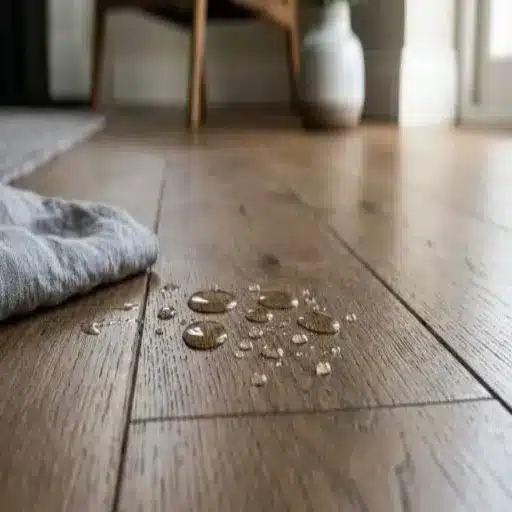
Most engineered wood flooring is not waterproof. It is water-resistant, which means it can handle small spills, humidity, and occasional splashes if they are cleaned up quickly. The multi-layer construction of engineered wood — a real wood veneer over a plywood or high-density fiberboard (HDF) core — makes it more stable than solid hardwood in moist conditions. However, water can still seep through seams, edges, and gaps, especially if it sits for more than a few minutes.
That said, a growing category of products is marketed as waterproof engineered hardwood. These floors combine real wood veneers with advanced core materials, sealed edges, and protective coatings to block moisture more effectively. Some can resist standing water for 24 to 36 hours, which is a dramatic improvement over traditional engineered wood. But even these products have limits. They are designed for everyday spills and pet accidents, not floods, chronic leaks, or standing water left for days.
The honest distinction:
| Term | What It Means | Typical Performance |
|---|---|---|
| Water-resistant engineered wood | Surface repels water; core can still absorb moisture | Handles quick spills; water should be wiped within 20–30 minutes |
| Waterproof engineered hardwood | Sealed edges + waterproof or high-density core block moisture longer | Can resist standing water for 8–36 hours depending on product |
| Waterproof-core flooring with wood veneer | Real wood surface over rigid waterproof core | Highly water-resistant, but still a wood product with seams |
| Solid hardwood | Solid wood through the entire plank | Not water-resistant; absorbs moisture, warps, and stains easily |
When a manufacturer calls a product “waterproof engineered wood flooring,” read the warranty and installation instructions carefully. The warranty usually tells the real story. If the product claims to be waterproof but the warranty excludes “water damage from standing water,” the product is likely water-resistant at best.
How Waterproof Engineered Hardwood Actually Works
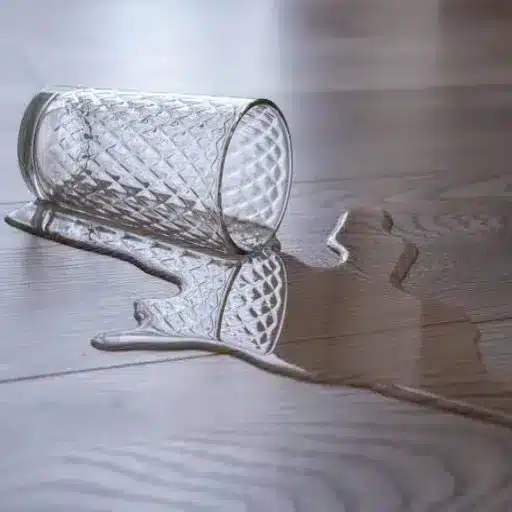
Understanding the technology helps you spot genuine waterproof performance versus marketing spin. Four main innovations make engineered hardwood more water-resistant or truly waterproof.
Sealed Edges and End Coatings
Standard engineered wood planks have exposed edges where the veneer meets the core. Water loves to find those seams. Premium waterproof products apply a water-repellent coating to all six sides of the plank — top, bottom, edges, and ends. This seals the weakest entry points and slows moisture migration between boards.
Bruce Hydropel™, for example, uses what it calls “six water-protection dimensions.” Every surface of the plank receives a moisture-blocking treatment, including the tongue-and-groove or click-lock edges. That matters because most water damage does not start on the surface; it starts where two planks meet.
Waterproof or High-Density Cores
The core layer determines how much water a floor can absorb. Traditional plywood cores can still swell when saturated. Newer waterproof engineered hardwood uses:
- Waterproof HDF cores that resist swelling even when exposed to water.
- Rigid SPC or WPC cores underneath a real wood veneer, combining the look of hardwood with the water resistance of vinyl.
- High-density fiberboard (HDF) treated with resins to slow water absorption.
A denser, better-sealed core buys you time. It does not make the floor invincible, but it can prevent catastrophic damage from a spilled dog bowl or a leaking dishwasher.
Densified Wood Technology
Densified wood is one of the more interesting recent innovations. Manufacturers compress real wood fibers under heat and pressure, creating a much harder, less porous material. The result is real hardwood with significantly improved dent, scratch, and water resistance.
Bruce Dogwood® Pro uses densified wood technology and adds an antimicrobial coating called Cleantivity™. The company claims 6× more dent resistance and 4× more scratch resistance than standard engineered hardwood, plus water protection for up to 24 hours on general spills and 8 hours on pet accidents. For homes with large dogs or active kids, that combination of hardness and water resistance is genuinely useful.
Protective Topcoats and UV-Cured Finishes
The surface finish is the first line of defense. Aluminum oxide, ceramic bead, urethane, and UV-cured acrylic finishes create a hard, water-repellent shell. A quality factory finish can prevent surface staining and make cleanup easier. However, surface protection alone does not make a floor waterproof. Without sealed edges and a protected core, water will eventually find a way in.
Where Waterproof Engineered Wood Flooring Works
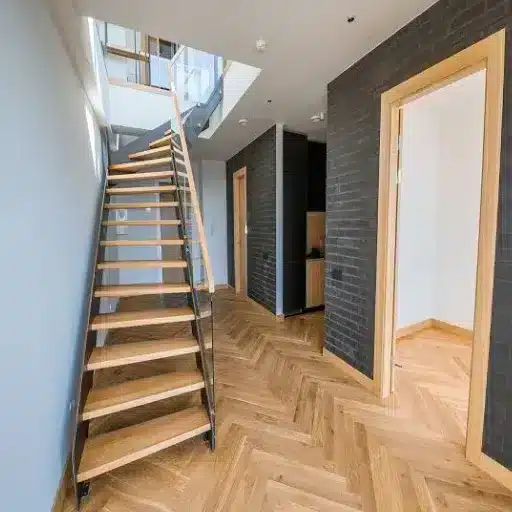
Room selection is where many homeowners go wrong. Just because a product is labeled waterproof does not mean it belongs everywhere. Use this room-by-room guide to make the right call.
Kitchens: Yes, With Caution
Kitchens are one of the best places for waterproof engineered wood flooring. Spills happen daily — water, coffee, wine, sauce. A quality water-resistant or waterproof engineered floor handles these well if you wipe them up promptly. The real wood surface also adds warmth and resale value that vinyl or laminate cannot match.
Mini-story: When the Chen family remodeled their 1920s bungalow in Portland, they wanted real wood in the kitchen but worried about their two young children and a golden retriever. They chose a waterproof engineered oak with a sealed-edge system. Six months later, a pasta pot overflowed and water pooled on the floor for nearly 20 minutes. They wiped it up, placed a fan nearby, and found no swelling or staining. “We would have replaced laminate twice by now,” they said.
Best practice in kitchens: Place mats near the sink and dishwasher, wipe up spills quickly, and choose a product with a documented water-resistance rating rather than assuming all engineered wood performs the same.
Powder Rooms and Half-Baths: Usually Fine
Powder rooms without showers or tubs are generally safe for waterproof engineered hardwood. The risk is lower because there is no constant steam, no bath overflow, and no splashing from daily showers. Still, seal around the toilet base properly and use a quality underlayment. A leak from the toilet supply line can destroy even a waterproof floor if water gets underneath it.
Living Rooms, Bedrooms, and Dining Rooms: Ideal
These are the easiest rooms for engineered wood. Moisture exposure is minimal, and you benefit from the comfort, beauty, and acoustic qualities of real wood. Waterproof or highly water-resistant engineered wood is simply extra insurance for everyday life: a tipped glass, a houseplant overflow, or a pet accident.
Homes with Pets and Kids: Strong Choice
If you have pets or children, waterproof engineered hardwood makes sense. Dog water bowls, muddy paws, juice spills, and potty-training accidents are all manageable if the floor has sealed edges and a protective core. Densified wood products like Dogwood Pro add scratch and dent resistance, which is often more important than water resistance in these households.
Basements: It Depends
Basements are the trickiest application. Below-grade concrete slabs can wick moisture upward, and basement humidity tends to be higher year-round. Standard engineered wood is risky here. Waterproof engineered hardwood with a moisture barrier and proper subfloor preparation can work in dry basements, but chronically damp or flood-prone basements are better served by tile or luxury vinyl plank.
For a deeper dive on below-grade installation, see our guide to engineered wood flooring for basement conditions.
Where It Doesn’t Work — and What to Use Instead
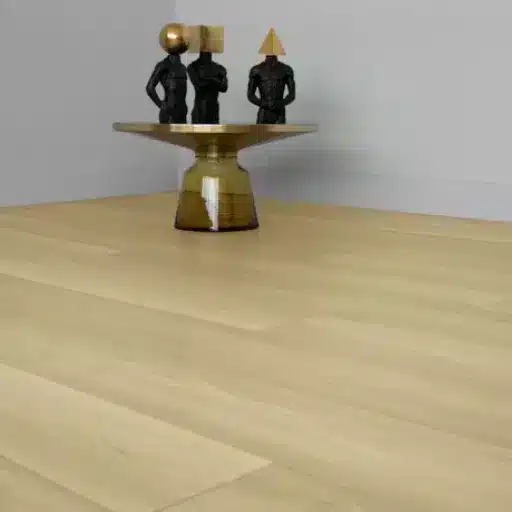
Honesty is important here. Waterproof engineered wood flooring has real limits, and ignoring them leads to expensive replacements.
Full Bathrooms: Not Recommended
Full bathrooms with showers and tubs produce steam, splashes, and standing water daily. Even the best waterproof engineered hardwood is not designed for that environment long-term. Water will eventually find seams, and the humidity fluctuations can stress the wood veneer. For full bathrooms, porcelain tile or ceramic tile remains the safest choice. If you want wood warmth, consider wood-look porcelain tile or high-quality waterproof SPC vinyl.
Laundry Rooms and Mudrooms: Risky
Laundry rooms have washing machine leaks. Mudrooms have melting snow, wet boots, and dripping coats. These rooms are borderline. If you choose waterproof engineered hardwood here, install a floor drain, use absorbent mats, and check appliance hoses regularly. For most homeowners, waterproof SPC or tile is the more practical choice.
Flood-Prone Basements: Use Tile or LVP
If your basement has flooded before, or if you live in an area with a high water table, do not install engineered wood — even waterproof engineered wood. Water can come up from below, around the perimeter, or through the slab. Once moisture gets underneath the flooring, the installation is compromised. Tile with a waterproof membrane or 100% waterproof SPC flooring is the correct solution.
Comparison: Waterproof Engineered Hardwood vs. Alternatives
| Flooring Type | Waterproof? | Best For | Real Wood Surface? | Cost Range (materials) |
|---|---|---|---|---|
| Waterproof engineered hardwood | Up to 36 hours | Kitchens, powder rooms, living areas, pet homes | Yes | $6–$14/sq ft |
| LVP/SPC vinyl | Yes, fully | Bathrooms, basements, high-moisture areas | No | $4–$10/sq ft |
| Waterproof laminate | Yes, fully | Kitchens, laundry rooms, budget projects | No | $3–$7/sq ft |
| Porcelain/ceramic tile | Yes, fully | Bathrooms, kitchens, basements | No | $3–$15/sq ft |
| Standard engineered wood | No, water-resistant | Dry living areas, bedrooms | Yes | $4.50–$16/sq ft |
| Solid hardwood | No | Living rooms, bedrooms, hallways | Yes | $8–$25+/sq ft |
Best Waterproof Engineered Wood Flooring Technologies and Brands
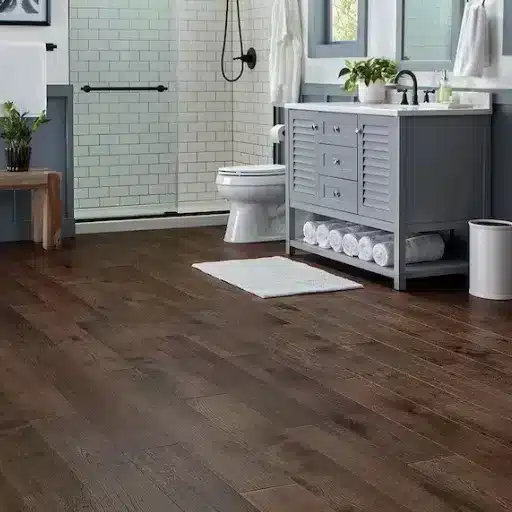
Several manufacturers have developed credible waterproof engineered hardwood products. Here are the most notable options in 2026.
Bruce Hydropel™
Bruce Hydropel is one of the best-known waterproof engineered hardwood lines. It features a real wood veneer over a waterproof hyper-dense core, with sealed edges and a coated backing. Bruce claims up to 36 hours of protection against standing water and offers a 50-year residential warranty and 10-year commercial warranty.
- Species available: White oak, hickory
- Thickness: 7/16″
- Width: 5″
- Janka hardness: 2,400
- Best for: Homeowners who want maximum water protection with real wood
Bruce Dogwood® Pro
Dogwood Pro uses densified wood technology rather than a separate waterproof core. The wood fibers themselves are compressed to create a harder, denser surface. It also includes an antimicrobial coating to resist bacteria, mold, and mildew.
- Species available: White oak, red oak, hickory, and others
- Janka hardness: 3,000+ for oak, 3,500+ for hickory
- Water protection: Up to 24 hours general spills; 8 hours for pet accidents per warranty
- Best for: Homes with pets, kids, and heavy traffic
Shaw Floorte® with Repel®
Shaw’s Floorte collection includes waterproof hardwood options that combine a real wood surface with a waterproof rigid core. The Repel finish adds surface protection, and the click-lock system helps block moisture at the seams.
- Best for: DIY-friendly installation and wide design variety
- Note: Specific water-resistance durations vary by product line; check the warranty
Robbins HydroGuard®
Robbins HydroGuard offers engineered hardwood with waterproof construction and sealed edges. It is positioned as a durable option for active households.
- Best for: Builders and homeowners seeking a mid-to-upper-range waterproof hardwood
Islander HDPC Waterproof Hardwood
Islander HDPC uses a high-density plastic composite core with a real wood veneer, blending the water resistance of rigid-core flooring with the appearance of hardwood.
- Best for: Budget-conscious buyers in moderate-moisture areas
What to Look for in Specifications
When comparing products, check these details:
- Water-resistance duration: How long can water sit before damage occurs?
- Warranty coverage: Does the warranty actually cover water damage?
- Core type: Is it plywood, HDF, SPC, WPC, or densified wood?
- Edge sealing: Are the edges and ends coated?
- Janka hardness: Higher numbers mean better dent resistance.
- Finish type: Aluminum oxide and ceramic bead finishes are hardest.
- Certifications: FSC, PEFC, FloorScore, GREENGUARD, CARB/EPA TSCA.
Sustainability and Ethical Sourcing Considerations
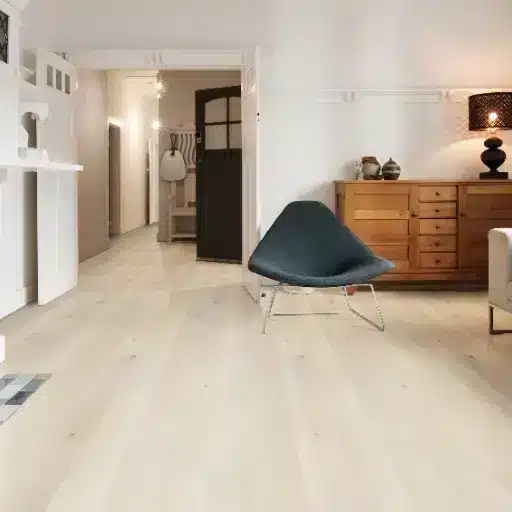
At VitalWood Global, we believe performance should not come at the cost of the planet. Waterproof engineered wood flooring can be a sustainable choice, but only if the materials are sourced and manufactured responsibly.
Forest Certification
Look for products made with FSC-certified or PEFC-certified wood. These certifications verify that the timber comes from responsibly managed forests that protect biodiversity, water quality, and local communities. Engineered wood uses less solid timber per plank than solid hardwood, which makes it a more resource-efficient choice overall.
Low-VOC Finishes
Waterproof coatings and adhesives can emit volatile organic compounds (VOCs). Choose products with FloorScore or GREENGUARD Gold certification, which confirm low chemical emissions. This is especially important in homes with children, elderly residents, or people with respiratory sensitivities.
Formaldehyde Compliance
All engineered wood products sold in the U.S. should meet CARB Phase 2 or EPA TSCA Title VI formaldehyde emission standards. These regulations limit the amount of formaldehyde released from composite wood products. If a manufacturer cannot confirm compliance, choose a different product.
Global Sourcing Transparency
Engineered hardwood is manufactured worldwide, including in North America, Europe, and Asia. Manufacturing location affects quality consistency, labor practices, and transportation emissions. Ask suppliers for transparency about where the wood is harvested, where the core is produced, and where final finishing occurs. A shorter, more transparent supply chain is usually better for both quality and sustainability.
For more on responsible material sourcing, explore our pillar guide to engineered wood flooring and sustainable wood practices.
How to Protect Engineered Wood Floors from Water Damage
Even the best waterproof engineered wood flooring benefits from smart maintenance. Water resistance is a safety net, not an excuse to ignore spills.
The 20–30 Minute Rule
On standard water-resistant engineered wood, wipe up spills within 20–30 minutes. On waterproof products, follow the manufacturer’s stated limit — often 8 to 36 hours. Do not test the limits intentionally. The sooner you remove water, the longer your floor will last.
Cleaning Do’s and Don’ts
Do:
- Use a damp microfiber mop, not a soaking wet mop.
- Clean with a manufacturer-approved hardwood cleaner.
- Dry the floor thoroughly after cleaning.
Don’t:
- Use steam mops on engineered wood.
- Pour water directly onto the floor.
- Use harsh chemicals, ammonia, or abrasive scrubbers.
Steam mops are particularly risky. The heat and pressure can force moisture into seams and damage the finish over time.
Humidity Control
Engineered wood performs best in relative humidity between 35% and 55%. Use a humidifier in dry winters and a dehumidifier in damp summers or basements. Extreme humidity swings can cause gaps, buckling, or cupping even in waterproof products.
Mats, Rugs, and Barriers
Place absorbent mats at exterior doors, kitchen sinks, and pet water bowls. Use rug pads designed for hardwood floors to prevent trapping moisture underneath. In basements, run a dehumidifier and ensure the concrete slab has a proper vapor barrier before installation.
Recoating and Maintenance
Over time, surface finishes wear down. Recoating with a compatible finish restores water repellency and extends the floor’s life. Follow the manufacturer’s recommendations for recoating intervals, usually every 5–10 years depending on traffic.
For detailed installation and maintenance guidance, see our article on engineered wood flooring installation best practices.
Waterproof Engineered Wood Flooring Cost Guide
Price is always part of the decision. Here is what to expect in 2026 for materials only:
| Product Category | Price per Square Foot |
|---|---|
| Standard engineered hardwood | $4.50–$16 |
| Waterproof engineered hardwood | $6–$14 |
| Densified wood engineered hardwood | $8–$16 |
| Waterproof SPC/LVP | $4–$10 |
| Waterproof laminate | $3–$7 |
| Porcelain tile | $3–$15 |
Installation adds $2–$7 per square foot depending on your market, subfloor condition, and installation method. Waterproof engineered hardwood often installs as a floating click-lock floor, which can reduce labor costs compared to glue-down or nail-down solid hardwood.
Cost considerations:
- Waterproof engineered hardwood costs more than standard engineered wood but less than premium solid hardwood.
- The real value is longevity and repairability. You can often refinish or spot-repair engineered wood, whereas vinyl and laminate usually require full replacement after major damage.
- Factor in underlayment, vapor barriers, and transition strips when budgeting.
Frequently Asked Questions
Can engineered hardwood get wet?
Yes, engineered hardwood can get wet briefly. Standard engineered wood handles small spills if wiped up within 20–30 minutes. Waterproof engineered hardwood can resist standing water for 8 to 36 hours depending on the product. Prolonged exposure will damage any wood floor.
How long can water sit on engineered wood before damage?
For standard engineered wood, water should be removed within 20–30 minutes. For waterproof engineered hardwood, follow the manufacturer’s rating — typically 8, 24, or 36 hours. Damage can occur faster if water seeps through unsealed edges or gaps.
Is engineered wood OK in bathrooms?
Engineered wood is generally fine in powder rooms or half-baths without showers. For full bathrooms with tubs or showers, tile or waterproof SPC vinyl is a safer choice because of constant humidity and splashing.
What is the best waterproof engineered hardwood?
The best choice depends on your needs. Bruce Hydropel offers the longest water protection rating at up to 36 hours. Bruce Dogwood Pro offers superior dent and scratch resistance plus antimicrobial protection. Shaw Floorte provides wide design variety and easy installation. Compare warranties, certifications, and hardness ratings before deciding.
Is waterproof engineered hardwood really waterproof?
Truly waterproof engineered hardwood exists, but marketing often overstates performance. Look for sealed edges, a waterproof or high-density core, documented water-resistance duration, and a warranty that actually covers water damage. Even then, “waterproof” means protection against everyday spills, not floods.
Can you mop engineered wood floors?
Yes, but use a damp — not soaking — microfiber mop. Avoid steam mops and excess water. Dry the floor after mopping, and use only cleaners approved by the flooring manufacturer.
Does water damage void an engineered wood warranty?
It depends on the warranty. Many standard engineered wood warranties exclude water damage from leaks, floods, or standing water. Waterproof engineered hardwood warranties may cover specific water exposure up to a stated duration. Always read the warranty before purchasing.
Is waterproof engineered hardwood sustainable?
It can be, if it uses certified wood, low-VOC finishes, and complies with formaldehyde emission standards. Engineered wood uses less solid timber than solid hardwood, which is inherently more resource-efficient. Check for FSC, PEFC, FloorScore, GREENGUARD, and EPA TSCA compliance.
Conclusion
Waterproof engineered wood flooring offers a rare combination: the authentic look and feel of real hardwood with protection against the spills, pets, and humidity of everyday life. But the label “waterproof” only tells part of the story. Most engineered wood is water-resistant. True waterproof performance comes from sealed edges, waterproof cores, densified wood technology, and honest manufacturer specifications.
For kitchens, powder rooms, living areas, and homes with pets or children, waterproof engineered hardwood is a strong, sustainable choice. For full bathrooms, laundry rooms, and flood-prone basements, tile or rigid-core waterproof flooring is still the safer investment.
The best floor is not just the one that looks beautiful today. It is the one that performs well, lasts for decades, and comes from materials sourced with integrity. At VitalWood Global, we help homeowners, builders, and designers find wood products that balance performance, sustainability, and long-term value.
Ready to choose engineered wood flooring with confidence? Explore our complete guide to engineered wood flooring, review engineered wood flooring installation best practices, or contact our team for personalized recommendations on certified, responsibly sourced wood products for your next project.