
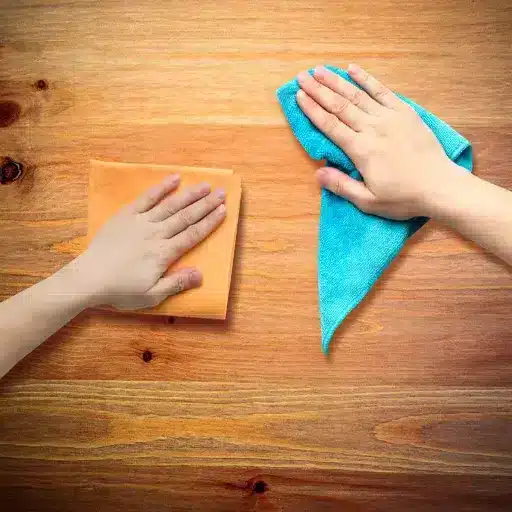
How To Clean Wood Veneer: The Complete Care Guide
The safest way to clean wood veneer is to dust it regularly with a soft, lint-free cloth, then wipe it gently with a barely damp cloth and a drop of mild dish soap, always moving in the direction of the grain, and dry it immediately. Avoid soaking, harsh chemicals, and abrasive tools, because veneer is a thin layer of real wood that damages far more easily than solid lumber.
Here’s the problem: most cleaning advice treats veneer like solid wood or like laminate. It is neither. When Maya moved into her new apartment last spring, she wiped her walnut veneer coffee table with a soaking rag and an all-purpose spray. A week later, the finish looked milky, and a corner of the face was starting to lift. A $40 cleaner and one bad habit had damaged a piece she planned to keep for a decade.
By the end of this guide, you’ll know exactly how to clean wood veneer the right way: the step-by-step routine, the safe products, the ones to avoid, and how to care for different finishes so your veneer lasts for years. We’ll keep it simple and practical, because that’s what caring for real wood should be.
Key Takeaways
- Dust wood veneer once or twice a week with a soft, lint-free cloth, always following the grain.
- Clean with a barely-damp cloth and a few drops of mild dish soap; never spray liquid directly on veneer.
- Dry the surface immediately after cleaning, because standing moisture causes swelling, peeling, and delamination.
- Avoid ammonia, bleach, silicone polishes, abrasive scrubbers, steam cleaners, and vinegar as a routine cleaner.
- Match your care to the finish (lacquer, oil/wax, UV-cured, unfinished) and polish only every 2-3 months.
Why Wood Veneer Needs Different Care Than Solid Wood
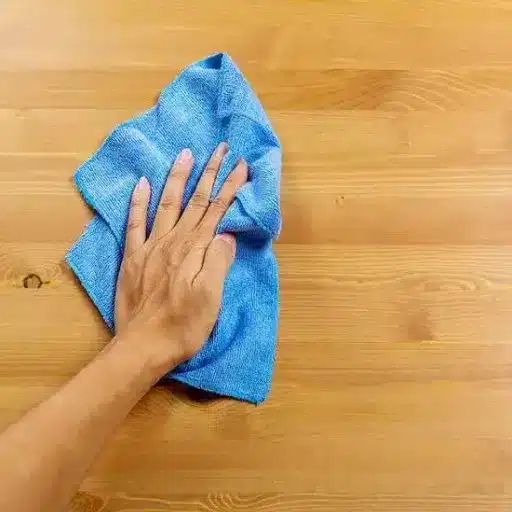
Veneer is not a wood substitute. It is real wood, just in a very thin form. This is the single most important thing to understand before you pick up a cloth.
How Veneer Is Made
Wood veneer starts as a thin slice of natural timber, usually just 0.5 to 2 millimeters thick, about the thickness of a few sheets of paper. That slice is bonded to a stable core like plywood, MDF, or particleboard. This construction is what gives veneer furniture its strength and stability, and it’s also what makes it different from a solid wood board. Because the real wood face is so thin, any mistake that would merely scratch solid wood can cut right through veneer. For more on how these surfaces are built, see our overview of wood veneer panel construction.
Why Excess Water Is Veneer’s Biggest Enemy
The glue that holds the veneer to its core is strong, but it is not waterproof. When moisture seeps into the edges, seams, or through a damaged finish, it does three things at once: the face veneer swells, the core expands at a different rate, and the adhesive weakens. The result is the dreaded “bubbling” or peeling you see on damaged furniture. Even a water ring is a warning sign. This is why every expert guide, from Herman Miller to the U.S. General Services Administration, leads with the same rule: keep water away from veneer edges, and dry any moisture quickly.
The Sustainability Case for Good Care
Here’s a thought worth sitting with: the most sustainable wood product is the one already in your home. Properly maintained veneer can easily last fifteen years or more, and the U.S. Forest Service notes that well-cared-for veneer furniture lasts as long as solid furniture. Every year you keep a piece in good condition is a year you don’t buy a replacement, which means fewer resources consumed and less waste created. At VitalWood Global, we source our products from certified sustainable forests, and we believe protecting that investment is part of the responsibility. Good care is good for the planet, plain and simple.
What You’ll Need: Safe Cleaning Supplies
You don’t need a cabinet full of products. In fact, the fewer, the better. Here’s your full cleaning kit:
- A soft, lint-free cloth. Microfiber or an old cotton t-shirt works well. On open-pored or raw veneer, use a clean dry cloth instead of microfiber to avoid fine scratches.
- A pH-neutral wood cleaner or mild dish soap. A few drops in a cup of warm water is all you need.
- Distilled or lukewarm water for diluting your cleaner.
- A silicone-free polish or beeswax for conditioning, only if your finish allows it.
- A soft brush or vacuum attachment for crevices and carved details.
That’s it. Most commercial spray cleaners are unnecessary for routine care, and many contain ingredients that hurt veneer over time. For a detailed breakdown of products that are worth your money, check our guide to the best wood cleaner.
How to Clean Wood Veneer Step by Step
Now for the routine itself. Follow these six steps and you can clean any sealed veneer surface safely.
- Dust first. Use a dry, lint-free cloth once or twice a week, working in the direction of the grain. Dust is abrasive; rubbing it into the finish creates micro-scratches.
- Mix a gentle solution. Stir a few drops of mild dish soap into two cups of warm water.
- Dampen, don’t drench. Dip your cloth, then wring it out until it is barely damp. It should never drip. Never spray cleaner directly onto the veneer.
- Wipe with the grain. Move gently in one direction, following the wood grain, to avoid streaks and to keep from forcing dirt into the surface.
- Rinse and dry. Wipe again with a clean, water-dampened cloth to remove soap residue, then dry immediately and completely with a clean cloth.
- Condition sparingly. On finishes that accept it, apply a small amount of silicone-free polish or beeswax every two to three months, then buff.
Always test any new product on a small, hidden area first. This quick check takes seconds and saves you from discovering a bad reaction later.
Here’s what the routine looks like in real life. Tom, a contractor in Portland, refinished his own veneer kitchen table last fall. He used to spray a commercial lemon cleaner directly on it and wipe in circles. Within months, the finish dulled and sticky spots appeared. When he switched to the damp-cloth method, dusting with the grain and drying immediately, the table looked better in three weeks than it had in a year. The materials cost him less than two dollars.
How to Clean Different Veneer Finishes
Not all veneer is finished the same way, and the finish decides what you can safely use. Here’s a quick reference:
| Finish Type | Cleaning Method | Polishing | Products to Avoid |
|---|---|---|---|
| Lacquer or polyurethane | Damp cloth + mild soap | Silicone-free polish, sparingly | Waxes, silicone, abrasives |
| Oil or wax | Dry or lightly damp cloth | Reapply furniture oil or wax quarterly | Silicone, ammonia |
| UV-cured | Damp microfiber + pH-neutral cleaner | Minimal | Harsh solvents, abrasives |
| Unfinished | Keep clean and dry only | Seal immediately | All liquids, all cleaners |
How to Clean Lacquered Wood Veneer
Lacquered veneer is common on modern furniture, and it needs an extra caution. Wax and silicone polishes build up on lacquer over time, leaving a cloudy, sticky film that actually attracts dust. Stick to a damp cloth and mild soap, and if the shine fades, use a silicone-free polish very sparingly. When in doubt, less is more on lacquered surfaces.
How to Clean Specific Veneer Surfaces
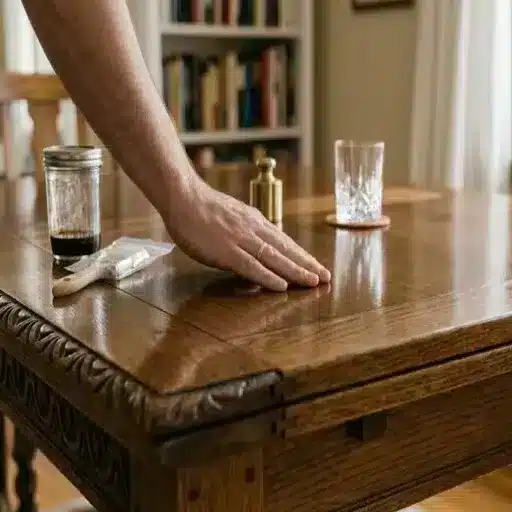
Different pieces of veneer furniture face different kinds of grime. Here’s how to handle the most common ones.
Veneer Furniture and Tables
For dining tables, coffee tables, and dressers, the routine above is your bread and butter. Blot spills immediately with a soft cloth, and never drag plates or mugs across the surface. If you have several wood pieces, the broader methods in our guide on how to clean wood furniture apply here too.
Veneer Cabinets
Kitchen cabinets attract grease, which dust alone won’t remove. Use the same mild soap solution and wipe cabinet fronts with the grain, paying extra attention to areas near the stove. Avoid silicone polish in the kitchen, where it tends to build up and attract more grease over time. Dry the hardware and edges after cleaning so moisture doesn’t settle into seams.
Veneer Panels and Doors
Wall panels and doors are vertical, high-traffic surfaces, and they face dust and fingerprints more than spills. They also respond strongly to room humidity, so keep the space between about 35% and 55% relative humidity. For a deeper look at keeping panels and commercial installations in top shape, see our wood veneer panels maintenance guide.
Safe Ways to Handle Common Veneer Problems
Even with careful cleaning, things happen. Here’s a quick troubleshooting guide for the most common issues, from mild to more serious:
- Sticky residue or grime buildup. Make a paste of baking soda and a little water, apply it gently with a soft cloth, rinse, and dry immediately.
- A dull or cloudy finish. Clean the surface, dry it fully, then apply a silicone-free polish or beeswax sparingly and buff.
- Light water rings. These often respond to a gentle heat method or a light oil treatment. For the full safe progression, see our dedicated guide on how to remove water stains from wood veneer.
- Minor scratches. A colored touch-up marker or wax stick matched to the wood tone can disguise shallow marks.
- Peeling, bubbling, or deep gouges. This is where DIY stops. Once the veneer face is lifting or damaged through, a professional refinisher is the right call. Attempting to sand thin veneer usually makes it worse.
When in doubt, stop and ask. That’s not failure, that’s protecting your piece. A small repair handled by a pro is far cheaper than replacing a veneer tabletop.
What to Avoid When Cleaning Wood Veneer
The list of what not to use is just as important as the steps above. These products and tools are common causes of veneer damage:
- Ammonia-based cleaners. They strip and dull the finish over time.
- Bleach and harsh disinfectants. They can discolor the wood and weaken the adhesive.
- Abrasive scrubbers, steel wool, and scouring pads. They scratch right through the thin face.
- Silicone-based polishes. They leave a cloudy, sticky buildup on lacquer and polyurethane.
- Spraying cleaner directly on the surface. It pools at seams and edges, where moisture does the most damage.
- Steam cleaners. The moisture penetrates the substrate and causes delamination.
- Vinegar as a regular cleaner. Its acidity, around pH 2.5, etches and dulls clear finishes with repeated use.
Every one of these mistakes is fixable only with professional help, and some aren’t fixable at all. Avoiding them is the entire game.
FAQ
Can you use vinegar on wood veneer?
Avoid vinegar as a routine cleaner on wood veneer. Its acidity, around pH 2.5, can etch and dull sealed finishes over time, especially with repeated use. For occasional tough spots, a very diluted vinegar solution might be acceptable, but always test it on a hidden area first and rinse thoroughly. A mild soap solution is safer for regular cleaning.
Can you use Murphy’s Oil Soap on wood veneer?
Yes, with caution. Murphy’s Oil Soap is a mild, water-based cleaner that many people use on sealed wood veneer successfully. Dilute it as directed, use a barely-damp cloth, work with the grain, and dry immediately. Avoid using any oil soap on lacquered or unfinished veneer, and always test in an inconspicuous spot first.
How often should you clean wood veneer?
Dust wood veneer once or twice a week to prevent abrasive buildup. Do a gentle damp cleaning every few weeks or as needed, and condition or polish every two to three months if your finish allows it. Wipe up spills immediately, every time.
Can you use water on wood veneer?
Yes, water is safe if you use it correctly. The key is damp, not wet. A barely damp cloth with mild soap is fine, and you should dry the surface right away. Never soak veneer or let water pool on it, because moisture causes swelling, peeling, and delamination.
Does wood veneer need to be polished?
Only if your finish accepts it. Lacquered and polyurethane veneer needs very little polishing, and waxing them can cause buildup. Oil- and wax-finished veneer benefits from periodic reapplication of a matching product. If you’re unsure, clean and dust regularly and skip the polish entirely.
Conclusion
Cleaning wood veneer is simple once you know the rules: dust often, clean damp-not-wet with the grain, dry immediately, and keep harsh products away. That routine protects the thin real-wood face that gives veneer its beauty, and it lets your furniture live for decades rather than years. It also happens to be one of the most sustainable choices you can make, because well-maintained wood is wood that never needs replacing.
Your next step is easy. Look at your veneer piece, grab a soft cloth, and start with a good dusting. Then, if you’re planning a new project or need responsibly sourced materials, explore our sustainable wood products or get in touch with our team for guidance. We’re here to help you care for the wood you already love, and to help you choose the right wood for what’s next.