
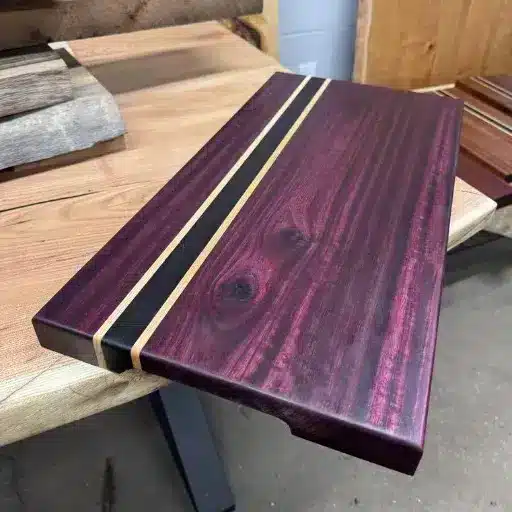
Is Purple Heart Wood Food Safe? Cutting Board Guide
Yes, purple heart wood is food safe for cutting boards and charcuterie boards once it’s finished with a food-safe oil. But there’s an important catch: the raw wood dust is a known sensitizer, and purpleheart is so hard it will dull your knives far faster than maple, walnut, or cherry. That combination is why online advice sounds so contradictory.
Search “is purple heart wood food safe” and you’ll find two camps. One calls the wood toxic and warns it leaches into your food. The other insists it’s perfectly safe and durable enough to outlast every other board you own. Both are partly right, and that confusion has real consequences. Builders toss out beautiful boards over a myth. Worried home cooks avoid a striking, moisture-resistant wood that could serve them well for years.
This guide settles the question with wood science, food-contact standards, and real-world use. You’ll learn whether purple heart cutting boards are safe, which finishes are truly food safe, how to care for one, and when a different wood is the smarter choice. If you’re new to this species, our purple heart wood complete guide covers the full picture from tree to finished project.
Key Takeaways
- Purple heart wood is food safe once finished with a food-safe oil, but its dust is a known sensitizer that can irritate skin and lungs.
- At Janka 2,520 lbf, purpleheart is roughly twice as hard as maple, which means it dulls knives quickly. Use it for accents, not the full cutting surface.
- The right finish is food-grade mineral oil plus beeswax or carnauba. Skip UV-inhibitor and varnish finishes if you plan to cut food on it.
- Hand wash and re-oil monthly; a cared-for purple heart board can easily last 15 years.
- Buy kiln-dried, FSC-certified purpleheart to keep your project both safe and sustainable.
The Short Answer: Is Purple Heart Wood Food Safe?
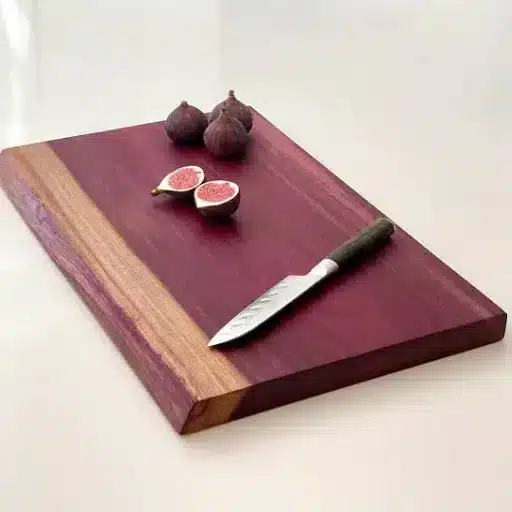
The short answer is yes. Purple heart wood is food safe for cutting boards and charcuterie boards when it’s sealed with a food-safe finish. The wood itself is a sensitizer rather than a toxic timber, which is a distinction worth understanding before you build or buy.
“Food safe” is really a question about the finish, not the bare wood. The FDA food-contact standard that matters here, 21 CFR 175.300, governs the coatings applied to surfaces that touch food. A properly oiled purpleheart board meets that standard because the oil seals the surface and prevents water, bacteria, and tiny wood fragments from moving into your food.
Here’s the nuance most guides miss. The concern about purpleheart isn’t about eating off a finished board. It’s about breathing the dust during sanding and cutting. Once the board is finished and the dust is sealed away, the food-contact risk drops to near zero. That’s why woodworkers have used purpleheart in cutting boards for decades without incident, and why commercial makers sell purpleheart boards labeled “food safe.”
Still, honesty matters. Purpleheart is hard enough to blunt knives faster than softer domestic woods. For that reason, many pros treat it as a decorative accent species rather than a full daily-prep surface. We’ll dig into exactly why below.
Why the Confusion? “Toxic” vs. “Sensitizer” Explained
The “toxic” claim isn’t pulled from thin air, but it’s badly misunderstood. Wood toxicity databases rate species for how they affect people who handle the raw material, not for whether a finished board poisons food. On those ratings, purpleheart is flagged as a sensitizer, meaning repeated exposure to its dust can cause skin, eye, or respiratory irritation in some people.
A sensitizer and a poison are not the same thing. Sensitization is an allergic-style reaction that develops from exposure, and for purpleheart it’s driven almost entirely by dust. Ingesting tiny amounts of wood from a finished board isn’t the mechanism that causes problems. The reaction happens in the lungs and on the skin during woodworking, not in the stomach at the dinner table.
The fearmongering versions of this story usually start with a legend that rainforest tribes poisoned darts with purpleheart. It’s a colorful tale, but woodworkers who’ve tested the claim find no record of it, and the wood’s chemistry doesn’t support it. What is real is that sanding any exotic hardwood, purpleheart included, throws off dust you don’t want to inhale. Wear an N95 or P100 mask and use dust collection, and the real risk all but disappears.
Keep the dust out of your lungs and the wood sealed, and purpleheart is as safe to work with as any other exotic hardwood. The finish is where food safety actually happens, so we’ll get to that shortly.
Is Purple Heart Wood Safe by Food-Contact Standards?
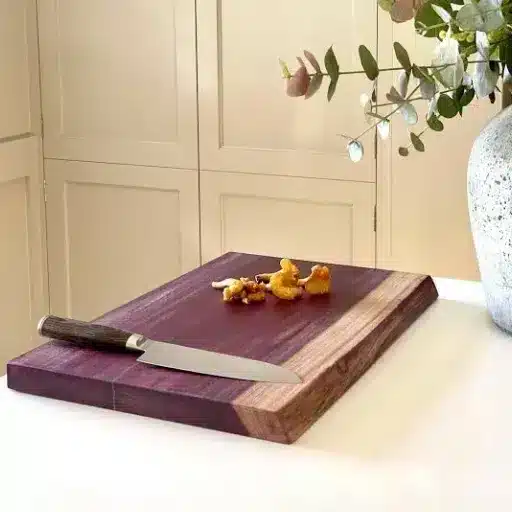
Yes, and in some ways purpleheart is a better candidate than you’d expect. Its natural moisture resistance is a real advantage for anything that touches food.
Wood is naturally antibacterial in a way that plastic and stone aren’t. That sounds counterintuitive, but it comes down to hygroscopy. Wood’s porous structure wicks moisture and juices away from the surface, and bacteria die when they dry out. That’s why wooden boards have been the safe, traditional choice for centuries.
Purpleheart adds two things on top of that baseline. First, its density means it absorbs very little water, around 2 percent or less after a 24-hour soak, so it resists warping and cracking. Second, its natural oils and rot resistance give it excellent durability in a wet environment like a kitchen.
Let’s be realistic about what “food safe” does and doesn’t guarantee. It doesn’t mean the wood is sterile, and no cutting board should go unwashed between uses. What it means is that, finished properly and cleaned normally, a purple heart cutting board won’t transfer harmful levels of anything into your food. That’s the standard you’re really asking about, and purpleheart meets it.
The Hardness Trade-Off: Purpleheart Will Dull Your Knives
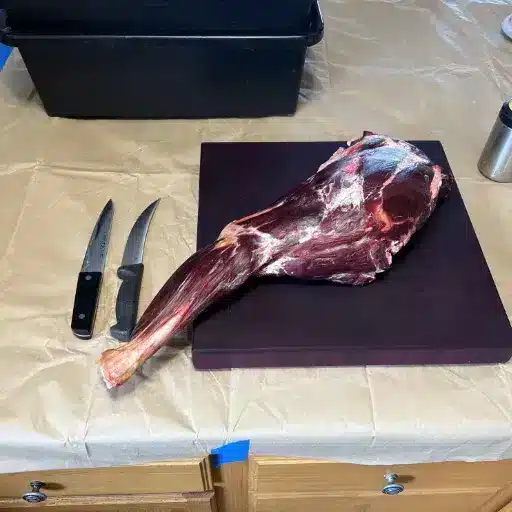
Here’s the honest part that retailers skip. Purpleheart is extremely hard, with a Janka rating around 2,520 lbf. The sweet spot for cutting boards is roughly 900 to 1,500 lbf, and hard maple sits near 1,450. Purpleheart doesn’t just exceed that range, it blows past it.
When Dan, a hobbyist woodworker in Ohio, built his first purpleheart cutting board in 2022, he loved the look so much he made it his everyday board. Three weeks later, he was sharpening his chef’s knife twice a week instead of twice a month. “It was like cutting on a rock,” he told a woodworking forum. “Beautiful board, but I went through steel fast.” That experience mirrors what many builders report: purpleheart boards chew through knife edges noticeably faster than maple.
That doesn’t make purpleheart a bad choice. It makes it a specialist. Use it for accent stripes, charcuterie boards, serving boards, and decorative pieces where knife contact is light. When it’s paired with a softer wood like maple, the knife does most of its work on the maple surface and the purpleheart adds striking contrast without wrecking your edge. For the full list of applications, from furniture to flooring to instruments, see our guide on what is purple heart wood used for.
End-Grain vs. Edge-Grain
If you do commit to a purpleheart surface, construction matters. End-grain boards expose the wood fibers on end, which absorbs knife impact and is gentler on blades. The trade-off is that purpleheart’s interlocked grain makes end-grain work slow and splinter-prone. Edge-grain is easier to build and still looks gorgeous. For a first purpleheart project, edge-grain accent strips in a maple board give you the best of both worlds.
Best Food-Safe Finishes for Purple Heart Cutting Boards
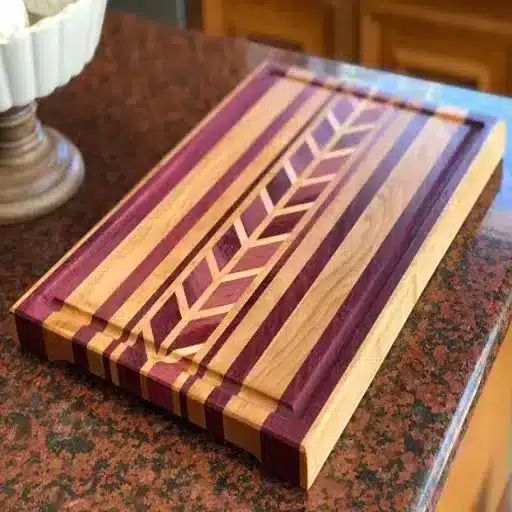
Finishing is where food safety is actually decided. The good news is that the right products are simple, affordable, and easy to find.
- Food-grade mineral oil. This is the gold standard. It’s colorless, odorless, tasteless, and never goes rancid. It soaks into the wood and seals out moisture. Apply generously, let it penetrate, then wipe off the excess.
- Beeswax and carnauba wax. Mixed into a paste or “board butter,” wax adds water repellency and a silky feel. Carnauba is the hardest natural wax and boosts water resistance even more.
- Pre-mixed butcher block conditioners. Products like Howard Butcher Block Conditioner and Walrus Oil combine mineral oil, beeswax, and carnauba, and they’re explicitly labeled food safe. They’re the easiest option for beginners.
- Coconut oil blend. Some makers prefer fractionated coconut oil blends. They’re fine, but standard cooking oils are not, because they can turn rancid over time.
What to avoid matters just as much. UV-inhibitor finishes and polyurethane or varnish coatings can hold purpleheart’s color beautifully, but they’re not food safe for direct cutting surfaces. Here’s the uncomfortable truth about this wood: the same sunlight that fades purple to brown is part of why some builders reach for non-food-safe finishes. If you want to cut food on the board, choose food safety over color preservation. That’s a trade-off to make with eyes open.
For a deeper look at keeping purpleheart vivid, our guide on how to finish purple heart wood covers the color-versus-safety decision in detail.
How to Care for a Purple Heart Cutting Board
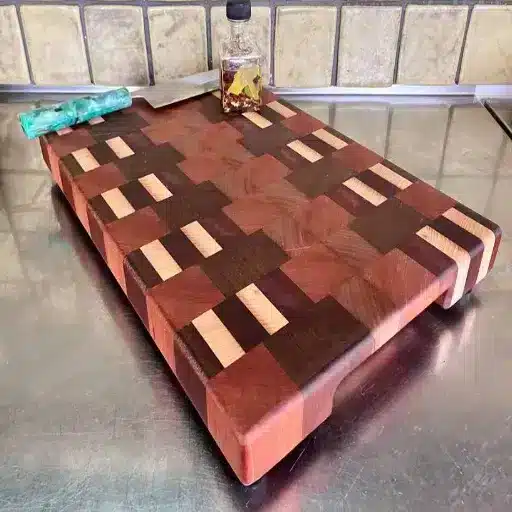
Maintenance is simple and mostly comes down to oiling on schedule. Purpleheart is durable enough that neglect is the main thing that will hurt it.
- Daily: Hand wash with warm water and mild soap. Dry immediately. Never put it in the dishwasher or let it soak.
- Monthly: Re-oil with food-grade mineral oil when the surface starts to look dry. Rub it in, let it sit, and buff off the excess.
- Every few months: Apply a beeswax and carnauba conditioner for extra water resistance and a satin finish.
- Watch the color: Purpleheart fades from vivid violet to deep chocolate brown with light and oxygen. That’s natural, not a defect. If you want it to last, keep it out of direct sunlight when it’s not in use.
Done right, purpleheart is remarkably long-lived. Maria, who makes charcuterie boards out of her garage in Austin, has a purpleheart and walnut serving board she’s used nearly every day since 2019. “It’s still flat, still gorgeous, and my knives stay sharper when I pair it with walnut,” she says. “The purple has mellowed to a rich plum, but people still ask about it at every farmers market.” With regular oiling, a 15-year lifespan is realistic, and many builders report beating that by a wide margin.
Purple Heart vs. Other Cutting Board Woods
Not every wood is built for the same job. Here’s how purpleheart stacks up against the usual cutting board candidates, so you can pick for your actual use.
| Wood | Janka Hardness (lbf) | Knife-Friendliness | Moisture Resistance | Food-Safe with Proper Finish |
|---|---|---|---|---|
| Purpleheart | ~2,520 | Poor (dulls fast) | Excellent | Yes |
| Hard maple | ~1,450 | Excellent | Good | Yes |
| Black walnut | ~1,010 | Excellent | Good | Yes |
| Cherry | ~950 | Excellent | Fair | Yes |
| Teak | ~1,000-1,255 | Good | Excellent | Yes (oiled) |
The pattern is clear. For an everyday cutting board, hard maple is the classic choice for a reason: it’s hard enough to resist deep cuts, gentle enough on blades, and cheap. Walnut and cherry add warmth and color while staying knife-friendly. Teak is the outdoor and wet-weather specialist.
Purpleheart’s best role is as a design element. A maple board with purpleheart accent strips is the look that sells out at maker markets, and it’s the smartest way to use this wood in a kitchen. For charcuterie and serving boards, where the knife touches the wood lightly, purpleheart works beautifully on its own.
Want to compare purpleheart against other colorful exotics? Our purpleheart vs padauk comparison breaks down the differences in hardness, color stability, and workability.
Where to Buy Responsibly Sourced Purple Heart Wood
If you’re ready to build with purpleheart, buy it the responsible way. This species comes from tropical rainforests, and not all of it is harvested legally or sustainably. At VitalWood Global, we believe your project shouldn’t cost the planet.
A few things to check before you buy:
- Kiln-dried. Ask for stock dried to 6-8 percent moisture content so it won’t move after you build.
- FSC certification. Look for wood certified by the Forest Stewardship Council, which verifies responsible forest management. It costs more, but it’s the ethical choice.
- Chain of custody. A reputable supplier should trace where the wood came from and confirm legal harvest.
- Buy from specialists. Exotic-wood specialists with transparent sourcing beat bargain-bin lumber every time.
Choosing certified, sustainably sourced purpleheart means your board is beautiful, food safe, and a genuine contribution to responsible forestry. If you’d like guidance on sourcing premium exotic wood for your next project, contact our team or explore how we handle sustainable wood sourcing at VitalWood Global.
Frequently Asked Questions
Is purple heart wood toxic?
No. Purpleheart is a sensitizer, not a toxic timber. Its dust can irritate skin and lungs during woodworking, but a finished board doesn’t poison food. Wear a mask when sanding and finish the board properly.
Does purple heart wood dull knives?
Yes. At Janka 2,520 lbf, purpleheart is roughly twice as hard as maple and will blunt knives faster. That’s why it’s best used for accent strips and serving boards rather than a full daily-prep surface.
Is purple heart wood antibacterial?
Wood’s porous structure wicks moisture away from the surface, which starves bacteria. Purpleheart adds excellent moisture resistance, so it’s a strong candidate for food contact when finished and cleaned normally.
Can you use purple heart for charcuterie boards?
Absolutely. Charcuterie and serving boards involve light knife contact, which suits purpleheart’s hardness. Finish with food-grade mineral oil and beeswax.
What oil is food safe for purple heart?
Food-grade mineral oil is the gold standard. Beeswax and carnauba wax add water resistance, and pre-mixed butcher block conditioners combine all three.
Does purple heart wood stay purple on a cutting board?
No wood stays purple forever. Purpleheart fades from violet to deep chocolate brown with light and oxygen. It’s a natural aging process, not a flaw.
Conclusion
Here’s the bottom line on whether purple heart wood is food safe. Yes, once it’s finished with a food-safe oil and cared for properly, purpleheart is safe for cutting boards, charcuterie boards, and serving boards. It’s a sensitizer, not a poison, and the real hazard lives in the dust you breathe while sanding, not in the food on your plate.
The honest trade-off is hardness. Purpleheart is spectacularly durable and moisture-resistant, but it will dull your knives faster than maple or walnut. Treat it as an accent species, pair it with a knife-friendly wood, and you get a board that looks incredible and lasts for 15 years or more.
Whatever you build, choose certified, sustainably sourced wood. A purple heart cutting board you can feel good about is one that’s beautiful, food safe, and kind to the forests it came from. When you’re ready to source responsibly harvested exotic wood for your next project, we’re here to help you make it happen.