
How To Finish Purple Heart Wood (And Keep It Purple)
The best way to finish purple heart wood is to let the color bloom first, then seal it quickly with a UV-inhibiting, water-based finish (or a shellac-and-lacquer schedule) to slow the shift to brown. No finish stops the color change entirely, but the right one can keep the purple vivid for years instead of months.
Here’s the honest version of that story: when Dana finished a purple heart coffee table in her shop last fall, she reached for the same oil-based polyurethane she used on walnut. It looked gorgeous for about two weeks.
By the time winter ended, the table had settled into a muddy, brownish-red that barely hinted at the color she paid for. Dana did nothing wrong with her sanding or her coats. She just chose the wrong finish for this particular wood.
Purple heart (also called purpleheart) is the striking violet heartwood of Peltogyne trees from Central and South America. It’s famous for one thing: that dramatic purple. And it’s infamous for one problem: the color fades. If you’ve bought this wood, you’ve probably already felt that frustration. In this guide, we’ll walk through a complete finishing system, from prepping the surface to matching the finish to your project, protecting it from UV light, and restoring it when it fades. You’ll learn exactly how to finish purple heart wood the way a wood products company that works with it daily actually does.
Key Takeaways
- Purple heart wood does not stay purple on its own. Fresh-cut wood blooms from gray-brown to vivid violet within days, then drifts toward brown or silver-gray over time.
- The single most important decision is UV protection: a UV-inhibiting, water-based finish (or shellac plus clear lacquer) holds the color far better than oil-based finishes, which amber and muddy it.
- Match the finish to the project: water-based polyurethane or UV-stabilized lacquer for furniture, food-safe oil and wax for cutting boards, CA glue for pens and knife handles, and marine-grade varnish outdoors.
- There is a real trade-off between color and food safety: the film finishes that protect the purple are not food-safe, and food-safe oils don’t protect the color.
- Always test your finish schedule on an offcut from the same board, and seal the piece within a day or two of the color blooming.
Why Purple Heart Changes Color (and Why Finishing Matters)
Before you pick a finish, it helps to understand what you’re actually fighting. The color of purple heart comes from natural pigments called dalbergiones that react to two things: oxygen and ultraviolet light. This is covered in more depth in our guide to purple heart wood color and properties, but here’s the short version.
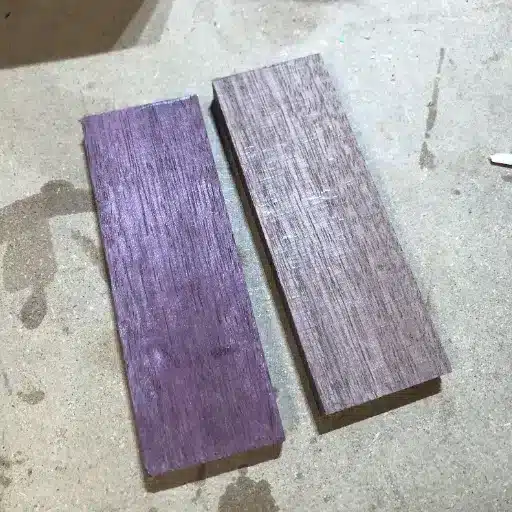
When you cut or sand fresh purple heart, it looks dull gray-brown or tan. Over the next few days, exposure to air and UV light oxidizes those pigments, and the wood “blooms” into its famous vivid violet. That’s the moment we all love. But the reaction doesn’t stop there. With continued UV exposure, the same chemistry pushes the color further, toward deep crimson, then chocolate brown indoors, or a silver-gray outdoors. The window of peak purple is temporary, and finishing is what decides how long that window stays open.
Heat vs. UV: Two Different Kinds of Color Change
It’s worth separating two things people often confuse. Friction heat, like the heat from sanding or cutting, turns the surface brown or dark temporarily. This is usually a surface effect that fades back to purple within a day or two as the wood re-oxidizes. UV light and oxygen, on the other hand, cause a permanent chemical change that keeps compounding over time. The temporary brown from sanding will surprise you, but it’s not the real enemy. The real enemy is UV exposure, and that’s what a good finish blocks.
Does purple heart wood stay purple? No. Purple heart wood shifts from vivid violet to deep crimson and then brown over months to years indoors, and to silver-gray outdoors under strong UV light. UV-inhibiting finishes and keeping the piece out of direct sunlight slow the change dramatically, but nothing stops it entirely.
Step 1: Sand and Prep Purple Heart for Finishing
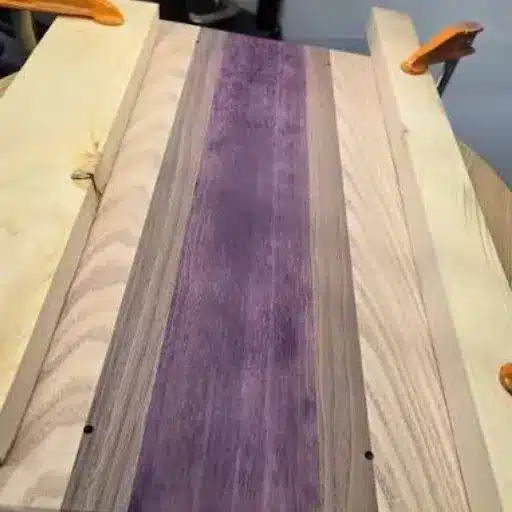
Good finishing starts before any finish touches the wood. Purple heart is dense and hard, with a Janka hardness of about 2,520 lbf, so it demands sharp tools and a patient hand. Our complete guide to working with purple heart wood walks through the machining side; here we’re focused on the sanding that happens right before finishing.
Grit and Technique (Avoid Burn Marks)
Work up through the grits to at least 220, and ideally 320, for the smoothest base under a film finish. The interlocked grain of purple heart catches light in a way that makes scratches obvious, so use a raking light (light held at a low angle across the surface) to spot streaks you’ll miss in normal lighting. Change paper frequently. This wood gums up abrasives quickly, and worn paper does more burnishing than cutting.
The biggest sanding trap with purple heart is heat. Because the wood is so dense, fast sanding generates friction heat that can scorch the surface and clog the wood with its own resin. Keep passes light, keep the sander moving, and let the piece cool between passes if you’re working with a power sander.
Let the Color “Bloom” Before You Finish
Here’s the trick most guides skip. After sanding, purple heart often looks disappointing, a flat brown-gray. If you finish it right then, you’re sealing in the dull color.
Instead, let the wood sit in bright light for a few days first. Strong sunlight or even bright indoor light will oxidize the surface and bring the purple up to full intensity. Then seal it quickly, within a day or two, before the color passes its peak. Some makers speed this up with a heat gun on small pieces, but careful, overdoing it scorches the wood.
Clean the Oily Surface
Purple heart has a naturally oily, resinous surface that can interfere with finish adhesion. Before your first coat, wipe the surface clean with acetone or denatured alcohol on a lint-free cloth to remove natural oils and dust. For water-based finishes, add a wash coat of dewaxed shellac sanding sealer first. It seals the oily wood, stops the water-based finish from raising the grain, and gives you a smooth, even base to build on.
Step 2: Choose the Best Finish for Purple Heart Wood (by Project)
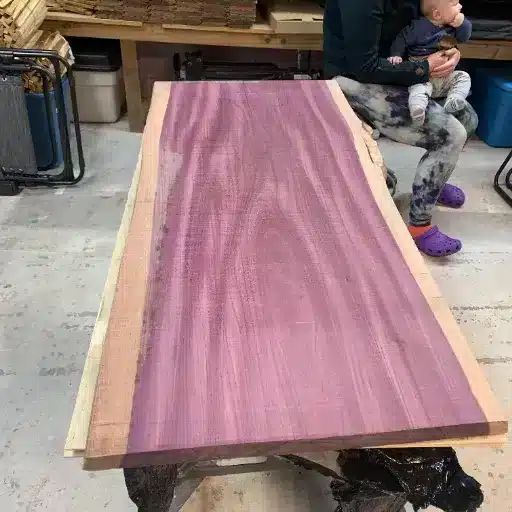
Now the decision that actually decides your outcome. The search results on this topic argue endlessly, shellac versus lacquer versus polyurethane versus oil, and the truth is that different finishes serve different projects. Here’s the framework we use, and it comes down to two rules first.
The Two Rules: UV Inhibitors and No Ambering
Rule one: whatever you choose, it should have UV inhibitors. UV protection is the single biggest lever you have for keeping purple heart purple. A finish without UV blockers lets the light keep attacking the pigments, and you’ll watch the color drain out regardless of the brand.
Rule two: avoid finishes that amber. Oil-based polyurethane and oil-based varnishes yellow as they age, and yellow on top of purple makes muddy brown. As one veneer manufacturer put it bluntly, “Yellow + Purple = Muddy Brown.” Water-based finishes stay clear, which is why they’re the default for color retention.
| Finish Type | Best For | Color Retention | UV Protection | Food Safe | Durability |
|---|---|---|---|---|---|
| Water-based polyurethane | Furniture, trim, panels | Excellent | Good (if UV-inhibiting) | No | High |
| UV-stabilized lacquer (or shellac + lacquer) | Furniture, veneer | Excellent | Good | No | High |
| Shellac sanding sealer | Undercoat for most schedules | Good | Fair | No | Medium |
| CA glue (cyanoacrylate) | Pens, knife handles, small turnings | Excellent | Fair | No | Very high |
| Marine-grade / spar varnish | Outdoor pieces, high-UV areas | Good | Excellent | No | Very high |
| Food-safe mineral oil + wax | Cutting boards, kitchenware | Poor (fades faster) | None | Yes | Low, reapply often |
Furniture and Trim: Water-Based Poly or UV-Stabilized Lacquer
For furniture, trim, and any indoor piece where you want the purple to last, use a water-based polyurethane with UV inhibitors, or a clear, non-yellowing lacquer. A proven schedule is shellac sanding sealer for the base, then two or three thin coats of lacquer or water-based poly on top, sanding lightly between coats. Shellac is reputedly UV-resistant, and lacquer is an evaporative finish that dries fast without the curing slowdown that purple heart’s alkaloids can cause in some finishes.
Cutting Boards and Food Contact: Food-Safe Oil and Wax
If your purple heart piece touches food, the rules change completely. For cutting boards and charcuterie boards, the finish needs to be food safe, which means a food-grade mineral oil, walnut oil, or a food-safe wax blend, reapplied regularly. Our full guide on is purple heart wood food safe covers the safety questions in detail, including why the raw dust is a concern but the finished surface is not.
Here’s the trade-off nobody states plainly: the UV-inhibiting film finishes that preserve the purple are not food safe, and the food-safe oils don’t block UV. As a result, a cutting board will age toward brown faster than a sealed tabletop will. That’s the cost of safe food contact, and it’s worth knowing before you build an all-purple-heart board. Most makers use purple heart as accent strips on a maple or walnut board anyway, which keeps the drama and limits the fade.
When Tom started selling charcuterie boards with purple heart inlays, he finished them with a mineral oil and beeswax conditioner. He noticed the purple dulled after a few months, so he tested a countertop water-based poly on one board just to compare. The color held beautifully, but he could never sell it as food safe. He stuck with the oil, added a care card telling customers to reapply monthly, and priced the boards knowing the purple would mellow. His customers love them, and the honesty about care actually helped his reviews.
Turning, Pens, and Knife Handles: CA Glue Finish
For small turnings, pens, bottle stoppers, and knife handles, a CA glue (cyanoacrylate) finish is the go-to. It’s applied in thin coats that cure quickly into a hard, glossy shell that shows off the purple beautifully and holds the color well. It’s the finish we recommend throughout our guide to purple heart wood turning projects, and it’s forgiving enough for beginners who are willing to practice on scraps.
Veneer and Panels: Non-Yellowing, UV-Blocking Finishes
Purple heart veneer is a favorite for cabinetry, wall panels, and inlays because it gives you that bold color at a fraction of the solid-wood cost and weight. The finishing rules are the same, with one extra caution: the veneer face is thin, so sanding mistakes are expensive. Use a non-yellowing, UV-inhibiting finish (catalyzed lacquer or a quality water-based poly) and check with a raking light for scratches or sand-through before you ever open the finish can.
Outdoor and High-UV: Spar or Marine Varnish
If the piece will live outside or in a sun-drenched window, don’t bother with interior finishes. Use an exterior spar varnish or marine-grade finish with UV inhibitors. These are formulated like sunscreen for wood and hold up to direct light far better than anything else. Even so, keep the piece out of direct sunlight where you can. Purple heart outdoors will always be a losing battle against silver-gray; the best you can do is slow it down.
Ready to test the difference on real, sustainably sourced purple heart? Get a quote and explore our wood options →
Step 3: Apply Your Finish, and Always Test First
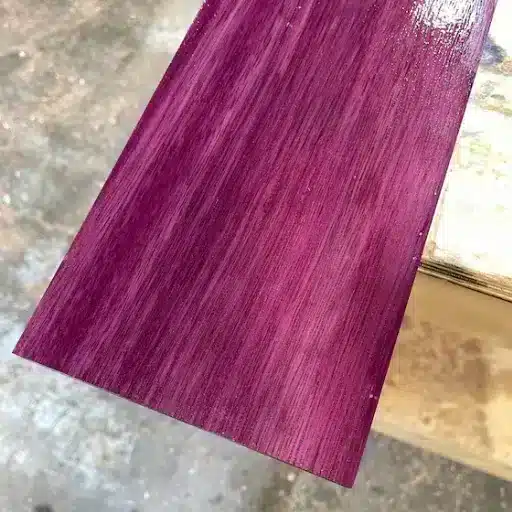
Here’s the protocol we insist on, and it saves projects. Before finishing the real piece, run your exact finish schedule on an offcut from the same board. Purple heart batches vary. What held color on one board can shift on the next, and you want to know how the finish behaves before it’s on your finished work. It takes ten minutes and it’s the cheapest insurance in woodworking.
When you’re ready to finish the piece: apply multiple thin coats rather than one heavy one, sand lightly between coats with fine grit, and give each coat its full dry time. Sealing with dewaxed shellac first prevents grain raise and gives the topcoat something solid to bond to. And once you have the color you want, don’t wait. Seal it within a day or two of the bloom, because every day of unsealed UV exposure is color you’re giving away.
How to Restore Faded or Browned Purple Heart
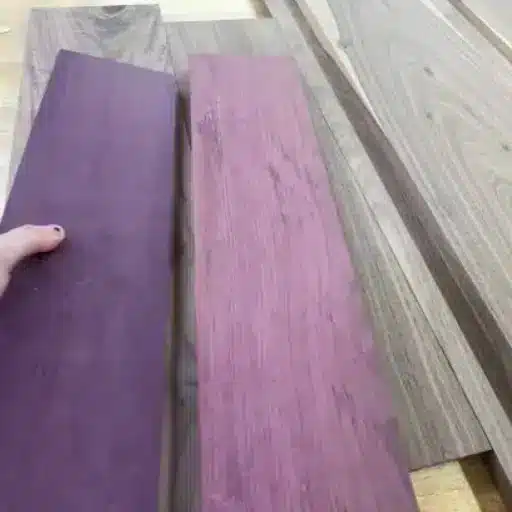
Good news: purple heart that has turned brown isn’t necessarily ruined. Because the color change starts at the surface, sanding can bring the purple back. Here’s the restoration workflow:
- Sand off the oxidized layer. A light pass at 220 to 320 grit removes the browned surface and exposes fresher wood underneath.
- Re-bloom the color. Set the piece in bright light or sunlight for a day or two (or carefully apply heat to small pieces) to bring the purple back up.
- Reseal quickly. Finish within a day or two with a UV-blocking finish so the fresh color doesn’t drift again.
The critical mistake is sealing over a browned surface. If you topcoat a brown board, you’ve locked in the brown, and you’ll have to strip and sand it to start over. A little patience with the re-bloom step, however, is the difference between a revived table and a permanently brown one.
When Nina noticed her two-year-old purple heart dining table had gone a uniform, dull brown, she almost sold it. Instead, she sanded the top back to bare wood with 220 grit, set it in front of her south-facing window for a weekend, and watched the purple bloom back. She sealed it the following Monday with a UV-inhibiting water-based poly, and she moved the table off the window line. Two years later it’s still purple, not as loud as day one, but unmistakably purple.
Common Purple Heart Finishing Mistakes to Avoid
- Using oil-based polyurethane. It ambers, and yellow plus purple equals muddy brown. Water-based is the color-safe choice.
- Sealing over a browned surface. You lock in the brown. Sand and re-bloom first.
- Skipping UV protection. If the finish has no UV inhibitors, you’ve done nothing to slow the fade.
- Finishing right after milling. The color hasn’t bloomed yet. You’re sealing in the dull gray-brown.
- Over-sanding or sanding hot. You burnish the surface, create heat marks, and fight with gummy resin.
- Ignoring dust safety. Purple heart dust is a known sensitizer and can irritate skin and lungs. Wear an N95 or P100 respirator, use dust collection, and ventilate your workspace. Sealed pieces are safe to handle; raw dust is the concern.
Finish Purple Heart Responsibly
Finishing is only part of the story. Purple heart is a tropical hardwood, and how it’s sourced matters as much as how it’s finished. Before you buy, ask where the wood came from and whether it’s certified. Look for FSC-certified or otherwise verified legal and sustainably managed sources, kiln-dried wood at a stable moisture content, and a supplier who can show chain of custody. This is the standard behind our purple heart wood complete guide, and it’s how we source every exotic species we sell.
A responsible supplier saves you finishing headaches too. Properly dried, consistently cut lumber behaves predictably under your finish. Wood from a certified, well-managed source means your colors bloom evenly and your coats go down clean. The finish protects your project; the sourcing protects the forest it came from.
Frequently Asked Questions
What is the best finish for purple heart wood?
For most indoor projects, a water-based polyurethane with UV inhibitors, or a clear, non-yellowing lacquer over a dewaxed shellac sealer, gives the best combination of color retention and durability. For small turnings, use CA glue. For cutting boards, use food-safe mineral oil and wax.
Does purple heart wood stay purple?
No, not permanently. It blooms to vivid violet within days of UV and oxygen exposure, then slowly shifts to crimson, brown, or silver-gray over time. UV-inhibiting finishes and indirect light slow this dramatically, but nothing stops it completely.
How do you keep purple heart wood from fading?
Seal the color quickly after it blooms, use a finish with UV inhibitors, keep the piece out of direct sunlight, and choose a water-based finish over an oil-based one. Sunscreen for wood, essentially.
Can you use shellac on purple heart wood?
Yes. A dewaxed shellac sanding sealer is one of the best first coats for purple heart because it seals the oily wood, prevents grain raise, and provides a smooth base for water-based finishes or lacquer.
Is water-based or oil-based polyurethane better for purple heart?
Water-based. Oil-based polyurethane ambers over time, and the yellow tint turns the purple muddy. Water-based finishes stay clear and hold the violet color far longer.
What finish is food safe for purple heart wood?
Food-grade mineral oil, walnut oil, or a food-safe wax blend. These are safe for cutting boards and kitchenware, but they don’t block UV, so the purple will fade faster than under a film finish.
How do you restore faded purple heart wood?
Sand off the oxidized surface layer at 220 to 320 grit, expose the piece to bright light to re-bloom the purple, then reseal within a day or two with a UV-blocking finish.
Conclusion
Finishing purple heart wood isn’t complicated once you understand what you’re fighting. The color blooms, peaks, and drifts, and your finish decides how long that peak lasts. Let the color bloom before you seal it. Choose a UV-inhibiting, water-based finish for most projects, and match the finish to what you’re building, whether that’s furniture, a cutting board, a turned pen, or a veneer panel.
Then test on an offcut, seal quickly, and keep the piece out of direct sunlight. If it does fade, remember it can often be restored with a light sand and a fresh seal.
The purple you paid for is worth protecting. With the right prep and the right finish, your piece will stay unmistakably purple for years, and you’ll know exactly what to do when the day finally comes that it starts to drift.
Ready to start with responsibly sourced purple heart? Contact VitalWood Global for sustainably sourced exotic wood and veneer →, or explore our complete guide to purple heart wood for everything else you need to know.