
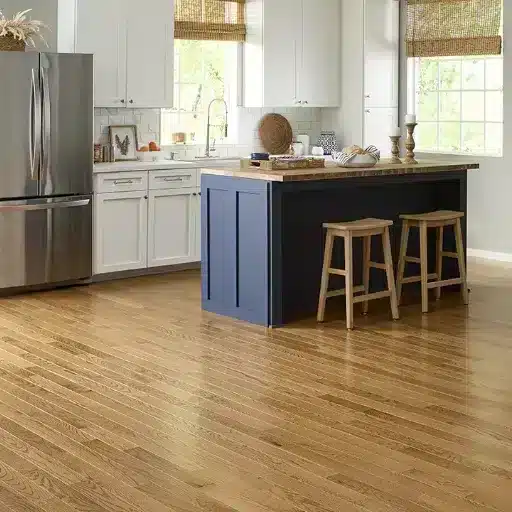
Engineered Hardwood vs Solid Hardwood: Which Is Right for You in 2026?
Choose engineered hardwood if you need a stable, versatile real-wood floor for basements, concrete slabs, radiant heat, or humid climates. Choose solid hardwood if you have a plywood subfloor above grade, stable humidity, and want a floor that can be refinished many times over 50+ years. Both are real wood. The right choice depends on your subfloor, climate, budget, and how long you plan to stay in the space.
That answer surprises some buyers. For decades, solid hardwood was seen as the premium choice and engineered wood as a budget alternative. That reputation is outdated. According to Mordor Intelligence, engineered wood now accounts for roughly 72% of hardwood flooring sales. It dominates because it solves real problems: moisture, installation flexibility, and cost without sacrificing the look of real wood.
Buyers who type engineered wood vs solid hardwood into Google are usually trying to answer one question: is the engineered version a compromise? The short answer is no. It is a different product built for different conditions. The longer answer depends on what you need from your floor.
By the end of this guide, you will understand exactly how engineered hardwood vs solid hardwood compares across construction, stability, cost, lifespan, refinishing, installation, and resale value. You will also have a clear decision framework for choosing the right floor for your project.
Key Takeaways
- Engineered hardwood is real wood: a hardwood veneer bonded over a stable multi-layer core.
- Solid hardwood is one solid piece of timber, typically 3/4″ thick, and can be refinished 4–10+ times.
- Engineered hardwood usually costs 15–25% less installed and works on concrete, in basements, and over radiant heat.
- Solid hardwood lasts longer in ideal conditions but is riskier below grade or in humid climates.
- Both can increase resale value; the biggest jump is from carpet or laminate to real wood, not solid vs. engineered.
What Is Engineered Hardwood Flooring?
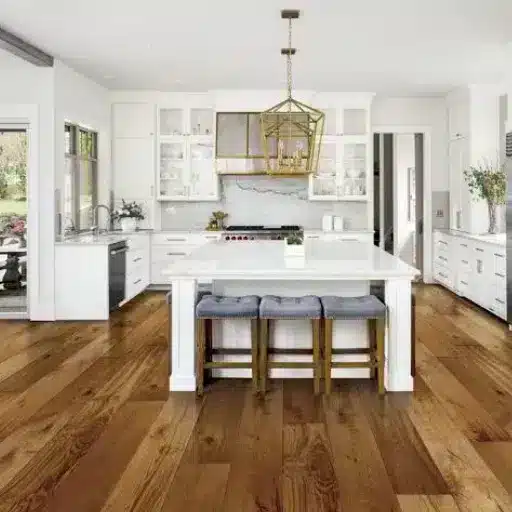
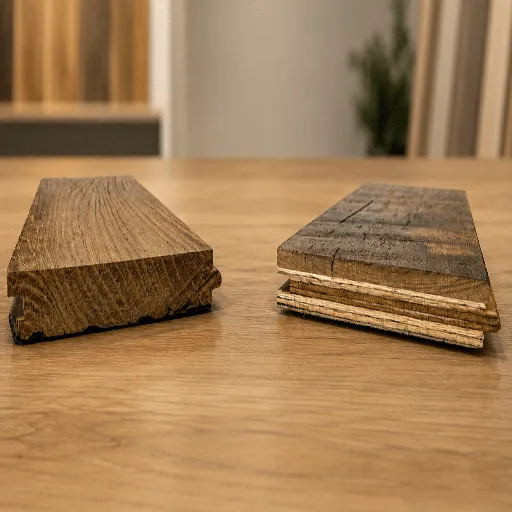
Engineered hardwood flooring is a manufactured wood floor made of a thin slice of genuine hardwood, called a wear layer or veneer, bonded over a multi-layer core. The core usually consists of plywood, high-density fiberboard (HDF), or softwood layers arranged in alternating grain directions. That cross-layered construction is what gives engineered hardwood its dimensional stability.
The top veneer is real hardwood, not a printed image. An engineered oak floor has the same grain, texture, and warmth underfoot as solid oak. You can sand and stain it if the wear layer is thick enough. Industry bodies like the National Wood Flooring Association recognize engineered hardwood as real wood flooring.
Wear layer thickness is the most important quality indicator. A 0.6–1 mm wear layer cannot be refinished. A 2 mm layer supports one light sanding. A 3–4 mm layer supports 2–3 refinishes. Premium products with 5–6 mm wear layers behave almost like solid wood and can be refinished multiple times.
For a deeper look at how engineered wood is built and where it performs best, see our complete guide to engineered wood flooring.
What Is Solid Hardwood Flooring?
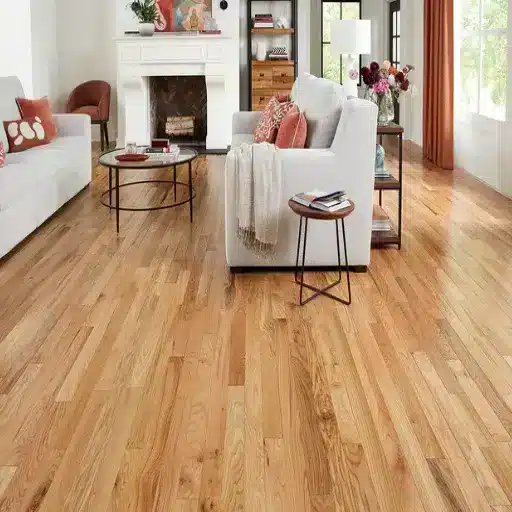
Solid hardwood flooring is a single piece of milled timber, typically 3/4″ thick, from top to bottom. It is the traditional premium option. Because it is solid wood all the way through, it can be sanded and refinished many times over its life.
Solid hardwood excels in above-grade living spaces with stable humidity and a plywood or wood subfloor. It carries a timeless feel, works beautifully in historic restorations, and can last 50–100+ years when maintained. However, it expands and contracts across the grain as humidity changes, which can cause seasonal gaps, cupping, or buckling in damp or variable climates.
Engineered Hardwood vs Solid Hardwood: Side-by-Side Comparison
This table summarizes the main differences at a glance.
| Factor | Engineered Hardwood | Solid Hardwood |
|---|---|---|
| Construction | Real hardwood veneer over multi-layer core | One solid piece of milled timber |
| Thickness | 3/8″ to 3/4″ total | Typically 3/4″ |
| Stability | High; cross-grain core resists movement | Lower; expands/contracts with humidity |
| Moisture resistance | Better; suitable for basements and humid climates | Lower; best in dry, stable spaces |
| Installation | Float, glue, or nail | Nail-down only on wood subfloor |
| Cost installed | 6–6–20/sq ft | 8–8–28/sq ft |
| Lifespan | 20–40 years (premium up to 50+) | 50–100+ years |
| Refinishing | 0–3 times depending on wear layer | 4–10+ times |
| Best subfloor | Concrete, plywood, radiant heat | Plywood over wood joists, above grade |
| Resale value | Strong; often categorized as hardwood | Strong; slight prestige edge in luxury markets |
| Sustainability | Uses less slow-growth hardwood per plank | Uses more hardwood; easier to recycle |
The table shows the trade-off clearly. Engineered hardwood gives up some refinishing potential in exchange for stability, versatility, and lower upfront cost. Solid hardwood gives up installation flexibility in exchange for maximum lifespan and tradition.
Stability and Dimensional Movement
When buyers search solid hardwood vs engineered, they often assume the comparison is simple: solid is premium, engineered is economy. In reality, the choice is about matching the material to the environment. Solid hardwood’s biggest weakness is humidity. Engineered hardwood’s biggest weakness is limited refinishing.
Solid hardwood reacts across the width of each plank. In climates with wide humidity swings, that movement can create seasonal gaps, cupping, or buckling. In extreme cases, a poorly acclimated solid floor over a damp slab can warp within a single season.
Engineered hardwood resists that movement because the core layers are arranged in opposing grain directions. When the top veneer wants to expand, the layers beneath pull against that movement. Some manufacturers report engineered products are up to 75% more dimensionally stable than solid wood of the same species.
That stability matters in basements, over concrete slabs, in kitchens and bathrooms, and anywhere with underfloor heating. It is also why engineered hardwood is often the safer choice in coastal, tropical, or continental climates where indoor humidity swings are large.
Engineered Hardwood vs Solid Hardwood Cost Comparison in 2026
Price is usually one of the first questions buyers ask when comparing engineered hardwood cost against solid hardwood. The answer depends on whether you are looking at material only or total installed cost.
Material-Only Costs
| Grade | Engineered Hardwood | Solid Hardwood |
|---|---|---|
| Budget | $4.50–$7/sq ft | $5–$9/sq ft |
| Mid-range | $7–$12/sq ft | $8–$15/sq ft |
| Premium | $12–$16+/sq ft | $15–$25+/sq ft |
Total Installed Costs
| Project Type | Engineered Hardwood | Solid Hardwood |
|---|---|---|
| Budget / entry-level | $7–$10/sq ft | $8–$12/sq ft |
| Mid-range | $10–$16/sq ft | $12–$20/sq ft |
| Premium / high-end | $16–$20+/sq ft | $20–$30+/sq ft |
Engineered hardwood is usually 15–25% less expensive for materials and 20–35% less expensive total installed. The savings come from faster installation, especially with click-lock floating systems, and from more efficient use of slow-growing hardwood species.
For a detailed pricing breakdown, see our engineered wood flooring cost breakdown.
Long-Term Value
Solid hardwood can be refinished more times, so it often lasts longer in ideal conditions. However, in damp or unstable environments, solid hardwood may need repairs or replacement sooner than engineered. The lowest total cost of ownership depends more on matching the product to the space than on the material price alone.
Refinishing Potential
Refinishing is where solid hardwood traditionally wins. Because it is solid wood from top to bottom, it can be sanded and refinished 4–10+ times over 50–100 years. That makes it attractive for homeowners who plan to stay in one place for decades.
Engineered hardwood can be refinished only as many times as the wear layer allows:
| Wear Layer | Refinishing Potential |
|---|---|
| 0.6–1 mm | Cannot be refinished |
| 2 mm | 1 light sanding |
| 3–4 mm | 2–3 sandings |
| 5–6 mm | 4–6 sandings |
Screening and recoating, which adds a new finish layer without sanding through the veneer, is a safer option for thinner engineered floors. If you want a floor that can be refreshed many times, prioritize a thick wear layer or choose solid hardwood.
For restoration guidance, see our article on refinishing engineered hardwood floors.
Moisture, Humidity, and Room Suitability
Room conditions often decide the winner in the engineered hardwood vs solid hardwood debate before price or appearance even enter the conversation.
Basements and Concrete Slabs
Solid hardwood is generally not recommended below grade. Concrete releases moisture, and basements are prone to humidity spikes. Engineered hardwood handles these conditions better, especially when paired with a moisture barrier and the right underlayment.
Kitchens and Bathrooms
Engineered hardwood works in kitchens if spills are wiped quickly. It is not recommended for full bathrooms because steam and pooled water can seep into joints. Solid hardwood faces the same water risks and is usually avoided in both rooms.
Radiant Heat
Engineered hardwood is one of the best real-wood options for radiant heating because its layered core resists the drying effects of heat. Keep surface temperature below 27°C (80°F) and follow manufacturer acclimation guidelines. Solid hardwood over radiant heat is riskier and often not recommended by manufacturers.
Humid Climates
Engineered hardwood is generally the better choice in humid or coastal regions. Its cross-grain core limits expansion and contraction, reducing the chance of seasonal gaps or cupping.
Neither product is waterproof. For wet-risk areas like laundry rooms or mudrooms, waterproof engineered hybrids or alternative materials like luxury vinyl plank are usually safer choices.
Installation Methods
Installation flexibility is one of engineered hardwood’s biggest practical advantages.
Engineered hardwood can be installed three ways:
- Floating. Planks click together and rest on an underlayment. Fastest and least disruptive.
- Glue-down. Adhesive is applied directly to the subfloor. Best for concrete slabs and radiant heat.
- Nail-down. Planks are fastened to a wood subfloor through the tongue. Most traditional feel.
Solid hardwood is almost always nail-down only and requires a wood subfloor above grade. That limits where it can go and usually makes installation slower and more expensive.
Both products need proper acclimation, subfloor prep, and expansion gaps. For step-by-step installation guidance, see our engineered wood flooring installation guide.
Sustainability and Indoor Air Quality
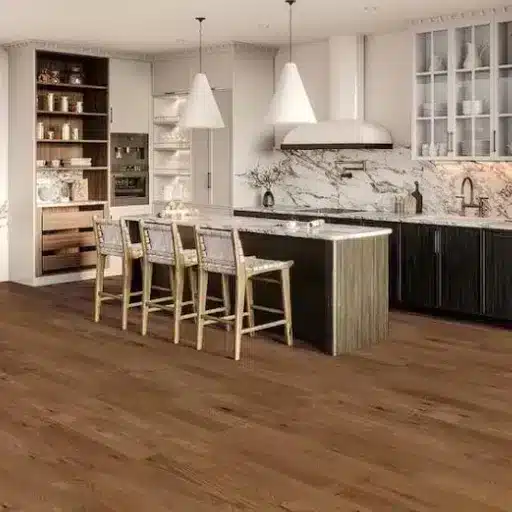
Sustainability is not a marketing angle for engineered hardwood. The construction method itself uses resources more efficiently than solid hardwood. A 4–6 mm wear layer gives you the beauty of oak, walnut, or hickory while using a fraction of the slow-growing hardwood a solid plank would require.
Certifications to Look For
- FSC (Forest Stewardship Council). Verifies responsibly managed forests. Learn more at the FSC website.
- PEFC (Programme for the Endorsement of Forest Certification). Strong chain-of-custody tracking.
- FloorScore. Certifies low VOC emissions. Details from SCS Global Services.
- GREENGUARD / GREENGUARD Gold. Tests for chemical emissions.
- EPA TSCA Title VI / CARB ATCM. Sets formaldehyde limits for composite wood products.
Indoor Air Quality
The core and adhesive in engineered hardwood can be a hidden source of indoor air pollution. Look for E0 or E1 adhesives, EPA TSCA Title VI compliance, and water-based or UV-cured finishes. Solid hardwood generally has fewer adhesive concerns but still requires low-VOC finishes for clean indoor air.
End-of-Life
Solid hardwood is easier to recycle or reclaim at the end of its life. Engineered hardwood is harder to recycle because of adhesives and finishes, though some products can be downcycled. Choosing a durable product with a thick wear layer extends useful life and reduces replacement waste.
At VitalWood Global, we source engineered and solid hardwood flooring from certified forests and verify emissions compliance so architects, builders, and homeowners can specify with confidence.
Engineered Hardwood vs Solid Hardwood Resale Value and ROI
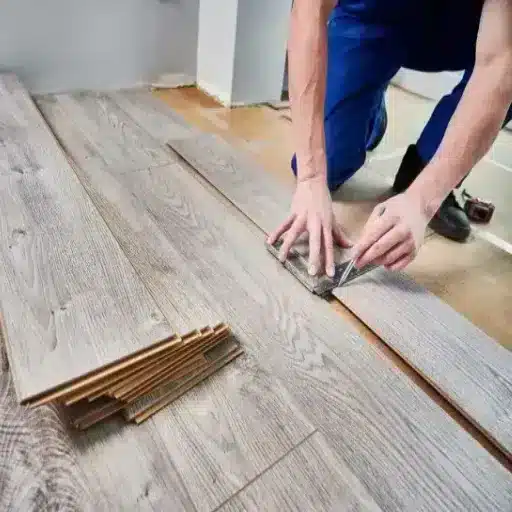
Both engineered and solid hardwood increase resale value compared to carpet, laminate, or vinyl. According to data cited by ListWithClever, new hardwood floors recover roughly 118% of their cost at resale. Refinishing existing hardwood recovers even more, around 147%.
The biggest value jump is from non-wood flooring to real wood. The gap between engineered and solid hardwood is usually smaller than buyers expect. In most markets, appraisers categorize both as hardwood flooring if the engineered product has a real wood veneer.
Which is Better for Resale Value?
Engineered hardwood resale value is strong in most markets. In many cases, appraisers categorize engineered floors with a real wood veneer as hardwood flooring. Solid hardwood may command a slight prestige premium in luxury or traditional markets where buyers expect century-long lifespans. Engineered hardwood often wins in markets where buyers prioritize moisture stability, modern wide-plank styles, and lower maintenance risk.
Neighborhood norms matter. Installing exotic solid hardwood in a mid-market area may not return the full premium. A well-installed engineered floor in the right climate can outperform a poorly chosen solid floor.
How to Choose: A Decision Framework
Use this five-step framework to choose between engineered hardwood vs solid hardwood for your project.
1. Start with the Subfloor and Grade
- Concrete slab or below grade → engineered hardwood.
- Plywood subfloor above grade → either option.
- Radiant heat → engineered hardwood.
2. Consider Climate and Humidity
- Humid, coastal, or variable climate → engineered hardwood.
- Dry, stable climate with consistent HVAC → solid hardwood.
3. Define Expected Lifespan and Refinishing Needs
- Plan to stay 30+ years and refinish multiple times → solid hardwood.
- Plan to stay 10–25 years or want lower upfront cost → engineered hardwood.
4. Set a Realistic Budget
- Include material, labor, subfloor prep, removal of old flooring, and long-term maintenance. Engineered hardwood usually costs less upfront and installs faster.
5. Check Certifications and Warranty
- Look for FSC or PEFC certification, FloorScore or GREENGUARD labels, and a strong warranty. A good residential warranty covers at least 25 years for finish and lifetime for structural integrity.
FAQ
Is engineered hardwood real wood?
Yes. Engineered hardwood has a genuine hardwood veneer on top. It is recognized as real wood flooring by industry associations.
Which lasts longer, engineered or solid hardwood?
Solid hardwood typically lasts 50–100+ years. Engineered hardwood lasts 20–40 years, with premium products reaching 50+ years depending on wear layer thickness.
How many times can engineered hardwood be refinished?
It depends on the wear layer. A 2 mm layer can usually be refinished once. A 3–4 mm layer can be refinished 2–3 times. A 5–6 mm layer can be refinished 4–6 times.
Is engineered hardwood waterproof?
No. Engineered hardwood is more moisture-resistant than solid hardwood, but standing water can damage it. Waterproof engineered hybrids exist but still cannot survive flooding.
Can you install solid hardwood in a basement?
Generally no. Solid hardwood is not recommended below grade because of moisture and humidity risks. Engineered hardwood is the safer real-wood option for basements.
Which is better for pets?
Both can work with the right species and finish. Choose harder species like hickory or maple, wire-brushed or distressed textures, and durable aluminum oxide or UV-cured finishes. Keep pet nails trimmed.
Which has better resale value?
Both increase resale value. In most markets, the difference is small. Solid hardwood may have a slight edge in luxury markets, while engineered hardwood often appeals to buyers in humid climates or modern homes.
Conclusion
The engineered hardwood vs solid hardwood debate is not about which product is better overall. It is about which product is better for your specific project.
Engineered hardwood wins on stability, installation flexibility, moisture tolerance, and upfront cost. It is the right choice for basements, concrete slabs, radiant heat, humid climates, and busy households. Solid hardwood wins on maximum lifespan, refinishing potential, and traditional prestige. It is the right choice for above-grade living spaces with stable humidity and long-term ownership.
Both are real wood. Both can add warmth, beauty, and resale value to a home. The best results come from matching the product to the subfloor, climate, and lifestyle, then installing it with proper acclimation, moisture management, and expansion gaps.
At VitalWood Global, we help architects, builders, designers, and homeowners find engineered and solid hardwood flooring that looks exceptional and meets strict sustainability standards. If you are planning a project and need guidance on species, wear layer thickness, or certification, contact our team for a personalized quote.
Still deciding? Explore our best engineered wood flooring buying guide, our engineered oak flooring species guide, or get in touch to discuss FSC-certified options for your next build.