
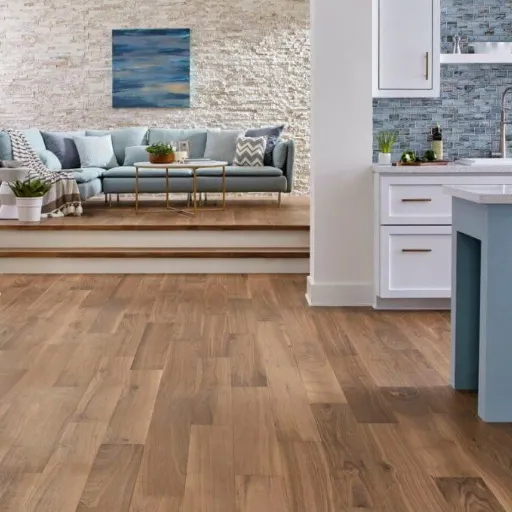
Does Walnut Flooring Lighten or Darken Over Time?
Yes, walnut flooring lightens. But not immediately, and not in a straight line.
In the first days after milling or sanding, walnut actually darkens as it oxidizes. Then over months and years, ultraviolet light breaks down the pigments in the heartwood and the floor mellows toward a warmer, lighter brown. On top of all that, an oil-based finish slowly ambers, pushing the visible color warmer still.
Three processes. Three different clocks. That’s why you keep finding contradictory answers online.
Most guides pick one of those three and describe it as if it were the whole story. This one separates them, gives you a free test to identify which change you’re looking at, and tells you honestly what you can and can’t control. We write from the manufacturing side, where color consistency across a large floor is a specification problem, not a marketing claim.
If you’re mid-project and need answers now, request a walnut sample set and compare natural, steamed, and fumed material under your own light before you commit.
Key Takeaways
- Walnut darkens for the first few days after milling, then lightens and mellows over months to years under UV exposure.
- Three separate processes change the color: oxidation (days), UV lightening (months to years), and finish ambering (years). They can push in opposite directions.
- The rug test tells you which one you have: lift your area rugs. Protected areas darker than sunlit areas means UV. A uniform warm shift everywhere means the finish.
- Walnut heartwood lightens while sapwood does not, so pale sapwood stripes become more prominent over time, not less.
- You can slow the shift but not stop it. Sanding back to bare wood genuinely restores the original chocolate tone.
Does Walnut Flooring Lighten or Darken? The Short Answer
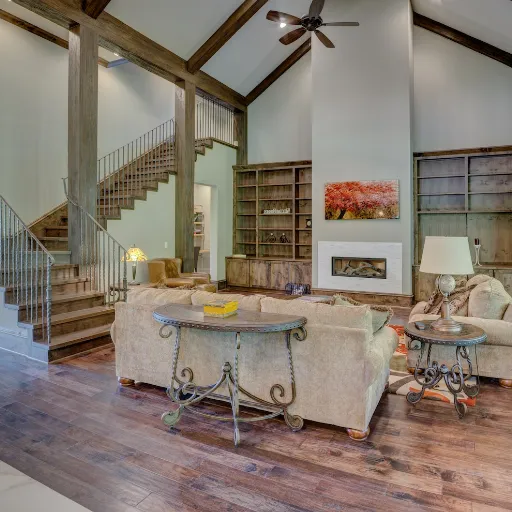
Walnut flooring lightens over time. It darkens briefly in the first days after milling as it oxidizes, then ultraviolet light gradually mellows the dark heartwood toward a warmer mid-brown over the first year or two. An oil-based finish ambers on top, which can make the floor look warmer still.
That’s the 60-second version. The rest of this article is about why the timeline matters, how to tell which change you’re seeing, and what to do about it. By the end you’ll know exactly how much walnut flooring lightens, how fast, and what your options are.
If you’re still choosing a floor, our complete engineered walnut flooring guide covers construction, wear layers, and installation. This article is about what happens after the floor is down.
Why You Get Two Different Answers: Three Changes, Three Clocks
Search this question and you’ll find sources insisting walnut lightens and sources insisting it darkens. Both are describing real phenomena. They’re just looking at different layers and different timeframes.
Here is the full picture of what drives walnut flooring color change.
| Mechanism | Timescale | What you see | What to do |
|---|---|---|---|
| Oxidative darkening | Hours to weeks | Freshly sanded walnut looks lighter and slightly green; it settles darker within days | Wait. Do not judge color for two weeks |
| UV photo-degradation | Months to a few years | Dark chocolate softens toward warm mid-brown, sometimes with golden undertones | Accept it, or manage light exposure |
| Finish-film ambering | Years | Whole floor turns warmer and yellower, including under rugs | Choose a UV-inhibited water-based finish |
Read that table once and most of the confusion disappears. The floor isn’t doing one thing. It’s doing three things at once, at different speeds, and the finish is sitting on top of the wood like a tinted window.
The First Days: Oxidative Darkening
Freshly milled walnut isn’t the color you think it is.
Cut into a walnut board and the interior can look noticeably lighter, sometimes with a faint green or purple cast. Expose it to air and it darkens within days as the extractives react with oxygen. This is the same reason a freshly sanded floor can look wrong for a fortnight.
We see this constantly in manufacturing. A batch comes off the line and the color reads one way under inspection lighting. Come back the following week and it’s settled.
This matters for one practical reason. Never judge a walnut floor’s final color in the first two weeks after installation or sanding. Give it time to settle before you decide you’ve got a problem.
The First Years: UV Photo-Degradation
This is the change most people mean when they ask whether walnut flooring lightens.
Walnut’s deep chocolate tone comes largely from extractives and pigments in the heartwood. Ultraviolet light degrades lignin at the wood’s surface and attacks those color compounds. The result is a gradual softening: the darkest boards drift toward a warmer, lighter mid-brown.
An Australian flooring specialist puts it plainly: the darkest boards soften toward a warmer mid-brown over many years of UV exposure, and most owners like the effect. That is what it looks like when walnut flooring lightens in practice.
That direction is unusual. Cherry famously darkens. Oak ambers. Walnut is one of the few common flooring species that goes the other way. If you’re choosing between the two most popular hardwoods, our walnut vs oak flooring comparison covers how each ages alongside hardness and cost.
What most people call walnut flooring patina is really this mellowing: the hard edges of the original black walnut flooring color softening into something warmer and less uniform. It is aging, not wear.
A note on honesty. The claim that walnut lightens is well established in the trade, but the primary research is thinner than the confidence of the sources making it. Species references like the Wood Database document walnut’s color range in detail but say nothing about light exposure in the main entry. The “it fades” observation appears in practitioner commentary rather than controlled studies.
We think you should know that. The effect is real and widely reported by people who work with the wood daily. It just isn’t as neatly quantified as a Janka number. For the underlying photochemistry, the Holzforschung study on wavelength-dependent wood degradation is the most rigorous starting point.
The good news is you don’t have to take the claim on faith. There’s a test you can run at home in about thirty seconds, and it’ll tell you exactly what’s happening on your floor.
The Whole Time: The Finish Film Ambers
Here is where the contradiction gets resolved.
Oil-based polyurethane and similar finishes yellow and warm as they age. This happens regardless of light, and it happens across the entire floor, including under furniture. A water-based finish with UV inhibitors stays far truer.
So when a furniture maker says an oil finish “slows” walnut’s lightening, and a finishing specialist says oil finishes amber, both are correct. They’re describing different layers.
The wood underneath is lightening. The film on top is yellowing. What you actually see is the sum of the two.
This is also why finish choice is the single biggest lever you control. More on that below.
The Rug Test: Which Change Is Your Floor Showing?
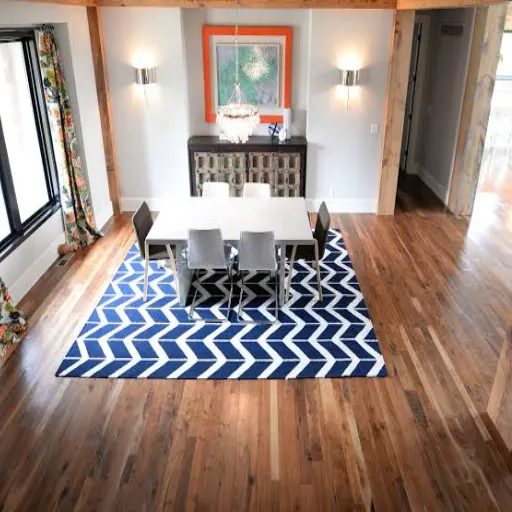
You don’t need a meter or a lab. You need to lift your rugs.
Wait until the floor has been down at least six months. Then lift every area rug and look at the protected patches underneath. What you find tells you which process is dominant.
Protected areas darker than the sunlit floor. The wood itself is lightening under UV. This is normal walnut behavior and it isn’t damage. The contrast will soften over time as the whole floor reaches a new equilibrium, but it won’t fully disappear. It is the clearest sign that walnut flooring lightens rather than darkens.
A uniform warm or yellow shift across the entire floor, including under the rugs. That’s finish-film ambering. The wood may also be lightening, but the film is driving what you see. A different finish at the next refinish is the fix.
Patchy, blotchy, or irregular discoloration with no relationship to light. Stop. This probably isn’t aging. Moisture intrusion, a spill that sat, an incompatible cleaning product, or a finishing defect all look like this. This is the one case where you should call a professional rather than wait it out.
The same test works on maple, with the opposite expected result. Maple floors turn yellow, so if you’re weighing the two species, our guide to why maple flooring turns yellow runs the same diagnostic from the other direction. It’s a useful pair to read together.
Not sure which pattern you’re looking at? Send us a photo of the floor with and without the rug lifted, and our team will tell you what it shows. No charge, no sales pitch.
Get a free color-change assessment →
How Long Does Walnut Flooring Take to Lighten?
Walnut flooring lightens most in the first three to six months after installation, then continues to mellow for a year or two before the rate slows sharply. Rooms with direct sunlight move fastest. After roughly two years the surface approaches a new equilibrium and further change becomes gradual.
Every floor is different, but the pattern’s consistent enough to plan around.
| Period | What is happening | What to expect |
|---|---|---|
| 0 to 2 weeks | Oxidative settling | Floor darkens slightly and evens out. Don’t judge color yet |
| 1 to 6 months | UV change begins | The most visible shift happens here. Rooms with direct sun move fastest |
| 6 to 18 months | Continued mellowing | Tone continues warming. Rug shadows become visible if rugs have not moved |
| 2 years and beyond | Approaching equilibrium | Change slows considerably but does not stop entirely |
The concentration of change in the first three to six months surprises most buyers. It’s also the reason a floor can look different from the showroom sample by the time the furniture arrives.
Walnut’s shift from deep chocolate to warm mid-brown over the first year of UV exposure.
Rotate your rugs every three to six months during that first year. It costs nothing and it’s the single most effective way to keep the aging even.
Your Sapwood Will Get More Visible, Not Less
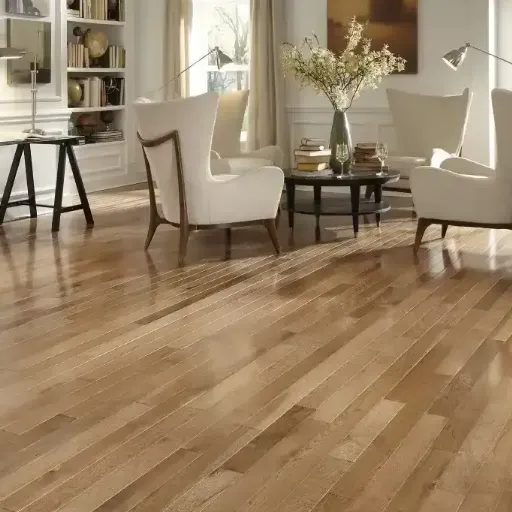
This one catches people out, and almost nobody writes about it when they cover walnut flooring color change.
Walnut sapwood is the pale, creamy outer layer of the tree. Heartwood is the dark chocolate interior. Most premium walnut flooring is graded to minimize sapwood, but some is sold with visible pale streaks as part of its character.
Here’s the thing. The heartwood lightens. The sapwood doesn’t.
Which means the contrast between them increases over time. Those pale stripes you see in a sample will become more prominent, not less, as the surrounding heartwood mellows toward them. So the answer to “does walnut flooring lighten evenly?” is no: it lightens by heartwood, which is why sapwood-heavy floors change character more than uniform ones.
If you’re choosing between two boards and one has noticeably more sapwood, that difference will widen. Decide now whether you like that look, because you’ll be living with more of it, not less.
Ask your supplier how the material is graded and whether sapwood is permitted. It’s a fair question, and a good supplier will answer it without flinching. Grade and sapwood allowance also move the price, which our walnut flooring cost breakdown explains.
How to Slow Walnut’s Color Shift
You can’t stop walnut flooring from lightening. You can slow it substantially, and in a bright room that’s worth doing. These are the levers in order of impact.
- Choose a UV-inhibited water-based finish. This is the biggest lever. It protects the wood and avoids adding amber on top.
- Add UV-filtering window film to large south- and west-facing glazing. Modern low-e glass already blocks a useful amount of UV.
- Use curtains or blinds in rooms with direct sun, at least during peak hours.
- Rotate rugs and move furniture every three to six months during the first year, then annually.
- Don’t place a feature floor in a sun trap if color stability is a hard requirement for the project.
- Accept a baseline rate of change. Some movement is inevitable and, honestly, most people prefer the mellowed tone.
Be skeptical of any product that promises to stop walnut from changing color entirely. No finish does that. A good finish slows the change and protects the surface. That’s the honest claim.
For projects where the finish specification is being written into a submittal, our engineered walnut specifier guide covers finish systems alongside core construction and wear-layer options.
Natural, Steamed, Fumed or Stained: Four Different Answers
“Walnut flooring” isn’t one product. How the wood was processed before it reached you changes how much it’ll move.
| Product class | Starting tone | Expected shift | Stability |
|---|---|---|---|
| Natural / unfinished | Full chocolate range, highest variation | Largest shift. Full UV lightening path | Lowest |
| Steamed walnut flooring | Lighter, more uniform, sapwood muted toward heartwood | Moderate. Much of the extractive variation is already driven off | Moderate to high |
| Fumed walnut flooring (ammonia) | Markedly darker, deep brown | Small. Color is a chemical reaction product, not raw pigment | High |
| Stained | Whatever the stain specifies | Masked and slowed, but the wood still lightens underneath | Moderate |
Steamed walnut flooring goes through heat and steam during drying. This evens out the sapwood toward the heartwood tone, so the floor starts lighter and more uniform and has less room to shift.
Fumed walnut flooring is treated with ammonia gas, which reacts with the wood’s tannins. The color change is chemical, not a surface coating, so it’s comparatively stable. A fumed floor won’t lighten back the way natural walnut does.
Stained walnut is the trickiest. The stain pigment is itself sensitive to UV, and the wood underneath continues to lighten. Stain slows and masks the visible change, but it complicates color matching later, because now two things have to be matched instead of one.
If color predictability is critical to your project, steamed or fumed material is the safer specification. If you want the species at its most expressive, go natural and plan for the shift.
Whichever route you take, confirm what you’re actually buying. Trade names in this species aren’t regulated, and “walnut” on a label doesn’t always mean the tree you expect. Our upcoming breakdown of Peruvian walnut vs black walnut will explain which names are true walnuts and which are substitutes.
Can You Get the Dark Color Back?
Yes. This is the reassuring part.
Sanding back to bare wood removes the UV-affected surface layer and exposes fresh material underneath. The original chocolate tone comes back, and the clock effectively restarts, including the brief darkening phase.
A flooring specialist describes it well: sand it back in twenty years and the same chocolate tones come up again.
Three caveats before you book the work.
Wear layer limits how often you can do this. Engineered walnut can only be sanded as far as its top layer allows. Thicker wear layers support more refinishing cycles. Thinner ones may only take a screen and recoat, which won’t remove color change that lives in the wood. Our guide to refinishing engineered hardwood floors covers the math.
Walnut is soft, and sanding it takes a light touch. At roughly 1,010 on the Janka scale, walnut marks and burnishes more readily than oak or maple. This is a professional job, not a rental-sander weekend. The NWFA sets the standards most reputable finishers work to. Softness also affects how the floor wears day to day, which our guide to walnut flooring durability covers in detail.
The change will start again immediately. Refinishing resets the floor, it doesn’t freeze it.
Refinishing is also the sustainable choice. Restoring a floor that has decades of service left in it keeps premium material out of landfill and avoids the footprint of a full replacement. For a species that takes as long to grow as walnut does, that matters.
Matching Walnut Floors to Cabinets, Furniture and Veneer Panels
This is where color change stops being an aesthetic question and becomes a logistics one.
Consider what happens in year six when three boards need replacing after a water event. The new stock arrives at its natural, unaged tone. The surrounding floor has spent six years lightening. The replacement boards will read noticeably darker, and no amount of blending will fully hide it.
The same problem applies across materials. A walnut floor and walnut veneer cabinetry finished with different systems will age apart. The floor lightens and mellows; the cabinetry ambers under an oil finish. Within a few years they’re visibly different woods.
Three practical steps.
Buy spare material at installation. Order 5 to 10 percent extra and store it. Aged-in-place boards are the only true match.
Specify one finish system across floor, cabinetry, and paneling on any project where they sit in the same sightline. This is standard practice on good commercial work and it’s routinely skipped on residential.
Plan for the direction of travel. If you’re matching a new floor to existing walnut furniture, expect the floor to move a step lighter over its first year. Choose the material a shade darker than the target, not the exact match.
For architects and designers specifying both surfaces, our walnut veneer range is produced to take the same finish system as the floor. The two then age together rather than apart.
FAQ: Walnut Flooring Color Change
Does walnut flooring lighten or darken?
Both, at different times. It darkens slightly in the first days after milling as it oxidizes, then lightens and mellows over months to years under UV exposure. An oil-based finish also ambers over time, adding warmth on top.
How long does it take for walnut flooring to lighten?
Most of the visible change happens in the first three to six months after installation. The floor continues to mellow for a year or two, then the rate slows considerably as the surface reaches a new equilibrium.
Is it normal for my walnut floor to look lighter than the sample?
Yes. Showroom samples are small, often viewed under cool artificial light, and have not been exposed to UV. A floor that has been installed for a year will typically read warmer and lighter than the sample you selected.
Does walnut flooring fade in sunlight?
Walnut floor fading in sunlight works in the opposite direction to most woods: it lightens rather than losing color. Direct sunlight accelerates the UV-driven mellowing. Rooms with large south- or west-facing windows will see faster change than shaded rooms.
Can I stop walnut flooring from changing color?
No. You can slow it with a UV-inhibited water-based finish, window film, curtains, and rug rotation. No finish stops the process entirely, and any product claiming otherwise should be treated with suspicion.
Does walnut darken over time with an oil finish?
The wood lightens while the oil film ambers. The combined effect often reads as the floor getting warmer rather than lighter, which is why some people report that walnut darkens over time. This is why sources disagree about direction: they are describing different layers.
What is the rug test for walnut flooring?
Lift your area rugs after six months. If protected patches are darker than sunlit areas, the wood is lightening under UV. If the whole floor is uniformly warmer including under rugs, the finish is ambering. If the pattern is patchy and unrelated to light, investigate moisture or a finishing defect.
Does stained walnut still lighten?
Yes, but less visibly. The stain masks the change and is itself UV-sensitive, so the floor still shifts. Staining also makes future color matching harder because both the stain and the wood are changing.
Does fumed or steamed walnut lighten?
Much less. Steaming evens the tone and removes much of the variation that drives the shift. Fuming is a chemical reaction with the tannins, so the color is comparatively stable and will not lighten back the way natural walnut does.
Will walnut sapwood lighten too?
No. Heartwood lightens; sapwood stays pale. The contrast between them increases over time, so visible sapwood streaks become more prominent, not less.
Can I make a lightened walnut floor dark again?
Yes. Sanding back to bare wood removes the UV-affected layer and restores the original tone. The wear layer thickness determines how many times this is possible.
Is walnut color change covered by warranty?
Generally not, because it is normal species behavior rather than a defect. Check your specific warranty terms, but expect color shift to be excluded and plan for it rather than relying on a claim.
The Honest Answer: Plan for It, Then Enjoy It
Walnut flooring lightens. It darkens first, then mellows over months and years, while the finish ambers on top. Once you know there are three processes running on three clocks, the conflicting advice online stops being confusing and starts being obviously incomplete.
So does walnut flooring lighten? Yes, reliably, and more than most people expect in the first year.
Run the rug test to find out which change you’re living with. Rotate your rugs for the first year. Choose a UV-inhibited finish if color stability matters. Buy spare boards.
And accept that a floor which changes over time isn’t a floor that’s failing.
Most walnut owners end up preferring the mellowed tone. The wood has done what wood does.
If you’re still choosing, our walnut flooring pros and cons sets color shift against walnut’s other trade-offs. That includes the softness that makes it a poor fit for some households. If you want the technical detail on construction and wear layers, start with the full engineered walnut guide.
Ready to see how walnut actually ages? Request a sample set and compare natural, steamed, and fumed material side by side under your own light. Our team can also quote to spec for projects where color consistency across a large floor plate is non-negotiable.