
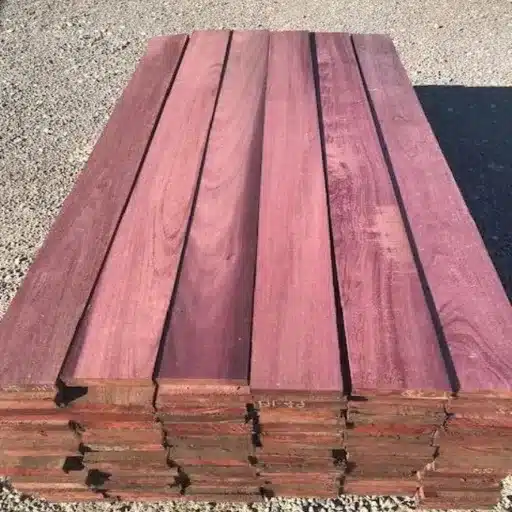
Is Purple Heart Wood Endangered? Sustainability & Sourcing Facts
Purple heart wood is not listed in the CITES Appendices, so it is not broadly regulated as an endangered species, but the conservation picture varies by species: Peltogyne purpurea is assessed as Vulnerable in parts of its range, a handful of other Peltogyne species are Endangered, and habitat loss plus overharvesting in the Amazon remain real concerns. That makes responsible, certified sourcing the single most important thing to verify before you buy.
For a wood so beloved by woodworkers, purpleheart carries an unusual amount of confusion. Ask three people whether it’s endangered and you may get three different answers. One says it’s totally fine. Another says you should never touch it. A third shrugs because they can’t even find it on a conservation list. All three are partly right, and that’s the problem.
In this guide, you’ll get a clear, sourced answer to the question “is purple heart wood endangered,” a species-by-species look at the actual conservation status, and a practical framework for buying this striking tropical hardwood without contributing to the problems that threaten it. We’ll also cover the legal side of importing it and the sustainable alternatives worth considering.
Key Takeaways
- Purple heart wood (Peltogyne spp.) is not listed in the CITES Appendices and not uniformly listed on the IUCN Red List, so it is not broadly considered endangered.
- Several specific species are threatened: Peltogyne purpurea is Vulnerable in Costa Rica, Panama, and Colombia, and P. mexicana, P. chrysopis, and P. gracilipes are Endangered.
- Deforestation, overharvesting, and illegal logging in the Amazon are genuine concerns that a CITES listing does not capture.
- FSC or PEFC certification with a verified chain of custody is the buyer’s main protection, even though certified purpleheart typically costs 25-40% more.
- You can buy purpleheart responsibly by verifying the scientific name, origin, and certification, and by choosing veneer where it maximizes yield.
Is Purple Heart Wood Endangered? The Short Answer
Purple heart wood is not listed in the CITES Appendices, meaning there are no international trade restrictions under that treaty, and the Peltogyne genus as a whole is not on the IUCN Red List of Threatened Species. That said, “endangered” is not a single yes-or-no question, because purpleheart is not one species. It’s a trade name covering roughly 23 species of tropical trees, and their conservation statuses differ.
The honest, accurate answer has three layers:
- CITES: Not listed. No export or import permits are required under the Convention on International Trade in Endangered Species.
- IUCN: Not listed as a genus, but several individual Peltogyne species carry Endangered or Vulnerable assessments, and many species simply haven’t been assessed at all.
- Real-world risk: Habitat loss, deforestation, and overharvesting are serious problems in parts of the species’ native range, particularly in the Amazon basin.
So the direct answer to “is purple heart wood endangered” is no, not in a legal or treaty sense, but the species-level reality is more complicated, and unchecked logging threatens parts of its range. Treat any source that gives you a flat yes or no with suspicion.
What Is Purple Heart Wood, Really?
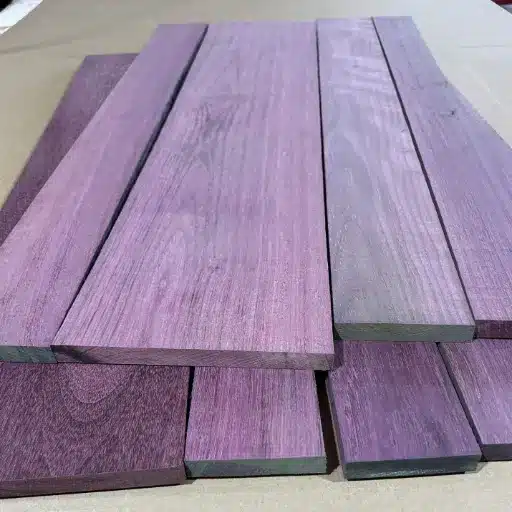
Before we talk conservation, it helps to know what you’re actually looking at. Purple heart wood is the heartwood of Peltogyne trees, a genus of roughly 23 species in the legume family (Fabaceae) native to tropical Central and South America. The commercial supply comes mostly from Brazil, Guyana, and Suriname, with additional species in Mexico, Costa Rica, Panama, and Colombia.
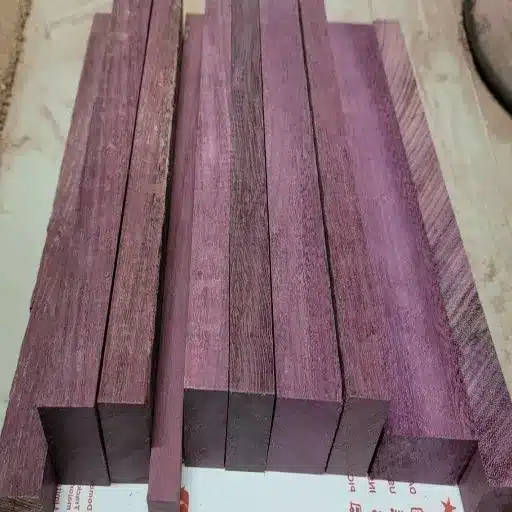
The tree grows tall and straight, and its heartwood is what makes it famous. Freshly cut, it’s a dull grayish brown. Within days of exposure to air and light, it oxidizes into that vivid eggplant purple that stops people mid-project. Over years, it darkens to a deep brown with hints of crimson, and outdoors it fades to gray under strong UV.
It’s also remarkably tough. With a Janka hardness around 2,520 pounds-force, purpleheart is significantly harder than white oak, and it rates as very durable against rot, decay, and most insects. That combination of color, hardness, and durability is exactly why it’s used for flooring, outdoor decking, cutting-board accents, musical instruments, and turning projects.
For a deeper look at the tree itself, its native range, and how the species vary, see our guide to the purple heart wood tree.
Purpleheart Conservation Status, Species by Species
Here’s the key fact that most articles get wrong: when you buy “purpleheart,” you are buying a species you may not know the name of. Retailers rarely label it beyond the trade name, and the conservation status depends entirely on which Peltogyne species you’re getting.
| Species | Common / regional name | CITES | IUCN / regional status |
|---|---|---|---|
| Peltogyne paniculata | Purpleheart (most common trade species) | Not listed | Not assessed |
| Peltogyne purpurea | Nazareno (Costa Rica) | Not listed | Vulnerable in Costa Rica, Panama, Colombia; legally protected in Costa Rica |
| Peltogyne mexicana | Mexican purpleheart | Not listed | Endangered (Guerrero, Mexico) |
| Peltogyne chrysopis | Purpleheart | Not listed | Endangered (small, fragmented range) |
| Peltogyne gracilipes | Purpleheart | Not listed | Endangered (small, fragmented range) |
| Peltogyne floribunda | Purpleheart | Not listed | Not threatened (2024 Kew assessment) |
| Peltogyne (genus) | Purpleheart, amaranth, violetwood | Not listed | Not uniformly listed |
There’s also a well-documented quirk that fuels the confusion: the IUCN Red List’s database does not reliably cross-reference the common name “purpleheart.” Searching the site for “purpleheart” often returns nothing, even though several species have assessments. That’s why so many people conclude it isn’t on any list. It’s on lists, but you have to search by the full botanical name.
One more practical implication: because Peltogyne paniculata, the species most commonly traded, has never been formally assessed, its conservation status is simply unknown. That uncertainty is itself a reason to prefer certified supply.
Why Purpleheart Faces Real Threats
Even where a species isn’t formally listed, the pressures on wild purpleheart populations are real. Here’s what conservationists and forestry bodies point to.
Deforestation and habitat loss. Purpleheart grows in tropical lowland and Amazonian forests that are under steady pressure from clearing for agriculture, ranching, and development. Forest loss removes habitat faster than any listing can respond.
Overharvesting. Loggers target the largest, straightest trees first, which are precisely the mature individuals needed to sustain a population. The species is slow to regenerate, with some individuals taking 80 years or more to reach harvestable size. Once big trees are stripped out, the population structure collapses.
Illegal logging. High international demand and premium prices for exotic hardwood make purpleheart attractive to illegal operators. In response, Guyana has listed some Peltogyne species as restricted logging species, and several populations that were once abundant have become scarce.
Here’s the nuance that a lot of reporting misses: purpleheart can grow quickly in its natural environment, which makes it genuinely renewable when forests are managed properly. The problem isn’t the tree’s biology. The problem is unmanaged logging that removes trees faster than they can replace themselves.
Consider what happened to Marcus, a wood supplier who built his small business around tropical hardwoods. In 2019, he sourced most of his purpleheart from a broker who sent a one-line email promising it was “from a legal source.” Three years later, one of his largest flooring customers asked for FSC documentation, and Marcus discovered his supplier had none. He lost the contract, had to re-source his entire inventory, and absorbed a 30% cost increase switching to certified lumber. He tells every new buyer the same thing now: verify before you buy, or the verification catches up with you eventually.
Is Purple Heart Wood Legal to Buy?
Legality is a separate question from conservation status, and it matters for anyone buying in quantity.
Because purpleheart is not CITES-listed, you don’t need CITES import or export permits. That’s one reason it’s become a popular legal alternative to restricted woods like rosewood (Dalbergia species) and bubinga, which are heavily regulated.
But “not CITES-listed” is not the same as “no paperwork.” In the United States, the Lacey Act requires importers to declare the scientific name (genus and species) and country of origin for all wood products using USDA form PPQ 505. The USDA’s Animal and Plant Health Inspection Service (APHIS) also requires imported wood to undergo treatment, typically heat or chemical treatment, to prevent invasive pests.
What this means for you: a legitimate supplier should be able to tell you exactly which species you’re buying and where it was harvested. If they can’t, that’s a red flag, not a minor annoyance.
How to Buy Purpleheart Responsibly
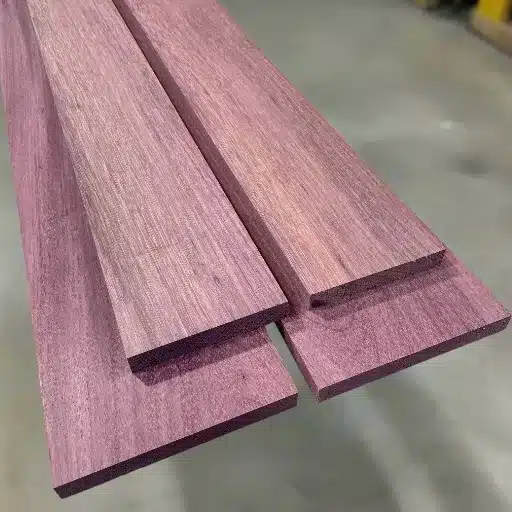
The good news is that responsible sourcing is entirely achievable. It just requires a few specific checks that most buyers skip.
1. Ask for the scientific name and origin. A real supplier knows whether you’re getting Peltogyne paniculata, P. purpurea, or another species, and which country the log came from. Trade names hide the details that determine both legality and conservation status.
2. Verify certification. The Forest Stewardship Council (FSC) and the Programme for the Endorsement of Forest Certification (PEFC) certify sustainable forest management, and a chain-of-custody certificate traces certified wood from forest to finished product. You can verify an FSC license code on the FSC’s public certificate database. Expect certified purpleheart to cost 25-40% more than wild-harvested stock; that premium is what you’re paying for verifiable sustainability.
3. Check for red flags. Be wary of any supplier who says the wood is simply “sustainably harvested” without a certificate number, who can’t name the species, or who won’t share origin documentation. These are the same signals our sourcing team looks for in every sustainable wood sourcing decision.
4. Match the material to the application. Purpleheart’s hardness and rot resistance genuinely earn their keep outdoors, in high-wear flooring, and in heirloom pieces. For lower-stakes applications, a certified domestic hardwood or a veneer is often the more responsible choice.
5. Consider veneer. A single cubic meter of log produces up to roughly 2,000 square meters of veneer, around forty times more finished surface than the same volume as solid lumber. When you genuinely want the purple, purple heart veneer stretches the material much further and reduces pressure on the resource.
For current pricing across grades, what drives the cost, and where to find reputable sellers, see our purple heart wood price and buying guide.
Is Purpleheart Eco-Friendly? A Balanced Verdict
After all the nuance, people usually want a bottom line. Here’s ours: purpleheart is neither the environmental villain some claim nor a worry-free choice others suggest. It depends on how it was sourced and what it’s used for.
Purpleheart is a responsible choice when:
- It’s FSC or PEFC certified and the chain of custody is documented
- It’s legally harvested with a clear country of origin
- It’s used where its hardness and durability genuinely reduce waste over the long term
- It’s specified as veneer where that maximizes yield
Purpleheart is a poor choice when:
- The source is unverified Amazon stock with no documentation
- It’s used for a low-stakes application where a certified domestic or fast-growing species would perform just as well
- The project is in a low-light space where the signature purple will fade to brown anyway, negating the whole reason to choose it
That balanced framing matters. It’s the difference between responsible forestry and virtue signaling, and it’s the approach we take across everything we source at VitalWood Global.
Sustainable Alternatives to Purpleheart
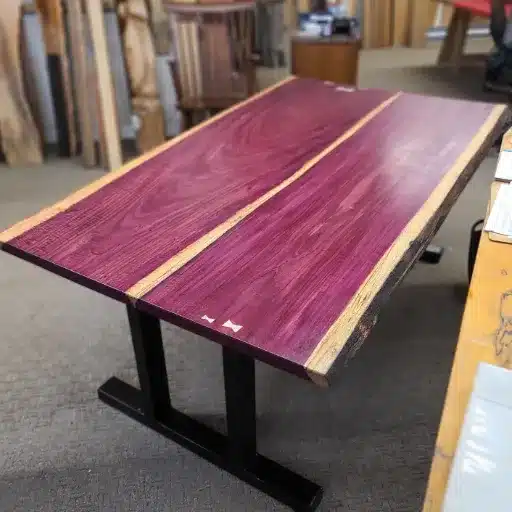
If you love the purple but want an even lighter footprint, or if the certification premium is a dealbreaker, you have solid options.
Reconstituted or engineered veneer is a standout. It’s made from fast-growing species like poplar, ayous, and eucalyptus, which mature in 10 to 15 years rather than 50 to 100, then dyed and reassembled to replicate the look of exotic species. You get the visual impact without the pressure on old-growth forests.
Certified domestic hardwoods like FSC white oak, maple, and walnut cover most furniture, flooring, and cutting-board applications with lower transport emissions and a simpler supply chain.
Other certified exotic species with existing sustainable supply chains can substitute for specific use cases, though none quite replicates purpleheart’s color.
And when you do want the genuine article, certified purpleheart veneer is the highest-yield, most resource-efficient way to get it. You can explore this further in our purple heart wood complete guide, which covers properties, uses, and responsible sourcing end to end.
Frequently Asked Questions
Is purple heart wood endangered?
Purple heart wood is not listed in the CITES Appendices, so it is not broadly regulated as endangered. However, several Peltogyne species, including P. purpurea, P. mexicana, P. chrysopis, and P. gracilipes, are assessed as Vulnerable or Endangered, and deforestation remains a real concern.
Is purpleheart wood on the CITES list?
No. The Peltogyne genus is not listed in any CITES appendix, so no CITES permits are required to trade it.
Is purple heart wood on the IUCN Red List?
Not as a genus, but several individual species have assessments. The IUCN database requires the full botanical name, which is why searching “purpleheart” often returns no results.
Is purple heart wood sustainable?
Yes, when it’s certified (FSC or PEFC), legally harvested, and documented with a clear origin. Unverified wild-harvested stock carries the real risks of deforestation and overharvesting.
Is purpleheart legal to buy in the US?
Yes, but the Lacey Act requires declaring the scientific name and country of origin on import paperwork, and APHIS treatment requirements apply to all imported wood.
Does buying purpleheart contribute to deforestation?
Only when the source is unverified. Certified and documented supply supports responsible forest management instead of contributing to habitat loss.
Conclusion
So is purple heart wood endangered? Not in the way the question is usually asked, and that’s exactly why it deserves a careful answer. It’s not CITES-listed, and the genus isn’t on the IUCN Red List. But purpleheart is not one species, several Peltogyne species are threatened, and deforestation, overharvesting, and illegal logging are real pressures across its range.
The practical takeaway is simple: buy certified, and verify the species. Ask for the scientific name, confirm the origin, check for FSC or PEFC chain-of-custody documentation, and choose veneer where it makes sense. You get the striking material you want, and you support the responsible forestry that keeps it available for the next generation of projects.
At VitalWood Global, responsible sourcing isn’t a marketing line, it’s how we work every day. If you’re planning a project and want certified, traceable wood you can feel good about, we’d love to help you choose the right material. Contact us for a quote and let’s build something that lasts, for you and for the planet.