

How to Remove Water Stains from Wood: A Complete Restoration Guide
You can remove most water stains from wood by matching the remedy to the stain type: use gentle heat or oil-based household items for white rings trapped in the finish, and use oxalic acid or sanding for dark stains that have soaked into the wood. The secret is diagnosing the stain before you treat it, because the wrong method can turn a small mark into a refinishing project.
That pale ring on your dining table is not just a cosmetic annoyance. It is a signal that moisture has crossed the finish line, and your next move determines whether the wood stays beautiful or needs professional help. At VitalWood Global, we believe quality wood deserves a second chance. Restoring a water-stained table, floor, or cabinet is often more sustainable than replacing it, and it starts with understanding what the stain is actually doing beneath the surface.
In this guide, you will learn how to identify white, dark, and heat stains; remove each type with methods that work; match the treatment to your finish and wood species; and protect wood so the problem does not come back.
Key Takeaways
- White water stains sit in the finish and usually respond to heat, mayonnaise, petroleum jelly, or mild abrasives.
- Dark or black stains have reached the wood fibers and often need oxalic acid, hydrogen peroxide, or sanding and refinishing.
- Heat stains are a surface moisture problem, not a burn, and the iron-over-cloth method lifts them safely.
- Always test any remedy in a hidden area first and work from the least aggressive method upward.
- A quality water-resistant finish, coasters, and quick spill cleanup are the best long-term prevention.
What Causes Water Stains on Wood?
Water stains fall into three main categories. Each one tells you something different about how far the moisture has traveled and what it will take to reverse the damage.
White Water Stains: Moisture Trapped in the Finish
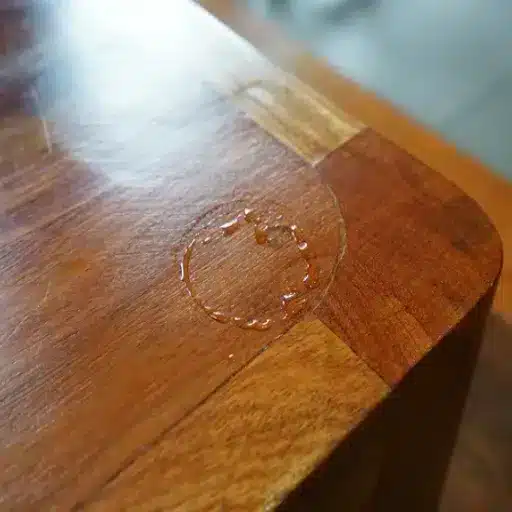
A white or cloudy ring means water has slipped under the clear topcoat but has not reached the bare wood. The moisture scatters light, which is why the spot looks pale. These stains are the easiest to fix because the wood itself is usually unharmed. Common culprits include cold glasses, hot mugs, damp vases, and cleaning cloths that are too wet.
Dark Water Stains: Water Reaches the Wood Fibers
When water sits long enough to soak through the finish, it can react with tannins in the wood. Oak, walnut, cherry, cedar, and mahogany are especially high in tannins, so they often turn gray, brown, or black. These stains are harder to remove because the discoloration is inside the wood, not just on top of it. For a deeper look at why this happens and which species are most affected, see our guide to tannin stains on wood.
Heat Stains: A Special Case of Surface Moisture
A hot coffee cup can leave a white mark that looks like a water ring. The heat drives moisture deeper into the finish film and traps it there. Many people assume the wood is burned, but the damage is usually reversible with the same gentle heat that caused it.
Mold and Water Damage
If moisture lingers for days, especially in humid environments, you may see dark patches with a musty smell or fuzzy growth. This is beyond a simple stain. The wood may be structurally compromised, and the priority shifts from cosmetic repair to drying, cleaning, and possibly replacing the affected piece.
How to Identify Your Stain Type Before Treating It
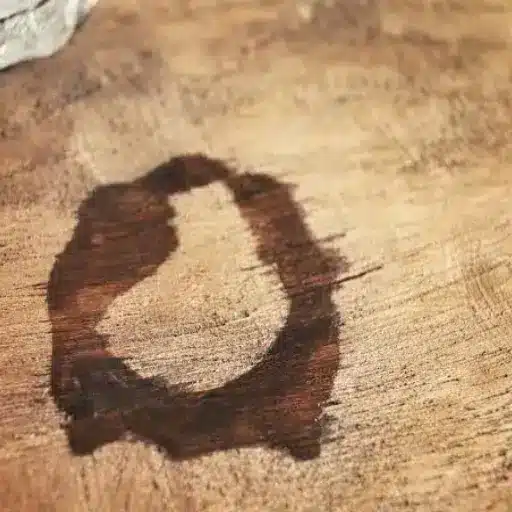
The right diagnosis saves time, money, and wood. Before you reach for a remedy, run through this quick assessment.
Visual Inspection Checklist
- Color: White or cloudy usually means a surface stain. Gray, brown, or black suggests deeper penetration.
- Texture: If the surface feels smooth and the discoloration seems to float under the shine, the stain is in the finish. If the area is rough, raised, or soft, the wood itself is damaged.
- History: A glass left overnight is likely a white ring. A leak under a planter that went unnoticed for weeks is likely a dark stain.
- Shape: Round or oval marks often come from cups and bowls. Irregular, spreading patches usually mean a larger spill or leak.
The Mineral Spirits Test
Dampen a clean white cloth with mineral spirits and gently rub an inconspicuous area. If the finish becomes tacky or cloudy, it is likely shellac or lacquer. If nothing changes, it is probably polyurethane, varnish, or a water-based finish. This matters because some removal methods can soften or strip certain finishes.
When the Damage Is Too Deep to Fix at Home
Deep dark stains that span several inches, wood that feels soft or crumbly, mold growth, or warping usually mean the damage is structural. In those cases, restoration is safer and more cost-effective than DIY repair, especially for antiques or sentimental furniture.
How to Remove White Water Stains from Wood

White stains are good news in disguise. Because the wood beneath is usually fine, you can often make the spot disappear without sanding or refinishing. For a full walkthrough of every surface-safe remedy, read our dedicated guide on how to remove white water stains from wood.
Heat Method: Clothes Iron or Hair Dryer
Gentle heat reopens the finish film and lets the trapped moisture evaporate. This is one of the fastest ways to remove a fresh white ring.
- Set a clothes iron to low or medium heat with the steam setting off.
- Lay a clean, white cotton cloth over the stain.
- Move the iron in slow circles for 10 to 20 seconds.
- Lift the cloth and check the spot. Repeat if needed.
- A hair dryer on medium heat, held 6 inches away, works for smaller areas.
Pro tip: Keep the iron moving. Leaving it in one place can overheat the finish and create a new problem.
Oil-Based Remedies: Mayonnaise and Petroleum Jelly
These work because the oil displaces the water trapped in the finish. They are also among the gentlest methods, which makes them a good first try on old or delicate pieces. Household remedies like these can lift many white rings, as Bob Vila explains in his guide to removing water stains from wood.
- Spread a thin layer of full-fat mayonnaise or petroleum jelly over the stain.
- Let it sit for several hours or overnight.
- Wipe it away with a soft, clean cloth.
- Buff the area with furniture polish or a small amount of wood oil.
Mild Abrasive Methods: Toothpaste and Baking Soda
Plain white toothpaste or a baking soda paste can polish away a surface stain without removing the finish.
- Mix a small amount of baking soda with water to form a paste the consistency of toothpaste.
- Apply it with a soft cloth and rub gently along the grain.
- Wipe clean with a damp cloth, then dry immediately.
- If the stain remains, repeat once or twice before moving to a stronger method.
Vinegar and Olive Oil Blend
This blend combines mild cleaning with conditioning.
- Mix equal parts white vinegar and olive oil.
- Apply a small amount to a soft cloth.
- Rub with the grain, then buff the area dry.
- The vinegar helps lift the stain while the oil restores some luster.
Finish-Specific Cautions
- Lacquer and shellac: Heat and oil methods usually work well, but test first because these finishes can soften.
- Polyurethane and varnish: Abrasives should be very gentle. These finishes are tough, but the shine can dull if you scrub too hard.
- Oil and wax finishes: Oil-based remedies blend in naturally. A fresh coat of oil or wax often hides any remaining trace.
Mini-story: When Elena noticed a cloudy ring on her oak sideboard after a holiday dinner, she panicked. Instead of sanding, she placed a cotton cloth over the spot and ran a warm iron across it for 15 seconds. The ring vanished before her eyes, and the finish was untouched. She now keeps coasters on every table and checks her guests’ glasses before refills.
How to Remove Dark Water Stains from Wood
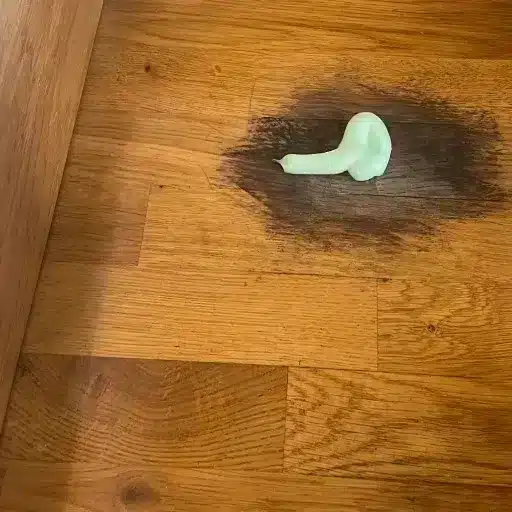
Dark stains take more patience, but many can still be removed without stripping the whole piece. Our guide to how to remove dark water stains from wood covers the full chemical and sanding workflow, while how to refinish water-damaged wood explains how to restore the finish once the stain is gone.
Mineral Spirits and Denatured Alcohol
If the stain is mostly in the finish layer, a solvent may dissolve it or loosen the damaged finish enough to wipe it away.
- Apply mineral spirits to a clean cloth and rub the stain gently.
- If the finish is shellac, use denatured alcohol instead.
- Work in a ventilated area and stop if the finish starts to soften or lift.
- Wipe the area clean and let it dry completely before deciding on your next step.
Oxalic Acid for Tannin and Iron Stains
Oxalic acid is the professional choice for dark water stains on high-tannin woods like oak, walnut, and mahogany. Popular Woodworking calls it one of the most useful bleaches in a woodworker’s kit because it neutralizes the dark compounds without bleaching the surrounding wood as harshly as chlorine bleach.
- Mix oxalic acid crystals with hot distilled water according to the product instructions, usually about 2 tablespoons per quart.
- Apply the solution to the stained area with a brush or cloth.
- Let it dry completely. The stain should lighten as it dries.
- Rinse with clean water and a little baking soda to neutralize the acid.
- Let the wood dry, then assess whether you need to repeat or restrain.
Safety note: Wear gloves, eye protection, and a respirator. Work outside or in a well-ventilated space. Oxalic acid is a strong chemical and should never touch your skin or eyes.
Hydrogen Peroxide and Chlorine Bleach
For dark organic stains, a 3% hydrogen peroxide solution can lift color without the harshness of oxalic acid. Chlorine bleach is stronger and more unpredictable, so most experts reach for it only when other methods fail.
- Dampen a cloth with hydrogen peroxide and lay it over the stain.
- Cover it with plastic wrap to keep it moist.
- Let it sit for several hours or overnight.
- Remove the cloth, rinse the area, and let it dry.
If you use chlorine bleach, dilute it heavily, apply briefly, rinse thoroughly, and neutralize with a vinegar solution afterward. Bleach can weaken wood fibers and leave a residue that interferes with finishing.
Sanding and Refinishing as a Last Resort
When the stain is too deep for chemicals, sanding is the final option. This removes the stained wood layer and exposes fresh material beneath.
- Start with 120-grit sandpaper and progress to 180-grit and then 220-grit.
- Always sand with the grain to avoid visible scratches.
- Wipe away dust with a tack cloth.
- Apply a wood conditioner if needed, then stain and seal to match the surrounding area.
Matching Color After Bleaching
Bleached spots almost always look lighter than the surrounding wood. To blend them:
- Apply a gel stain or wiping stain that matches the original color.
- Build the color in thin layers rather than one heavy coat.
- Seal with the same type of topcoat that was originally used.
If matching color feels uncertain, this is a good time to consult a professional finisher, especially for valuable pieces.
How to Remove Heat Stains from Wood
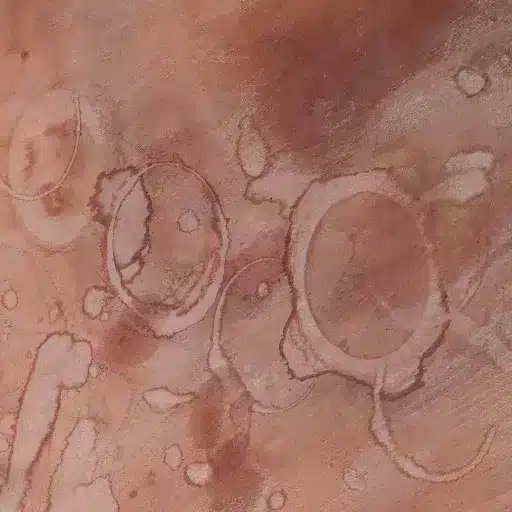
Heat stains look alarming, but they respond well to the same principle that causes them: controlled heat. For a complete guide to this common problem, see how to remove heat stains from wood.
Why Heat Stains Behave Differently from Cold Water Rings
A hot mug drives moisture into the finish faster and deeper than a cold glass. The result is a pale, sometimes slightly brownish mark. Because the moisture is trapped but the wood is not stained, the fix is usually quick.
Iron-Over-Cloth Method for Heat Marks
- Set an iron to medium heat with no steam.
- Place a clean cotton cloth, T-shirt, or tea towel over the mark.
- Move the iron in circles for 10 to 15 seconds.
- Check the spot and repeat as needed.
If the mark does not lift after three or four tries, the discoloration may have reached the wood and needs a different approach.
When Heat Stains Require Refinishing
Some heat marks come from finishes that have actually softened or discolored. If the iron method fails and the area feels rough or sticky, the finish itself may be damaged. In that case, light sanding and a fresh coat of finish is the best path forward.
Removing Water Stains by Finish Type
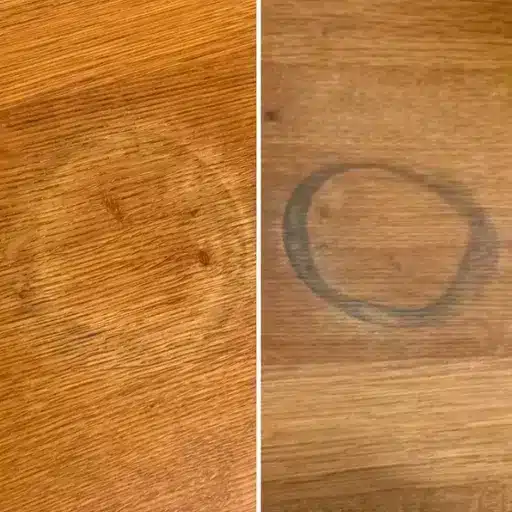
Knowing your finish helps you choose a method that removes the stain without destroying the coating.
Lacquer and Shellac Finishes
These solvent-based finishes can be reactivated. A light spray of lacquer thinner or a dab of denatured alcohol can release trapped moisture and blend the spot back into the surrounding finish. This is advanced work, so test on a hidden area and work quickly. The Wood Whisperer has an excellent breakdown of removing water spots from a finish for lacquer, shellac, and oil finishes.
Polyurethane and Varnish Finishes
These are the most common modern finishes and also the most water-resistant. White stains usually stay near the surface, so heat or oil methods work well. Avoid strong solvents, which can dissolve the finish.
Oil and Wax Finishes
Oil finishes are forgiving. A white stain often disappears when you rub the area with a little more oil or paste wax. These finishes are easy to refresh, which makes repairs less risky.
Water-Based Finishes
Water-based finishes can be sensitive to heat and solvents. Start with the gentlest method, such as mayonnaise or a hair dryer on low. If the finish clouds or softens, stop immediately.
Special Surfaces: Furniture, Floors, and Veneer
Water Stains on Wood Furniture
Furniture is the most common victim of water rings. Before treating, remove hardware, pull out drawers, and work on a stable surface. For tables, dressers, and chairs, see our guide to removing water stains from wood furniture. If the piece is veneered, read the next section before you sand. For solid wood furniture, most of the methods above are safe as long as you test first.
Water Stains on Hardwood Floors
Floors are harder to treat because you cannot move them to a workbench. Our guide to water stains on wood floors covers spot treatment, board replacement, and stain matching. For white stains, a hair dryer or a cloth with an iron works. For dark pet or plant stains, hydrogen peroxide or oxalic acid applied to the affected boards is common. If a single board is badly stained, replacing it may be easier than bleaching the whole area.
Water Stains on Wood Veneer
Veneer is a thin layer of real wood glued to a substrate. Sanding can cut through it in seconds. Because it is so thin, it needs special care. Learn the safest approach in our guide on how to remove water stains from wood veneer. For veneer, stick to heat, oil, or mild abrasive methods. If the stain is dark and deep, re-veneering or refinishing the panel is often safer than aggressive sanding.
For more on caring for thin wood surfaces, see our guide to wood veneer panels.
Antique and Sentimental Pieces: When to Call a Pro
Antiques, heirlooms, and high-value furniture deserve professional care. The wrong solvent can destroy a century-old patina, and aggressive sanding can erase historical value. If a piece matters to you emotionally or financially, consult a furniture restorer before DIY treatment.
Best Water Stain Removers and Tools
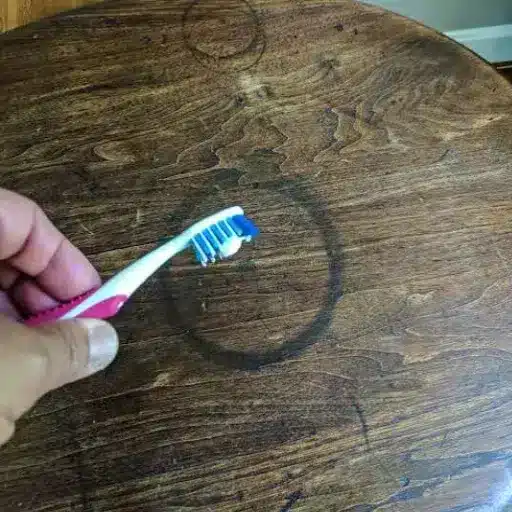
Having the right supplies on hand makes the job easier and safer. For a detailed comparison of household and commercial options, see our guide to the best water stain removers for wood.
Household Items That Work
- White cotton cloths or T-shirts: for heat methods and applying products
- Mayonnaise or petroleum jelly: for gentle oil displacement
- Baking soda and plain white toothpaste: for mild abrasive cleaning
- White vinegar and olive oil: for cleaning and conditioning
- A clothes iron or hair dryer: for heat-based moisture release
Commercial Products Worth Keeping on Hand
- Mineral spirits: for testing finishes and lifting finish-level stains
- Denatured alcohol: for shellac finishes
- Oxalic acid crystals: for dark tannin stains
- 3% hydrogen peroxide: for organic dark stains
- Wood bleach: for severe discoloration on bare wood
- Gel stain or touch-up markers: for color matching after repair
Safety Gear and Workspace Setup
- Nitrile gloves
- Safety glasses
- Respirator or dust mask when sanding or using oxalic acid
- Drop cloth or old newspaper
- Good ventilation
How to Prevent Water Stains on Wood

Prevention is the most sustainable repair of all. A few simple habits can keep wood looking beautiful for decades. For a full prevention system, read our guide on how to prevent water stains on wood.
Protective Finishes That Resist Water
A quality finish is your first line of defense. Polyurethane, varnish, lacquer, and hardwax oil all create a barrier that slows moisture penetration. For pieces that see heavy use, such as dining tables and kitchen counters, choose a finish rated for water resistance and reapply it every few years as it wears.
Daily Habits
- Use coasters, placemats, and trivets on every wood surface.
- Wipe up spills immediately, especially from coffee, wine, and juice.
- Avoid placing vases or plants directly on wood without a protective tray.
- Clean with a barely damp cloth, not a soaking wet one.
Humidity Control and Seasonal Care
Wood expands and contracts with humidity. In dry winters, wood can crack and open tiny gaps that let moisture in. In humid summers, it can swell and trap water. Keeping indoor humidity between 35% and 55% helps wood stay stable and less vulnerable to stains.
Choosing Water-Resistant Wood Species and Products
Some woods naturally resist moisture better than others. Teak, white oak, cedar, and ipe contain oils or dense grain structures that repel water. For high-moisture areas like bathrooms or outdoor spaces, choosing the right species matters as much as the finish.
At VitalWood Global, we source durable, responsibly sourced wood that stands up to real-world use. Whether you are selecting flooring for a busy office or custom furniture for a client, starting with quality material makes every future repair easier.
FAQ
What causes white water stains on wood?
White stains form when moisture becomes trapped between the wood and the clear finish. The water scatters light, which makes the area look cloudy or pale.
Why does wood turn black when wet?
Black or dark stains usually mean water has reached the wood fibers and reacted with tannins. Woods like oak, walnut, cherry, and mahogany are especially prone to this reaction.
Does mayonnaise really remove water rings from wood?
Yes, mayonnaise can remove water rings from wood. The oil in mayonnaise displaces the trapped moisture in the finish. Let it sit for several hours or overnight, then wipe it clean.
Can you use a clothes iron to remove water stains?
Yes, a clothes iron on low or medium heat with no steam can lift white water stains and heat marks. Always place a cotton cloth between the iron and the wood, and keep the iron moving.
How do you remove dark water stains from wood without sanding?
You can often remove dark stains with oxalic acid or hydrogen peroxide. These chemicals lighten the discolored wood fibers without sanding, though you may still need to re-stain the area to match the surrounding wood.
Can toothpaste remove water stains from wood?
Plain white toothpaste, not gel, can remove light surface water stains. It acts as a mild abrasive that polishes the finish. Rub gently with a soft cloth, then wipe clean.
How do you remove water stains from wood veneer?
For veneer, use gentle methods like heat, mayonnaise, or a mild abrasive. Avoid sanding because the veneer is thin and easy to wear through. If the stain is deep, consider professional re-veneering.
What is the best finish to prevent water stains on wood?
Polyurethane, varnish, lacquer, and hardwax oil all provide good water resistance. The best choice depends on the look you want and how much wear the surface will receive.
Does vinegar remove water stains from wood?
Vinegar mixed with olive oil can help lift light water stains and condition the wood. Use it as a gentle cleaning option before moving to stronger methods.
When should you call a professional for water-stained wood?
Call a professional if the wood is warped, soft, moldy, or an antique. Deep stains that do not respond to chemical treatments may also need expert restoration.
Conclusion
Learning how to remove water stains from wood starts with one simple habit: look before you treat. White rings and heat marks usually clear up with household methods, while dark stains need a deeper approach like oxalic acid or sanding. By matching the remedy to the finish, wood species, and surface, you can restore a piece instead of replacing it, which is better for your budget and the planet.
At VitalWood Global, we are committed to helping you extend the life of sustainably sourced wood. A little knowledge, the right supplies, and a careful hand can keep your wood furniture, floors, and panels beautiful for years. If you are planning a new project, explore our complete guide to how to stain wood for refinishing and re-staining water-damaged wood, and browse our responsibly sourced wood products to choose materials built to last.