
How to Clean Wood: The Complete Guide to Safe, Effective Wood Surface Care
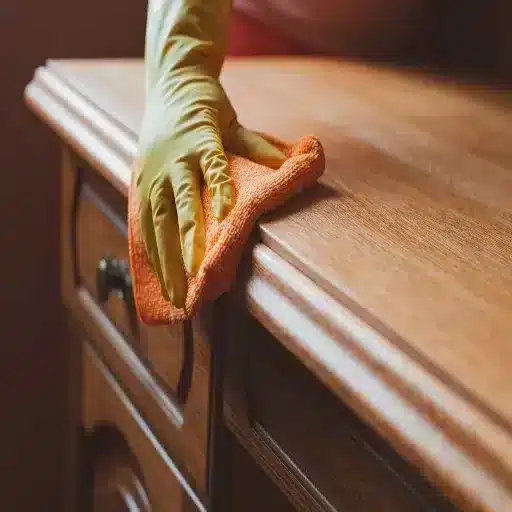
The safest way to clean wood is to dust it first, wipe it with a barely damp microfiber cloth, and dry it immediately. That simple routine works for most sealed wood furniture, floors, and cabinets. The danger starts when people soak wood, use harsh chemicals, or skip the drying step.
Most wood damage doesn’t come from neglect. It comes from cleaning it the wrong way. A well-meaning scrub with a Magic Eraser, a soaking-wet mop, or an all-purpose spray can strip a finish, raise the grain, or leave water marks that last for years. At VitalWood Global, we work with wood every day, from sustainably sourced lumber to custom veneer panels, and we’ve seen how the right care can keep wood beautiful for decades.
In this guide, you’ll learn how to identify your wood surface and finish, choose the right supplies, and clean wood safely. We’ll cover furniture, floors, cabinets, veneer, unfinished wood, antiques, teak, and outdoor pieces. You’ll also get practical tips for disinfecting wood, removing sticky residue, and preparing wood for staining or sealing.
Key Takeaways
- Clean wood with a gentle, three-step routine: dust, damp wipe with the grain, and dry immediately.
- Always match your cleaner to the finish; sealed, oiled, waxed, and unfinished wood need different care.
- Excess water is the enemy of wood; a barely damp cloth is almost always enough.
- Proper cleaning extends wood life, protects your investment, and supports sustainability by reducing waste.
- For deep cleaning, surface-specific problems, or pre-finishing prep, follow our linked guides for each wood type.
Why Proper Wood Cleaning Matters
Wood is a porous, hygroscopic material. That means it absorbs and releases moisture depending on the air around it. When water sits on the surface too long, it can swell the fibers, lift the finish, and create stains or mildew. When cleaners are too alkaline or too acidic, they can dissolve finishes or dull the surface over time.
At the same time, wood is one of the most durable and renewable materials we have. When you buy sustainably sourced wood from certified forests, you’re choosing a material that can last generations with the right care. Cleaning it correctly is part of that stewardship.
Here’s the good news: most wood surfaces don’t need aggressive products. They need consistency. Regular dusting, occasional damp wiping, and prompt attention to spills are usually enough. When you avoid silicone polishes, excess water, and abrasive tools, you protect the finish and the wood underneath.
The sustainability angle matters too. The global furniture polish market was valued at roughly $11.59 billion in 2025 and is expected to reach $12.27 billion in 2026, according to The Business Research Company. Much of that spending goes toward products that build up residue or mask problems. Learning to clean wood properly means fewer products, less waste, and longer-lasting furniture.
Identify Your Wood Surface and Finish First
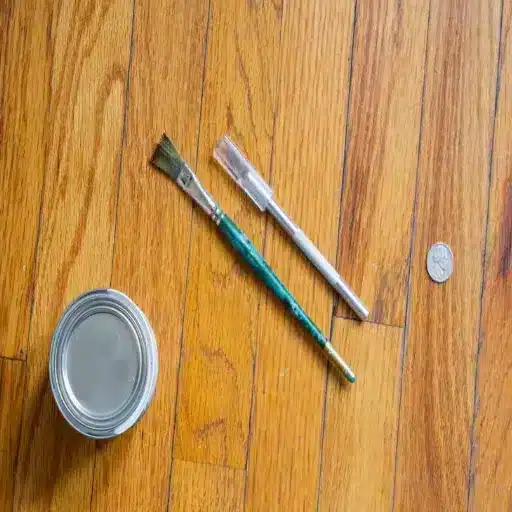
Before you reach for a cleaner, identify what you’re cleaning. The same product can be safe on one surface and damaging on another. Start by asking two questions: what is the surface type, and what finish is on it?
Surface Types
- Furniture: Tables, chairs, dressers, and bookcases. Often finished with lacquer, shellac, varnish, polyurethane, oil, or wax.
- Floors: Hardwood, engineered wood, or laminate. Usually sealed with polyurethane or aluminum oxide.
- Cabinets: Kitchen and bath cabinets. Typically finished with catalyzed varnish, conversion varnish, or paint.
- Veneer: A thin layer of real wood glued to a substrate. Found on furniture, panels, and cabinetry.
- Unfinished wood: Bare lumber with no protective coating. Common on raw projects, beams, and some rustic furniture.
- Outdoor wood: Decks, siding, fences, and patio furniture. Usually exposed to sun, rain, and mildew.
Common Finish Types
| Finish | Appearance | How to Clean |
|---|---|---|
| Polyurethane | Clear, plastic-like, durable | Damp cloth with mild soap; dry immediately |
| Lacquer | High gloss or satin, hard finish | Damp cloth only; avoid alcohol and ammonia |
| Shellac | Warm, amber tone, softer finish | Dry dusting; damp cloth with extreme care |
| Varnish | Thick, glossy, often on boats/outdoor | Mild soap and water; re-oil if needed |
| Oil finish | Matte, natural feel | Damp wipe; reapply oil when dry |
| Wax finish | Soft sheen, smooth feel | Dust with treated cloth; re-wax periodically |
| Bare/unfinished wood | Raw, porous, no shine | Dry methods only; minimal moisture |
When in doubt, test any cleaner on a hidden spot first. Wait 24 hours to see if the finish changes color, dulls, or becomes sticky.
Essential Wood Cleaning Tools and Supplies
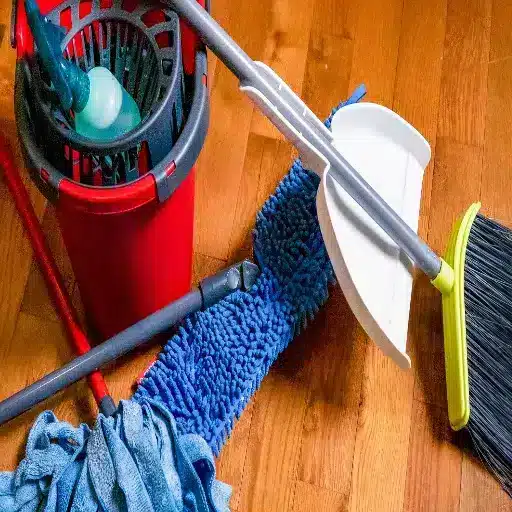
You don’t need a cabinet full of products to clean wood well. A small toolkit of reliable items will handle most jobs.
Dusting Tools
- Microfiber cloths (lint-free, washable, reusable)
- Soft-bristle paintbrushes or feather dusters for carvings
- Vacuum with soft brush attachment
Cleaning Solutions
- pH-neutral dish soap (a few drops in warm water)
- Distilled white vinegar (diluted, for specific jobs)
- Mineral spirits (for grease and sticky residue on sealed finishes)
- Hydrogen peroxide (3%, for stain removal and disinfecting)
Conditioning and Protection
- Food-safe mineral oil (for cutting boards and butcher block)
- Beeswax or carnauba-based paste wax
- Silicone-free furniture polish
- Boiled linseed oil or tung oil (for oiled wood)
Safety Gear
- Nitrile gloves when using solvents
- Eye protection
- Adequate ventilation
For most daily cleaning, all you really need is a microfiber cloth and a spray bottle of water with a drop of mild soap.
The Basic Wood Cleaning Process

Once you know your surface and finish, follow this four-step routine. It works for most sealed wood surfaces.
Step 1: Dust Top to Bottom
Start with a dry microfiber cloth or a soft brush. Dust before you damp-wipe; otherwise, you risk turning dust into mud that can scratch the finish. Work from the highest point downward so dust falls onto areas you haven’t cleaned yet.
Step 2: Damp Wipe With the Grain
Dampen your cloth with warm water and a tiny drop of pH-neutral soap. Wring it out until it is barely damp, not wet. Wipe in the direction of the wood grain, not across it. The grain direction acts like tiny channels; wiping across them can push dirt deeper.
Step 3: Dry Immediately
Use a second dry microfiber cloth to remove all moisture. This step is non-negotiable. Even sealed wood can suffer if water is left to evaporate on its own.
Step 4: Condition or Protect as Needed
Every few months, apply a conditioner appropriate to the finish. For oiled wood, add a thin coat of oil. For waxed wood, buff with paste wax. For sealed furniture, a silicone-free polish can restore luster without creating buildup.
How to Clean Wood Furniture
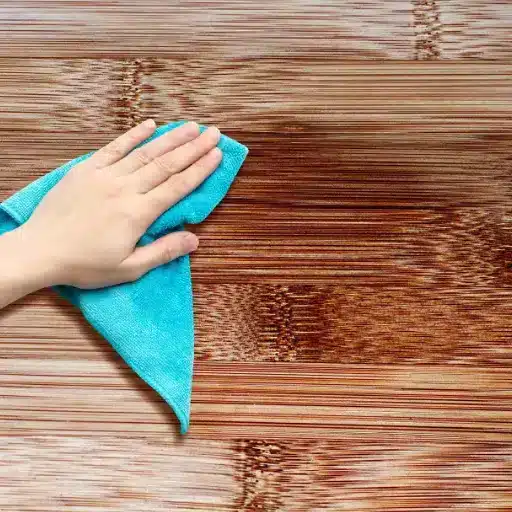
Wood furniture is often the centerpiece of a room, and it shows wear faster than floors or cabinets because it’s touched, leaned on, and exposed to sunlight. For a complete, finish-by-finish furniture care workflow, see our dedicated guide on how to clean wood furniture.
For routine care, dust weekly with a microfiber cloth. Every month or two, use a barely damp cloth with mild soap for a deeper clean. Dry immediately. For carved details, use a soft brush or a toothbrush dedicated to cleaning.
Common furniture issues include water rings, heat marks, and sticky buildup. A white water ring often means moisture is trapped in the finish, not the wood. You can sometimes draw it out with a dry cloth and a warm iron over a towel. For sticky residue from old polish or spills, a cloth lightly dampened with mineral spirits can help, but only on sealed finishes and only in a well-ventilated area.
Avoid silicone polishes. They create a shiny coating that attracts dust and can make future refinishing difficult. If you want to refresh the look of your furniture, choose a product made for the specific finish you have.
How to Clean Wood Floors
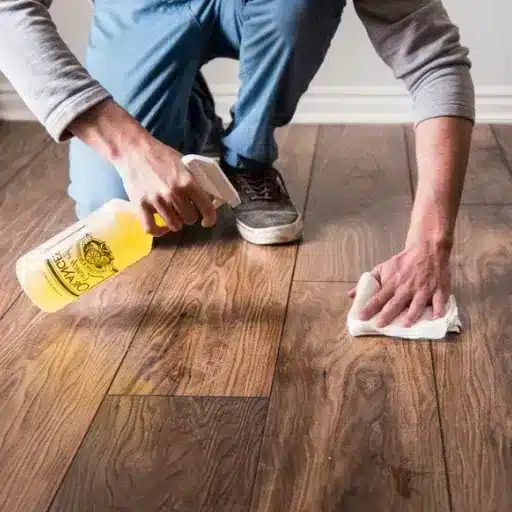
Wood floors take more abuse than almost any other wood surface in the home. Dirt, grit, and pet hair act like sandpaper underfoot. The key to clean wood floors is preventing abrasion before it starts.
Sweep, dust-mop, or vacuum daily if possible. Use a vacuum with a soft brush attachment; beater bars can scratch the finish. When damp-mopping, use a flat mop with a well-wrung microfiber pad. Never pour water directly onto the floor.
Choose a cleaner designed for your floor’s finish. Polyurethane-finished floors tolerate pH-neutral wood floor cleaners. Oil-finished floors may need a soap formulated specifically for oiled wood. Wax-finished floors should be dry-buffed and re-waxed, not wet-mopped.
For a deeper floor-care routine, including finish identification and damage prevention, read our full guide on how to clean wood floors.
How to Clean Wood Cabinets
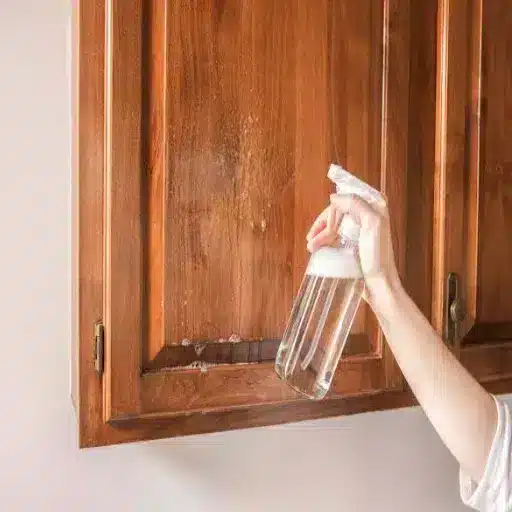
Kitchen cabinets collect grease, food splatter, and fingerprints. Bathroom cabinets deal with toothpaste, cosmetics, and humidity. Both need regular attention to prevent buildup that becomes harder to remove over time.
Start with warm water and a drop of dish soap on a microfiber cloth. Wipe with the grain and dry immediately. For greasy cabinets, add a small amount of baking soda to your damp cloth. The mild abrasion helps cut through grease without scratching.
Be careful around hardware. Moisture can corrode hinges and pulls over time. Clean around them with a barely damp cloth and dry promptly. Inside the cabinets, remove items, vacuum out crumbs, and wipe shelves with the same mild solution.
For painted cabinets, avoid waxes and oil-based products, which can soften paint. For stained cabinets, a light application of furniture wax once or twice a year can add protection. Get the full kitchen-and-bath cabinet workflow in our guide on how to clean wood cabinets.
How to Clean Sticky Wood and Remove Residue
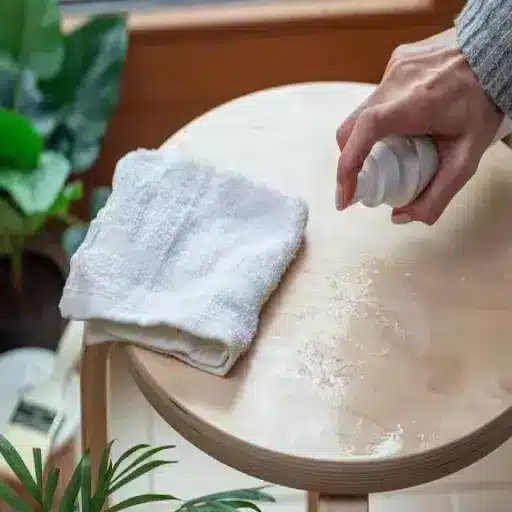
Sticky wood is one of the most common complaints. The culprit is usually one of four things: old furniture polish, wax buildup, grease, or spilled liquids that weren’t cleaned up promptly.
The first step is diagnosis. If the stickiness is uniform across the surface, it’s probably buildup from polish or wax. If it’s localized, it’s likely a spill or grease spot. For sealed finishes, mineral spirits on a soft cloth can dissolve many sticky residues. Work in a small area, wipe with the grain, and dry immediately.
For a gentler approach, mix one part white vinegar with two parts water. Dampen a cloth and wipe the sticky area. Vinegar cuts through grease and breaks down some residues, but it should not be used on waxed, shellacked, or unsealed wood.
Once the residue is gone, rinse with a clean damp cloth and dry thoroughly. Then stop using the product that caused the buildup. If you want a complete diagnostic and removal workflow, see our guide on how to clean sticky wood.
How to Disinfect Wood Without Damaging the Finish
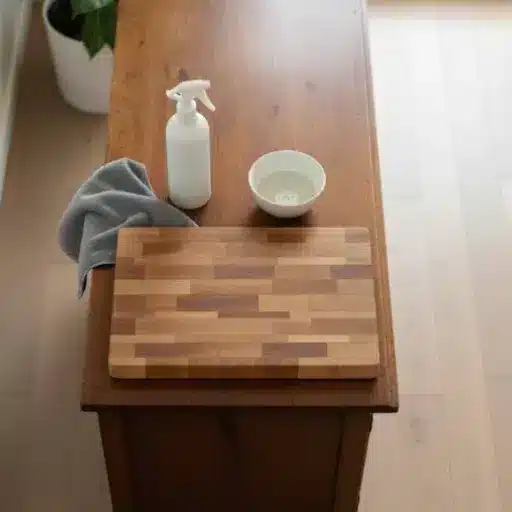
Disinfecting wood requires balance. You want to kill germs, but many disinfectants can damage finishes or warp the wood underneath. The CDC recommends cleaning first, then disinfecting with an EPA-registered product when needed.
On sealed wood furniture and floors, a 60–70% isopropyl alcohol solution is often the safest choice. It evaporates quickly, which reduces the risk of water damage. Spray it onto a cloth, not directly onto the wood, and wipe with the grain. Let it air-dry for the recommended contact time, then wipe with a clean cloth.
For wood cutting boards and butcher block, use hot soapy water after each use. For deeper sanitation, apply undiluted white vinegar or 3% hydrogen peroxide, let it sit for a few minutes, then rinse and dry upright. Regular application of food-safe mineral oil helps seal the pores and prevent cracking.
Unfinished wood is harder to disinfect without damage. Avoid bleach, which can raise the grain and cause discoloration. If disinfection is essential, use hydrogen peroxide with a short contact time, then dry immediately. Read our full guide on how to disinfect wood for finish-specific instructions.
How to Clean Wood Before Staining or Finishing
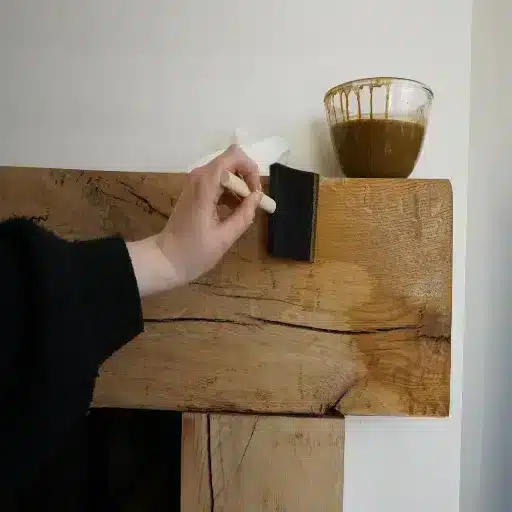
Cleaning wood before staining is not the same as routine cleaning. The goal is to remove dust, oils, mill glaze, and contaminants that could prevent the finish from adhering.
After sanding, remove dust with a vacuum and a tack cloth. Then wipe the surface with mineral spirits on a clean cloth. This removes oils from handling and any remaining sawdust. Let the wood dry completely before applying stain or finish.
Mill glaze is a glossy film that forms on new lumber during machining. It can block stain penetration and leave a blotchy finish. A light sanding with 120-grit paper followed by a mineral spirits wipe usually removes it.
For raw lumber or projects made with responsibly sourced lumber, this prep step is especially important. Quality wood deserves a clean start. For the complete pre-finishing workflow, see our guide on how to clean wood before staining.
Cleaning Specialty Wood Surfaces
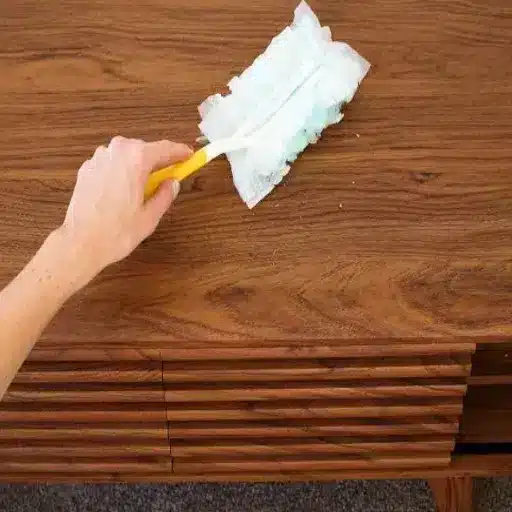
Some wood surfaces need extra care because of their construction, age, or exposure to the elements.
How to Clean Wood Veneer
Veneer is a thin slice of real wood bonded to a substrate. It looks like solid wood but can be damaged if water seeps through seams or edges. Use a barely damp cloth, wipe with the grain, and dry immediately. Never soak veneer or let water pool on the surface. For detailed veneer care, read our guide on how to clean wood veneer.
How to Clean Unfinished Wood
Unfinished wood has no protective barrier, so moisture is the biggest threat. Dry dusting is usually enough. If you need to clean a spot, use a cloth lightly dampened with water and mild soap, then dry immediately. For deeper cleaning, consult the Canadian Conservation Institute’s guidance on unfinished wood care. Learn more in our guide on how to clean unfinished wood.
How to Clean Teak Wood and Outdoor Furniture
Teak contains natural oils that make it resistant to rot and insects. Outdoor teak will develop a silvery-gray patina over time. If you prefer the original golden color, clean with a teak cleaner and apply a teak protector. For routine care, mild soap and water are enough. Read our complete outdoor care guide on how to clean teak wood.
How to Clean Antique Wood Furniture
Antique furniture often has original finishes that are delicate or historically significant. Start with dry dusting. Avoid commercial polishes, water, and any solvent unless you know the finish type. When in doubt, consult a professional conservator. Our guide on how to clean antique wood furniture covers safe methods and when to seek expert help.
DIY vs. Commercial Wood Cleaners
You don’t need to buy specialty products for most wood cleaning. A simple DIY solution of warm water and a few drops of pH-neutral dish soap handles daily cleaning on most sealed surfaces.
Vinegar solutions work well for cutting grease and removing some residues, but they are acidic. That makes them risky for wax, shellac, and unfinished wood. Use them with caution and always test first.
Commercial wood cleaners can be convenient, especially for floors and large surfaces. Look for pH-neutral, low-VOC formulas that match your finish. Avoid products containing silicone, ammonia, or bleach unless the label specifically says they are safe for your wood type.
If you’re trying to choose between products, our guide to the best wood cleaner compares commercial and DIY options by finish type, safety, and sustainability.
Common Wood Cleaning Mistakes to Avoid
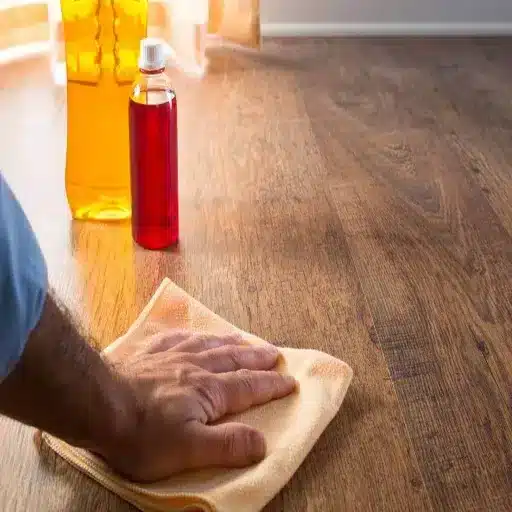
Even with the best intentions, it’s easy to damage wood. Here are the mistakes we see most often.
Over-wetting the surface. Water is the leading cause of wood damage. A dripping cloth or a soaked mop can cause swelling, warping, and stains.
Using abrasive tools. Steel wool, Magic Erasers, and scrubbing pads can scratch finishes and leave permanent marks.
Skipping the drying step. Letting wood air-dry allows moisture to penetrate seams and edges. Always dry immediately.
Using silicone polishes. They create a coating that attracts dust and complicates future refinishing.
Applying cleaner directly to wood. Spray your cloth first, then wipe. Direct spray can oversaturate the surface and seep into joints.
Ignoring the finish type. What works on polyurethane may ruin shellac or wax. Know your finish before you clean.
FAQ
Can you use vinegar to clean wood?
Yes, but only on certain finishes. Diluted white vinegar can cut grease and remove residue on sealed polyurethane or varnish. Do not use it on waxed, shellacked, or unfinished wood, because the acidity can damage the finish.
How often should you clean wood furniture?
Dust weekly. Damp-clean monthly or as needed. Deep clean and condition every three to six months, depending on use and exposure.
How do you clean wood without damaging the finish?
Use a barely damp microfiber cloth, wipe with the grain, and dry immediately. Test any new cleaner on a hidden area first.
What is the best way to clean wood floors?
Sweep or vacuum often, damp-mop with a well-wrung pad, and use a cleaner designed for your floor’s finish. Never wet-mop or steam-clean hardwood.
How do you remove sticky residue from wood?
For sealed finishes, use mineral spirits or a diluted vinegar solution on a soft cloth. Wipe with the grain, rinse, and dry.
How do you disinfect wood cutting boards?
Wash with hot soapy water, then apply white vinegar or 3% hydrogen peroxide. Let it sit, rinse, and dry upright. Oil regularly with food-safe mineral oil.
Can you use bleach on wood?
Bleach is generally not recommended for wood. It can raise the grain, weaken fibers, and discolor the surface. If disinfection is necessary, use hydrogen peroxide or alcohol on sealed wood instead.
How do you clean wood blinds and shutters?
Close the slats and dust with a microfiber cloth or soft brush. For deeper cleaning, wipe each slat with a barely damp cloth and dry immediately.
Conclusion
Learning how to clean wood is one of the simplest ways to protect your investment and reduce waste. The right routine, dust, damp wipe, dry, and condition, keeps wood surfaces looking their best without expensive products or harsh chemicals.
Remember to match your method to the finish. Sealed wood tolerates more moisture than waxed, shellacked, or unfinished wood. Excess water and abrasive tools are almost always the problem, not the solution.
Sources