
Blog
Is Purple Heart Wood Endangered? Sustainability & Sourcing Facts
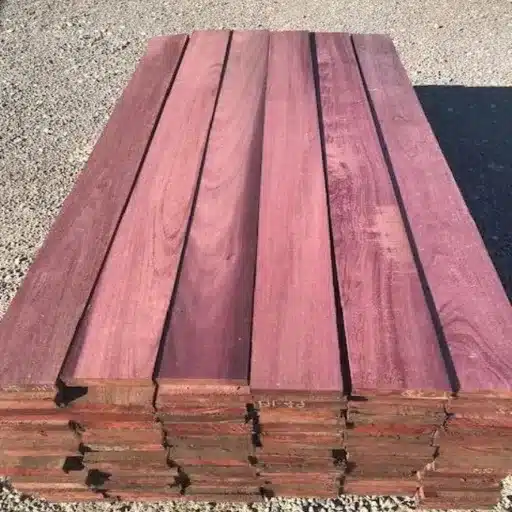
Purple heart wood is not listed in the CITES Appendices, so it is not broadly regulated as an endangered species, but the conservation picture varies by species: Peltogyne purpurea is assessed as Vulnerable in parts of its range, a handful of other Peltogyne species…
Purple Heart Wood Turning: Projects, Tools & Techniques
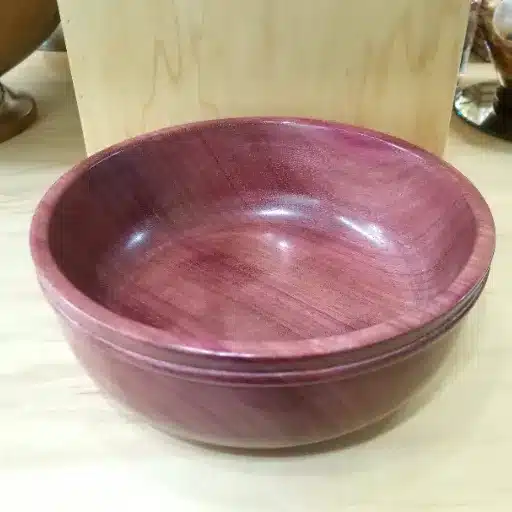
Yes, purple heart wood turns well with sharp tools, light cuts, and the right lathe speed. It is hard, dense, and brittle, so it punishes dull edges, but the vivid color and extreme durability make it one of the most…
Working With Purple Heart Wood: The Complete Machining Guide
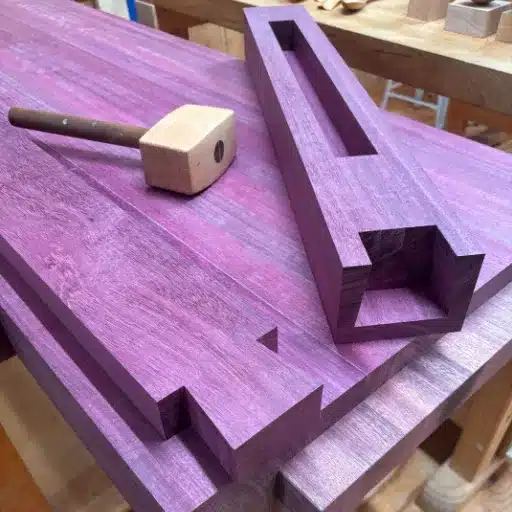
Working with purple heart wood is genuinely hard. It is one of the hardest, densest woods you will ever machine, with a Janka hardness around 2,520 lbf and high silica content that dulls blades in minutes. It burns easily, tears…
Purpleheart vs Padauk: Which Exotic Wood Is Better?
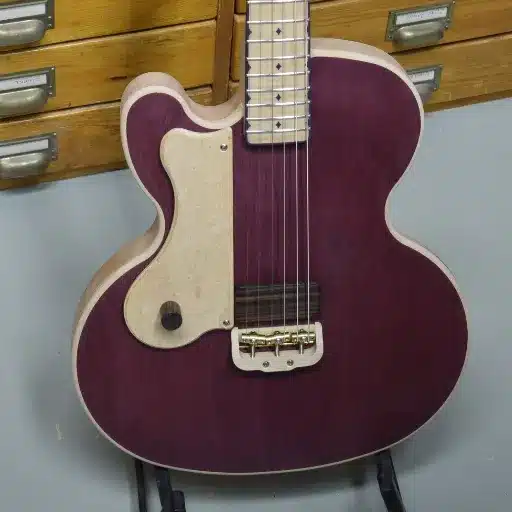
Purpleheart is the harder, denser wood, while padauk is easier to work with and generally less expensive. Choose purpleheart when you need maximum dent resistance and love its violet color; choose padauk when you want easier machining, a warm orange-red…
How To Finish Purple Heart Wood (And Keep It Purple)
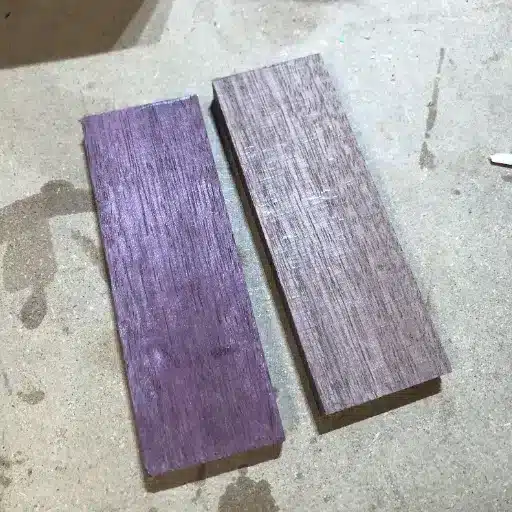
The best way to finish purple heart wood is to let the color bloom first, then seal it quickly with a UV-inhibiting, water-based finish (or a shellac-and-lacquer schedule) to slow the shift to brown. No finish stops the color change…
Is Purple Heart Wood Food Safe? Cutting Board Guide
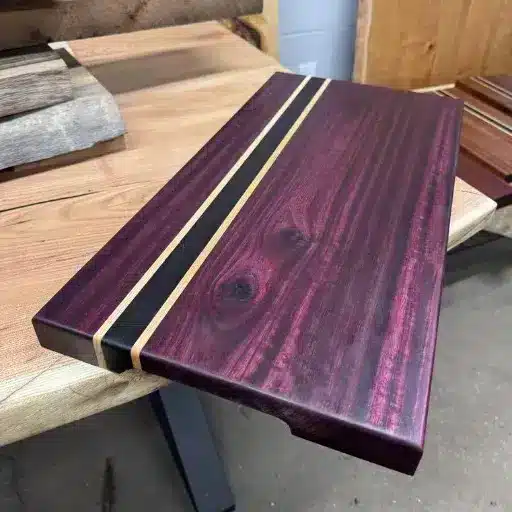
Yes, purple heart wood is food safe for cutting boards and charcuterie boards once it’s finished with a food-safe oil. But there’s an important catch: the raw wood dust is a known sensitizer, and purpleheart is so hard it will…
Purple Heart Wood Price: Cost Per Board Foot & Where To Buy (2026)
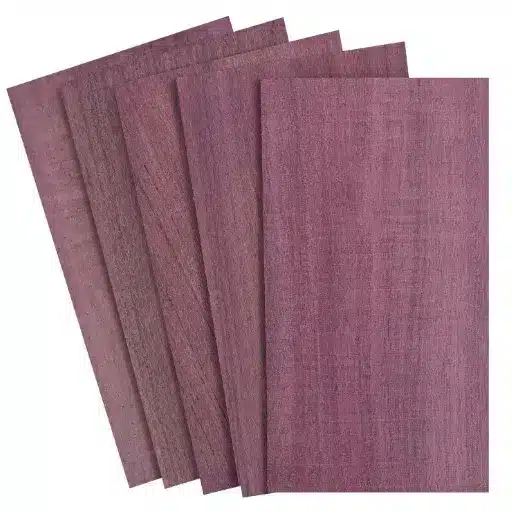
Purple heart wood costs $9 to $14 per board foot for typical kiln-dried stock in 2026, with rough-sawn 4/4 ranging from $5.50 to $13 and select-grade FAS reaching $15 to $22 per board foot. Live-edge slabs run $60 to $150…
Purple Heart Wood Flooring: Pros, Cons, Cost & Installation
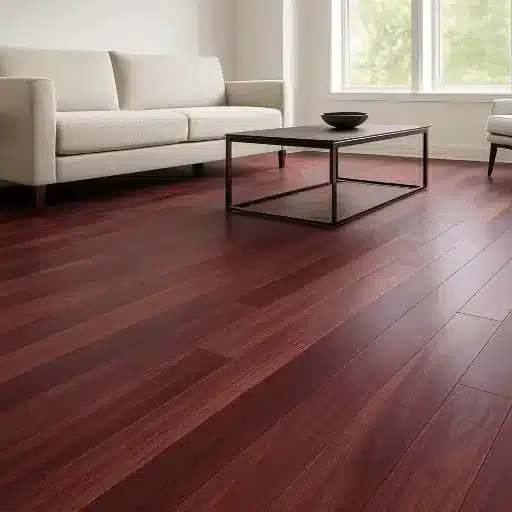
Purple heart wood flooring is one of the hardest, most durable hardwood floors you can install, and with proper care it lasts 30 to 50 years. It costs roughly twice as much as oak, its vivid violet color slowly fades…
Purple Heart Wood: The Complete Guide To Properties, Uses & Projects
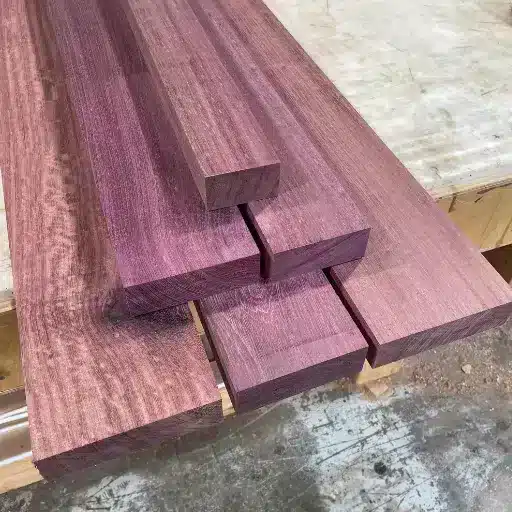
Purple heart wood is the vivid violet heartwood of Peltogyne trees, a tropical hardwood native to Central and South America that’s prized for its striking color, extreme hardness (Janka around 2,520 lbf), and natural rot resistance. This guide covers everything you need…